 Polish Girl Name Generator
Discover strong Polish names with Slavic heritage
Guides & Articles
Poland Girl Names: A Complete Guide to Stylish, Popular and Meaningful Choices
Discover the most beautiful, trending, unique and culturally rich Polish girl names for 2026
Introduction: The Enchanting World of Polish Girl Names
Choosing a name for your baby girl is one of the most meaningful decisions you will ever make as a parent. In Poland, this decision is shaped by deep Catholic traditions, Slavic linguistic heritage, centuries of rich history, and an evolving modern culture that is finding exciting new ways to balance the old and the new. Polish girl names are among the most beautiful and phonetically distinctive names in all of Europe, carrying a music and character that is entirely their own.
Poland has a naming culture built on profound roots. The country's long Catholic tradition means that saints' names, feast day names, and names with strong religious significance have been at the heart of Polish naming for over a thousand years. Alongside this religious foundation sits a deep Slavic linguistic heritage, one that gives Polish girl names their characteristic soft endings, their flowing combinations of consonants and vowels, and their deeply meaningful etymological roots in words for beauty, grace, victory, and love.
In 2026, Polish girl names are capturing global attention. Parents outside Poland are discovering the elegance of names like Zofia, Maja, and Lena, while parents within Poland are navigating an exciting moment in their naming culture, one where beloved traditional names are returning in strength, international influences are reshaping modern choices, and rare and distinctive picks are gaining new appreciation. Whether you are seeking popular Polish baby girl names with beautiful meanings, modern and trending names, traditional Slavic names, rare and unique picks, or deep insight into how names are chosen in Polish culture, this complete guide covers every aspect of the rich and beautiful world of Poland girl names.
Popular Polish Girl Names with Beautiful Meanings
Some names have remained at the heart of Polish naming culture for generations, consistently appearing among the most loved choices for baby girls across the country. These popular Polish girl names combine beautiful sounds, powerful meanings, and strong cultural resonance. If you want a name that feels warmly familiar across Poland while carrying genuine depth and significance, these are the names to explore first.
|
Name |
Origin / Meaning |
Why It Stands Out |
|
Zofia |
Greek, wisdom, knowledge |
Polish form of Sophia, timeless and graceful |
|
Maja |
Latin, great, from Maia |
Short, sweet, beloved across all of Poland |
|
Hanna |
Hebrew, grace, favored by God |
Biblical elegance, consistently top-ranked |
|
Lena |
Greek or Slavic, light, bright one |
Modern and soft, universally adored in Poland |
|
Natalia |
Latin, birthday of Christ |
Christmas-connected, warm and widely loved |
|
Julia |
Latin, youthful, soft-haired |
Classical Roman beauty, hugely popular |
|
Aleksandra |
Greek, defender of men |
Strong, royal, beloved traditional choice |
|
Wiktoria |
Latin, victory |
Polish form of Victoria, powerful and elegant |
|
Marta |
Aramaic, the lady, mistress |
Biblical simplicity, timeless Polish classic |
|
Klaudia |
Latin, from the Claudia family |
Sophisticated and smooth, widely chosen |
|
Amelia |
Germanic, industrious, hardworking |
International favorite thriving in Poland |
|
Emilia |
Latin, rival, eager, hardworking |
Flowing and beautiful, top Polish pick |
Zofia stands as one of the greatest names in the Polish tradition. As the Polish form of Sophia, it carries the universal meaning of wisdom and knowledge while wearing a distinctly Polish coat that makes it feel intimately connected to the country's culture and history. Saint Zofia is venerated in the Catholic Church, which gives the name both spiritual weight and cultural permanence in a country where faith has always been deeply interwoven with identity.
Maja has earned a special place in Polish hearts because of its effortless beauty and its soft, approachable sound. In Polish culture, Maja is strongly associated with springtime, new beginnings, and the warmth of May, making it a name that carries an almost poetic seasonal beauty. It also works beautifully as both a formal name and a nickname, which Polish families have always valued.
Modern and Trending Polish Girl Names in 2026
Polish parents in 2026 are drawn to girl names that feel contemporary, stylish, and forward-looking while still honoring the deep cultural roots that define Polish identity. Modern trending names in Poland tend to have a fresh, vibrant quality while keeping the characteristic softness and musicality that makes Polish names so beautiful. Here are the names gaining the most momentum across Poland right now.
|
Name |
Meaning |
Why Trending |
|
Zara |
Arabic or Hebrew, blooming flower |
Short, global, stylish and very current |
|
Lena |
Greek, light, shining one |
Clean, modern, loved across all ages |
|
Nadia |
Slavic, hope, full of hope |
Soft, romantic, rising beautifully |
|
Oliwia |
Latin, olive tree, peace |
Polish form of Olivia, very fashionable now |
|
Iga |
Old Slavic, pure and holy |
Short, distinctly Polish, very chic |
|
Laura |
Latin, laurel, honor and victory |
International classic thriving in Poland |
|
Alicja |
Old German, noble kind |
Polish Alice, beloved and highly modern |
|
Nina |
Spanish or Slavic, little girl, grace |
Short, elegant, hugely popular in 2026 |
|
Sara |
Hebrew, princess, noblewoman |
Biblical and fresh, consistently rising |
|
Roksana |
Persian, bright, dawn |
Exotic beauty, growing in Polish popularity |
|
Milena |
Slavic, grace and warmth |
Soft, flowing, deeply Slavic and stylish |
|
Ola |
Slavic, defender of people |
Short Polish nickname turned full name, beloved |
One of the clearest patterns defining modern Polish girl names in 2026 is the growing appeal of short, elegant names that feel both deeply Polish and internationally wearable. Names like Iga, Ola, and Nina reflect a Polish preference for names that are easy to say, impossible to forget, and full of quiet confidence. These names feel perfectly at home in Warsaw and equally elegant in London, Berlin, or New York, a quality that matters enormously to a generation of Poles who are more globally connected than any before them.
Oliwia represents another powerful trend. As the Polish adaptation of Olivia, one of the most popular girl names across Europe and America, Oliwia gives Polish parents access to a beloved international name while keeping it rooted in their own linguistic tradition through its distinctive Polish spelling. This pattern of Polonizing international favorites is one of the defining features of modern naming in Poland.
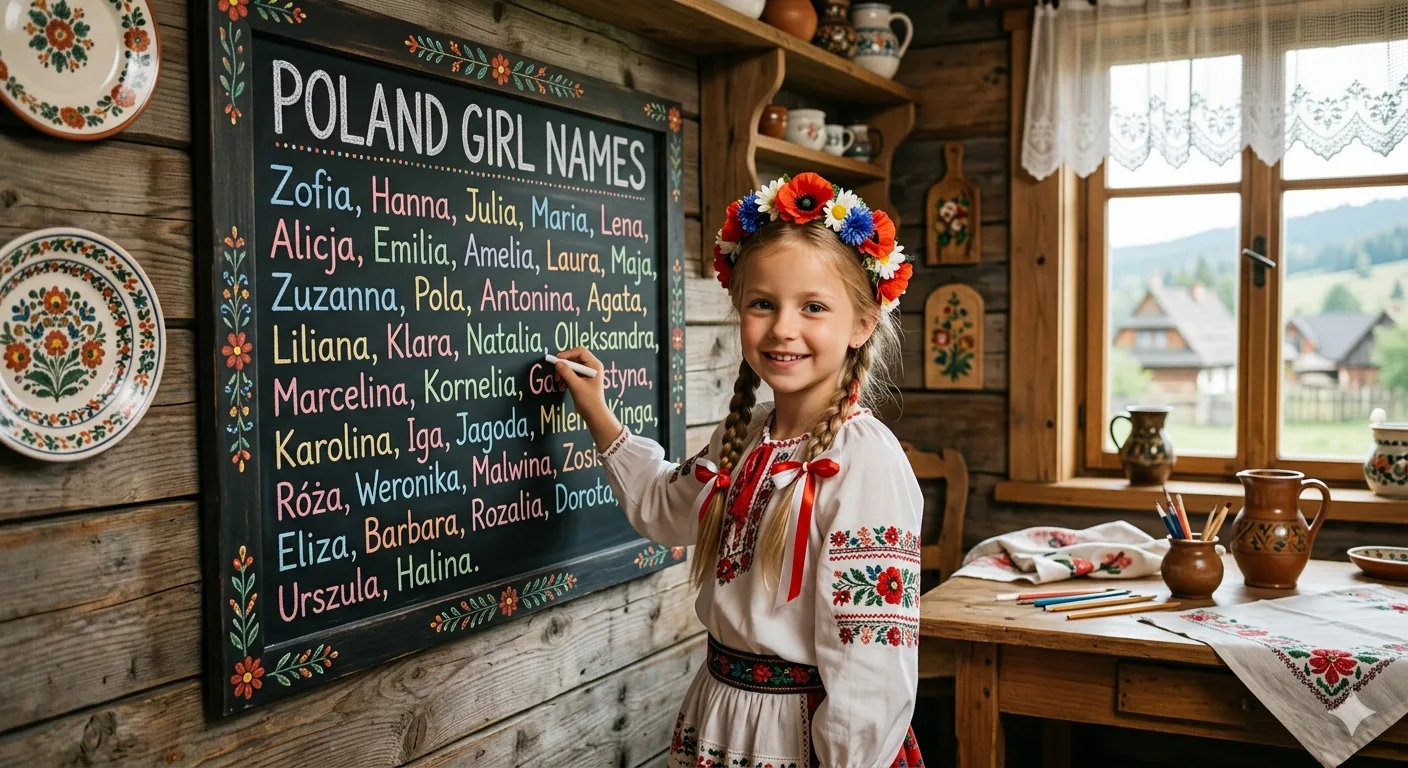
Traditional and Classical Polish Girl Names That Never Go Out of Style
Traditional Polish girl names carry the weight of over a thousand years of Catholic faith, Slavic cultural heritage, and proud national history. These classical names have been beloved by Polish families for centuries and continue to be chosen today because of their enduring beauty, their deep cultural significance, and the unbreakable connection they create between a child and her heritage.
|
Name |
Origin / Meaning |
Why It Endures |
|
Maria |
Hebrew, beloved, wished-for child |
Most historically important name in Poland |
|
Katarzyna |
Greek, pure, chaste |
Polish Catherine, centuries of royal elegance |
|
Agnieszka |
Greek, pure, holy and virginal |
Saint Agnes in Polish form, deeply beloved |
|
Magdalena |
Hebrew, woman of Magdala |
Biblical beauty, timeless Polish classic |
|
Barbara |
Greek, foreign woman, stranger |
Saint Barbara honored across centuries |
|
Elzbieta |
Hebrew, my God is an oath |
Polish Elizabeth, dignified and enduring |
|
Krystyna |
Greek, follower of Christ |
Christian faith expressed through naming |
|
Irena |
Greek, peace, peaceful one |
Timeless peace name, honored in Poland |
|
Halina |
Slavic, calm, serene, peaceful |
Distinctly Polish, deeply traditional |
|
Jadwiga |
Germanic, war and battle strength |
Most celebrated Polish queen's name |
|
Wanda |
Slavic, of the Vandal tribe |
Legendary Polish princess, iconic name |
|
Bozena |
Slavic, gift of God, divine |
Pure Slavic origin, beautifully Polish |
Maria holds a position in Polish naming culture that is truly extraordinary. Poland is one of the most deeply Catholic countries in Europe, and the Virgin Mary occupies a central place in Polish religious and cultural life that is difficult to overstate. The Black Madonna of Czestochowa, one of the most venerated religious icons in the world, sits at the heart of Polish national identity, and the name Maria has reflected this devotion for generations. Even today, Maria remains a beloved choice, often used as a middle name that connects a daughter to the deepest spiritual traditions of her people.
Jadwiga deserves special mention as one of the most historically significant names in all of Polish culture. Queen Jadwiga, who ruled Poland in the fourteenth century, was one of the most remarkable monarchs in European history. She converted Lithuania to Christianity, oversaw the founding of the Jagiellonian University in Krakow, and was canonized as a saint by Pope John Paul II in 1997. Her name carries an entire chapter of Polish greatness within it, and parents who choose Jadwiga for their daughter today are making a profound statement about cultural pride and historical awareness.
You can also use our Name Generator Tool to create unique names instantly. Fiji Girl Names
Enchanting Polish Girl Names Rooted in Slavic Heritage
Poland's Slavic linguistic heritage is the deepest and most distinctive well from which Polish girl names are drawn. Pure Slavic names, those that come directly from old Slavic roots rather than from Latin, Greek, or Hebrew sources, carry a quality of sound and meaning that is entirely characteristic of Polish culture and language. These names often combine meaningful word roots to create names that are essentially small poems in themselves.
|
Name |
Slavic Root Meaning |
Cultural Significance |
|
Miloslawa |
Milo + slawa, gracious glory |
Ancient Slavic compound name, elegant |
|
Bogumila |
Bogu + mila, dear to God |
Deeply Slavic, spiritual and beautiful |
|
Radoslawa |
Rado + slawa, joyful glory |
Joy and glory united, powerful Slavic pick |
|
Dobromila |
Dobro + mila, good and gracious |
Goodness embodied, rare and meaningful |
|
Miroslawa |
Miro + slawa, peaceful glory |
Peace and glory, classic Slavic compound |
|
Stanislawa |
Stan + slawa, glorious stand |
Feminine form of Poland's great name |
|
Bozena |
Boze, divine, gift of God |
Pure Slavic spirituality in a name |
|
Zlata |
Slavic, golden, made of gold |
Rare and luminous, golden quality |
|
Swietoslawa |
Swieto + slawa, holy glory |
Ancient and sacred Slavic compound |
|
Bronislawa |
Broni + slawa, armor of glory |
Protective strength beautifully expressed |
The Slavic compound name tradition is one of the most beautiful aspects of Polish naming heritage. Names like Miroslawa, combining the roots for peace and glory, or Radoslawa, combining joy and glory, are essentially blessings wrapped in a name. The ancient Slavic people who created these compound names believed that the meaning of a name directly shaped the destiny of the person who carried it, a belief that gives these old names a magical quality that continues to enchant parents today.
Zlata, meaning golden in the Slavic tradition, is one of the most luminous and beautiful rare Polish names available today. In an era when parents are rediscovering old Slavic names with fresh appreciation, Zlata stands out as a name of extraordinary beauty and meaning, evoking warmth, value, and radiance. It is the kind of name that feels genuinely discovered rather than chosen from a list, which is exactly what many modern Polish parents are looking for.
Rare and Unique Polish Girl Names That Truly Stand Out
For parents who want something genuinely distinctive, Polish naming tradition offers a wealth of rare and uncommon choices that feel both deeply rooted in culture and refreshingly unusual. These unique Polish girl names are perfect for families who want their daughter to have a name that is one of a kind, deeply meaningful, and guaranteed to turn heads at every name day celebration.
|
Name |
Origin / Meaning |
Why It Stands Out |
|
Anastazja |
Greek, resurrection, one who rises |
Rare Polish form of Anastasia, stunning |
|
Celestyna |
Latin, heavenly, celestial being |
Rare and poetic, deeply spiritual beauty |
|
Eleonora |
Greek or Hebrew, compassion and light |
Rare and royal, elegant in Polish form |
|
Felicja |
Latin, happy, fortunate, lucky |
Rare virtue name, wonderfully optimistic |
|
Gertruda |
Germanic, spear strength |
Old and noble, making a quiet comeback |
|
Izabela |
Hebrew, devoted to God |
Rare Polish Isabella, romantic and rare |
|
Konstancja |
Latin, constant, steadfast |
Rare dignity, strong classical meaning |
|
Leonarda |
Germanic, brave as a lion |
Extremely rare, powerful and beautiful |
|
Melchora |
Hebrew, king of light |
Rare and mystical, beautifully unusual |
|
Tekla |
Greek, glory of God |
Ancient saint name, very rare in modern Poland |
Anastazja, the Polish form of Anastasia, carries the powerful meaning of resurrection and new beginnings, which gives it an almost mythological quality. In Russian and Eastern European culture, Anastasia is a beloved classic, but in its Polish form Anastazja it feels genuinely rare and special. For parents who love the meaning and the beauty of the name but want a version that is unmistakably Polish, Anastazja is a magnificent choice.
Tekla is a name that very few Polish children carry today, making it an extraordinary choice for parents who want true rarity. Saint Thecla was one of the first female martyrs of the early Christian church and was deeply venerated in the early centuries of Christianity. In Poland's Catholic tradition, Tekla carries this ancient sacred weight while also offering a sound that is genuinely distinctive and memorable. It is a name with a thousand years of story behind it.
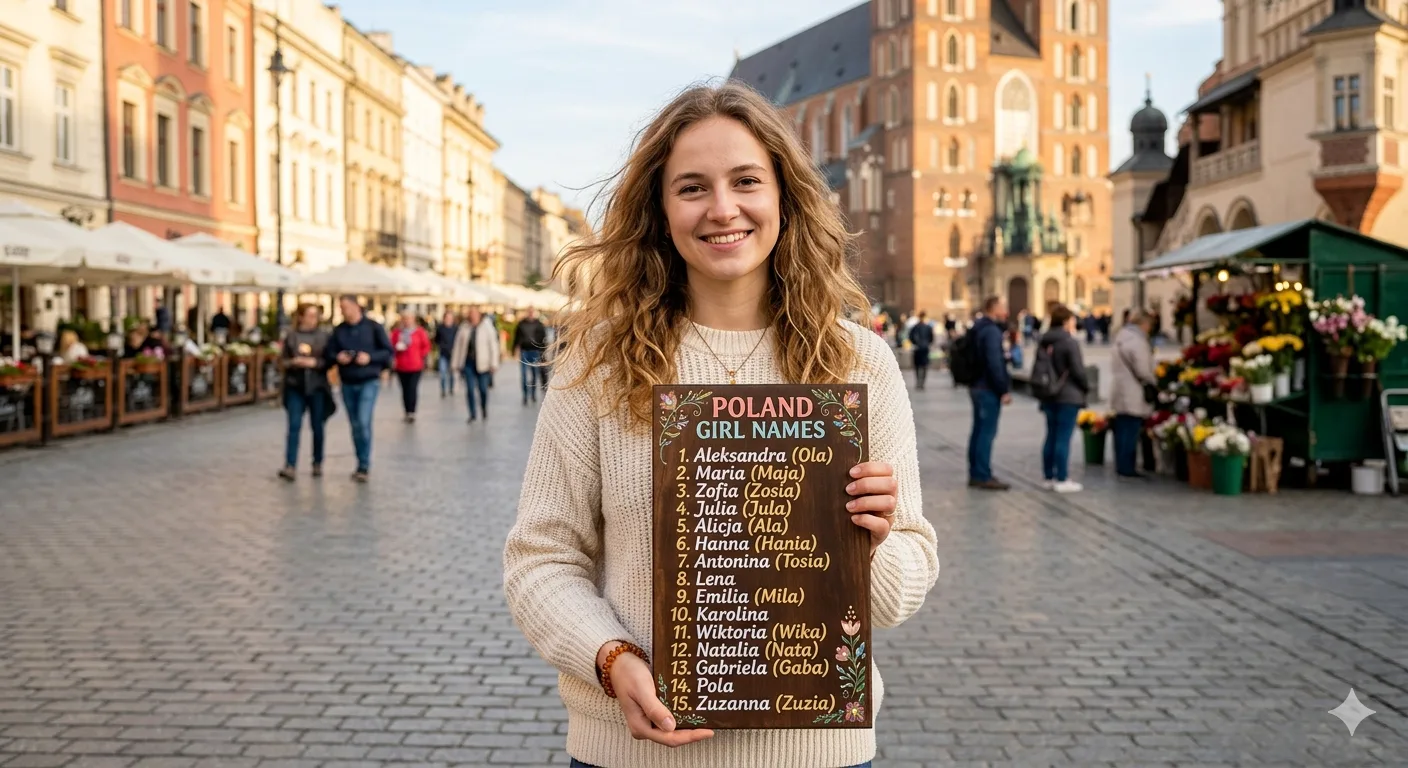
Nature-Inspired Polish Girl Names Blooming in 2026
Poland's extraordinary natural landscape, from the ancient Bialowieza Forest and the dramatic Tatra Mountains to the golden wheat fields of Mazovia and the wild Baltic coastline, has inspired generations of parents to choose names that honor the living world. Nature-inspired girl names are growing in popularity across Poland in 2026, reflecting a deep cultural love for the natural environment that has always been part of Polish identity.
|
Name |
Natural Connection |
Why It Is Beloved |
|
Roza |
Polish, rose flower, beauty |
Most beloved floral name in Poland |
|
Lilia |
Latin/Polish, lily flower, purity |
Delicate and pure, widely loved |
|
Lesna |
Slavic, of the forest, woodland |
Deeply Polish forest connection |
|
Wiosna |
Polish, springtime, season of renewal |
Poetic seasonal name, rare and beautiful |
|
Gwiazda |
Polish, star, celestial light |
Rare celestial beauty, luminous meaning |
|
Jagna |
Polish, pure, related to lamb |
Rural Polish tradition, earthy charm |
|
Kalina |
Slavic, viburnum tree, berry |
Traditional Slavic nature name, musical |
|
Breza |
Slavic, birch tree, grace |
Birch is Poland's national tree, meaningful |
|
Zefir |
Greek via Polish, west wind, breeze |
Airy and rare, beautifully poetic |
|
Kwiata |
Slavic, flower blossom, bloom |
Pure floral beauty in old Polish form |
Roza is the most deeply rooted floral name in the Polish tradition and one of the most beloved girl names in Polish culture overall. The rose has been a symbol of beauty, love, and devotion in Polish poetry, art, and folk tradition for centuries, making Roza a name that feels completely natural and deeply resonant in a Polish context. It also has the advantage of being easy to say and write while carrying extraordinary cultural weight.
Kalina deserves special attention as one of the most distinctly Slavic of all Polish nature names. The kalina, or viburnum berry, appears throughout Polish and broader Slavic folk music, poetry, and tradition as a symbol of Ukrainian and Polish national identity, of young maidenhood, and of the beauty of the natural world. Choosing Kalina for a daughter is choosing a name steeped in folk tradition, poetry, and the deep Slavic love of the living earth.
You can also use our Name Generator Tool to create unique names instantly. Finland Girl Names
Polish Girl Names Honoring the Catholic Faith and Tradition
Poland's Catholic faith is not simply a religious affiliation but a fundamental aspect of national identity that has shaped the country's culture, history, language, and of course its naming traditions for over a thousand years. Religious girl names in Poland draw on the rich calendar of saints, biblical figures, and Marian devotion that defines Polish Catholic life, and they carry a spiritual depth that many Polish families find essential in a name for their daughter.
|
Name |
Faith Tradition and Meaning |
Cultural Significance |
|
Maria |
Hebrew, beloved, the Virgin Mary |
Queen of Poland, most sacred name |
|
Anna |
Hebrew, grace, God has favored me |
Saint Anne, beloved across all Poland |
|
Agnieszka |
Greek, pure, holy, Saint Agnes |
One of Poland's most loved saint names |
|
Katarzyna |
Greek, pure, Saint Catherine |
Doctor of the Church, honored name |
|
Magdalena |
Hebrew, woman of Magdala, biblical |
Mary Magdalene, profound and beautiful |
|
Urszula |
Latin, little bear, Saint Ursula |
Beloved Polish saint name, traditional |
|
Rozalia |
Latin, rose, Saint Rosalia |
Marian floral connection, devotional |
|
Salomea |
Hebrew, peace, Saint Salomea |
Polish saint, rare and deeply meaningful |
|
Jadwiga |
Germanic, Saint Jadwiga queen |
Canonized Polish queen, national saint |
|
Faustyna |
Latin, lucky, Saint Faustyna |
Blessed Faustyna of Divine Mercy, iconic |
Faustyna carries extraordinary significance in Polish Catholic culture. Saint Faustyna Kowalska, a Polish nun canonized by Pope John Paul II in 2000, is one of the most important saints of the twentieth century Catholic Church. She received the visions that gave the world the Divine Mercy devotion, now one of the most widely practiced Catholic devotions globally. Choosing Faustyna for a daughter today is a profound act of faith and a connection to one of modern Poland's greatest spiritual figures.
The name day tradition in Poland gives religious names an additional layer of cultural significance. Every name in Poland's Catholic calendar has an assigned feast day, and Poles celebrate their name day, called imieniny, as enthusiastically as their birthday. Choosing a name with a well-known feast day in the Polish calendar means giving your daughter a special day of celebration every year, a tradition that remains vibrantly alive across the country.
How Names Are Chosen in Polish Culture and Society
Understanding how Polish families approach the naming process reveals the rich and layered cultural landscape that makes Polish baby names so meaningful and diverse. Several powerful forces shape naming decisions in Poland, and exploring them helps any parent understand the deep intentions that lie behind the most beloved Polish girl names.
The Name Day Calendar and Catholic Tradition
Poland's Catholic naming tradition is built around the liturgical calendar of saints. Historically, Polish children were often given the name of the saint whose feast day fell on their birthday, a practice that directly tied their identity to the rhythm of the Church year. Even today, many Polish parents consult the liturgical calendar when choosing a name, seeking a saint who carries qualities they hope their daughter will embody. The imieniny celebration that follows is one of the warmest and most distinctly Polish social traditions.
Family Heritage and Ancestral Continuity
Polish families place enormous value on the continuity of names through generations. It is very common in Poland to name a daughter after her grandmother, great-grandmother, or another beloved female relative, creating a living thread of memory and love that connects generations. This practice means that even very old or rare traditional names like Halina, Irena, or Janina remain in circulation because grandchildren are named in honor of grandparents who bore those names.
Slavic Identity and Cultural Pride
There is a growing movement among Polish parents toward choosing names with pure Slavic roots rather than Latin or Greek-derived names. This trend reflects a deeper cultural conversation about Polish identity, national heritage, and the desire to celebrate what is uniquely and irreducibly Polish. Names like Bogumila, Radoslawa, and Milena draw on the oldest layer of Polish cultural memory and are being embraced by parents who want their children to carry that heritage forward.
International Influences and Global Trends
Poland's deep integration into European and global culture means that international naming trends inevitably influence Polish parents. English, French, and Scandinavian names that have become fashionable across Europe are increasingly being adopted in Poland, sometimes in their original form and sometimes Polonized to fit the language's phonetic patterns. This openness to international influence creates a rich and dynamic naming landscape that is constantly evolving.
You can also use our Name Generator Tool to create unique names instantly. Portugal Girl Names
Latest Polish Girl Name Trends Shaping 2026
Polish baby girl naming trends in 2026 reflect a fascinating and sometimes surprising intersection of forces including religious revival, Slavic pride, international openness, and a powerful nostalgia for names that carry genuine history. Several clear patterns are defining the naming landscape across Poland right now.
Short and sweet names are enormously popular. Names with just two or three syllables, like Maja, Lena, Ola, Iga, and Nina, are consistently among the most chosen names in Poland. Polish parents appreciate names that feel easy and natural in daily life while retaining real beauty and cultural connection. This preference for simplicity without sacrificing meaning or elegance is one of the defining features of Polish naming in 2026.
Old Slavic names are experiencing a remarkable revival. After decades when Latin-derived saint names dominated Polish naming culture, parents are increasingly turning to names with deep Slavic roots. Names like Milena, Zlata, Bozena, Wanda, and even rarer compound names like Bogumila are being chosen with pride by parents who want to honor their pre-Christian Slavic heritage alongside their Catholic faith.
Names associated with beloved Polish historical and cultural figures are gaining ground. Poland's extraordinary history, full of heroic monarchs, brilliant artists, fearless freedom fighters, and world-changing scientists, provides a rich source of naming inspiration. Jadwiga honors the great medieval queen and saint. Maria honors the greatest Polish scientist, Marie Curie. Irena honors the heroic Irena Sendler who saved Jewish children in the Warsaw Ghetto. Naming a daughter after a historical heroine is a deeply meaningful trend.
International names with Polish spellings are everywhere. Oliwia, Aleksandra, Emilia, Amelia, and similar names represent the desire to participate in international naming culture while keeping one foot firmly planted in Polish linguistic tradition. These names give daughters global wearability while remaining unmistakably Polish in their spelling and pronunciation.
Two-name combinations are increasingly fashionable. Polish families have a long tradition of giving children two first names, and this practice is enjoying a renaissance in 2026. Combinations like Maria Zofia, Anna Julia, or Maja Aleksandra honor multiple traditions simultaneously and give a daughter a richness of naming heritage that a single name cannot provide on its own.
Expert Tips for Choosing the Perfect Stylish Polish Girl Name
Honor the name day calendar. In Polish culture, a name is not just a label but a connection to a saint, a feast day, and a living tradition. Look up the feast day associated with any name you are considering and think about whether the saint behind the name carries qualities you admire. Giving your daughter a name with a celebrated feast day also gives her a second birthday of sorts, a warm Polish tradition she will enjoy all her life.
Consider how the name sounds in Polish. The Polish language has its own phonetic music, and names that fit naturally into Polish sound patterns will always feel more comfortable and beautiful in everyday Polish life. Pay attention to how the name sounds when spoken aloud by Polish speakers, with the characteristic Polish stress on the second-to-last syllable, and make sure it feels right in that context.
Think about diminutives and nicknames. Polish has an extraordinarily rich tradition of diminutive forms and affectionate nicknames. Zofia becomes Zosia. Aleksandra becomes Ola. Maria becomes Marysia. Before choosing a formal name, explore the diminutive forms that will naturally emerge from it in Polish daily life, because your daughter will almost certainly be called by her diminutive far more often than by her full formal name.
Explore your family's regional heritage. Poland has distinct regional naming traditions, with different preferences in Mazovia, Malopolska, Silesia, Pomerania, and other regions. If you know your family's regional roots within Poland, exploring names particularly associated with that region can add a beautiful layer of specificity to your choice.
Balance tradition and freshness. The most successful Polish girl names in 2026 tend to be those that honor tradition while feeling fresh and wearable for a child growing up in today's world. You do not have to choose between the old and the new because the best Polish names manage to be both at once. Maja feels modern but has ancient May roots. Lena feels contemporary but connects to classical European naming. Look for names where history and freshness meet.
Generate More Names: Girl Names Generator
Conclusion: Celebrating the Beautiful World of Polish Girl Names
Polish girl names are among the most beautiful, meaningful, and culturally rich in all of Europe. They carry the music of the Slavic language, the weight of a thousand years of Catholic faith, the pride of a nation that has fought for and won its identity against extraordinary odds, and the warmth of a culture that has always placed the family at the center of life. Whether you choose a timeless classic like Zofia or Maria, a modern favorite like Maja or Lena, a pure Slavic gem like Milena or Zlata, a saint's name full of devotional meaning like Agnieszka or Faustyna, or a rare and distinctive pick like Anastazja or Tekla, you are giving your daughter a name with genuine beauty, depth, and heritage.
The most important thing about choosing a Polish girl name in 2026 is choosing one that resonates with your heart, connects your daughter to a culture and history she can be proud of, and carries the values you hope she will embrace throughout her life. A name is the first gift you give your child. In the rich, melodious, and endlessly generous world of Polish naming tradition, there is a perfect name waiting for every girl born into this extraordinary country.
We hope this complete guide to Polish girl names has inspired you, deepened your appreciation for Polish culture, and helped you discover possibilities you might not have considered before. May your daughter grow up proud of her Polish name, connected to the heritage it represents, and ready to write her own beautiful chapter in the long story of Poland.