 Montenegrin Girl Name Generator
Discover beautiful Montenegrin girl names from Slavic and Balkan heritage
Guides & Articles
Montenegro Girl Names: A Complete Guide to Stylish, Popular and Meaningful Choices
Discover the most beautiful, trending, unique and culturally rich Montenegrin girl names for 2026
Introduction: The Enchanting World of Montenegro Girl Names
Choosing a name for your baby girl is one of the most meaningful and joyful decisions any parent will ever make. In Montenegro, a small yet breathtakingly beautiful country nestled along the Adriatic coast of the Balkans, this tradition carries centuries of cultural depth, spiritual significance, and remarkable linguistic beauty. Montenegrin girl names are shaped by an extraordinary tapestry of Slavic heritage, Orthodox Christian faith, Ottoman historical influence, Mediterranean coastal culture, and a fierce national pride that has defined this land through generations of history and change.
Montenegro, whose very name means Black Mountain, is one of the newest nations in the world, having declared independence in 2006, yet its naming traditions reach back through the mists of Slavic migration and medieval kingdom building. This unique combination of ancient roots and modern national identity makes Montenegrin girl names some of the most fascinating and culturally layered in all of southeastern Europe. The names you find here carry the stories of mountain clans, Orthodox saints, Venetian coastal trade, Ottoman centuries, and the modern aspirations of a people proud to stand on the world stage as their own nation.
In 2026, parents in Montenegro and among the global Montenegrin diaspora are exploring a vibrant range of naming options. Some are honoring deep family traditions by choosing classic Slavic names passed down through generations. Others are embracing beautiful modern Montenegrin girl names that feel fresh and stylish while still rooted in cultural identity. Still others are seeking rare and unique Montenegrin names that reflect the country's rich history and natural landscape. This complete guide explores every dimension of Montenegro baby girl names, from popular favorites and traditional classics to rare gems and the latest naming trends shaping choices today.
Whether you have Montenegrin heritage, are fascinated by Balkan naming traditions, or simply love the sound and meaning of names from this strikingly beautiful part of the world, this guide will take you on a complete journey through the wonderful world of Montenegro girl names.
Explore 500+ free name generators for gaming, social media, Girl or Boy names, and more — find your perfect stylish name in seconds at Stylish Names Generator.
Popular Montenegro Girl Names with Beautiful Meanings
Some Montenegrin girl names have held their place in the hearts of families across the country for generations, consistently appearing among the most loved choices for baby girls. These popular Montenegro girl names combine musical sounds, powerful meanings, and strong cultural resonance rooted in Slavic tradition and Orthodox Christian heritage. If you want a name that feels warmly familiar across Montenegro while carrying genuine depth and significance, these beloved names deserve your closest attention.
|
Name |
Origin / Meaning |
Why It Stands Out |
|
Milica |
Slavic, gracious, dear one |
One of the most beloved names in Montenegro and Serbia |
|
Jelena |
Greek via Slavic, shining light, bright |
Classic and enduring, widely adored across the Balkans |
|
Ana |
Hebrew, grace, favor of God |
Simple, timeless, universally loved in Montenegro |
|
Marija |
Hebrew via Slavic, beloved, wished-for |
Most sacred feminine name, deeply rooted in faith |
|
Katarina |
Greek, pure, clear |
Classic European name with elegant Montenegrin form |
|
Nina |
Spanish or Slavic, little girl, grace |
Short, sweet, and widely popular in Montenegro |
|
Ivana |
Hebrew via Slavic, God is gracious |
Feminine form of Ivan, deeply traditional and beloved |
|
Jovana |
Hebrew via Slavic, God is gracious |
Montenegrin and Serbian classic, joyful meaning |
|
Tamara |
Hebrew, palm tree, date palm |
Warmly beloved throughout the Balkan region |
|
Teodora |
Greek, gift of God |
Royal and religious heritage, beautifully elegant |
|
Dragana |
Slavic, dear, precious, beloved |
Deeply Slavic name expressing love and value |
|
Vesna |
Slavic, spring, herald of spring |
Nature-inspired Slavic gem, poetic and fresh |
Milica stands as perhaps the most iconic Montenegrin and Serbian feminine name, combining the beautiful Slavic root meaning gracious and dear with a soft, musical sound that works perfectly in the South Slavic languages spoken across Montenegro. It carries royal historical associations, as Saint Milica was a revered Serbian princess and later a nun who is venerated in the Serbian Orthodox Church, which holds deep significance for the largely Orthodox Christian population of Montenegro.
Jelena, derived from the Greek Helen through centuries of Slavic linguistic evolution, means shining light or bright one, carrying the same luminous symbolism that has made Helen one of the most celebrated names in all of European history. In Montenegro, Jelena has a distinctively Slavic warmth that the original Greek form lacks, making it feel deeply native while still connecting to the broader European cultural tradition. Names like Marija and Ana reflect the powerful influence of Orthodox Christianity on Montenegrin naming culture, honoring the Virgin Mary and the grace of God through the most fundamental naming choices.
Modern and Trending Montenegrin Girl Names in 2026
Montenegrin parents in 2026 are increasingly drawn to girl names that balance contemporary freshness with cultural authenticity. Modern trending Montenegrin girl names tend to have a stylish, vibrant quality that feels right for a child growing up in today's connected and rapidly changing world, while still honoring the Slavic linguistic beauty and cultural heritage that defines Montenegrin identity. Here are the names gaining the most momentum across Montenegro right now.
|
Name |
Meaning |
Why Trending |
|
Sara |
Hebrew, princess, noble lady |
International appeal with warm Montenegrin feel |
|
Lena |
Greek or Slavic, light, shining |
Short, modern, hugely fashionable across Europe |
|
Sofia |
Greek, wisdom, knowledge |
European-wide trend reaching Montenegro strongly |
|
Mia |
Slavic or Scandinavian, beloved, mine |
Ultra-modern, stylish and increasingly popular |
|
Ema |
Germanic, whole, universal |
Modern form of Emma, growing fast in Montenegro |
|
Luna |
Latin, the moon |
Celestial trend arriving in Montenegro beautifully |
|
Lea |
Hebrew, weary or delicate, graceful |
Short and stylish, very current in Montenegro |
|
Kristina |
Greek, follower of Christ |
Classic faith name with very modern feel today |
|
Aleksandra |
Greek, defender of people |
Strong, regal name seeing fresh appreciation |
|
Maja |
Slavic or Latin, great, mother goddess |
Playful, light, and very fashionable right now |
|
Tara |
Celtic or Sanskrit, rocky hill, star |
Montenegrin river name turned beautiful baby name |
|
Zorana |
Slavic, dawn, aurora of morning |
Nature and sky-inspired, beautifully poetic |
One of the most interesting developments in modern Montenegrin girl naming is the way internationally familiar names are being embraced alongside traditionally Slavic choices. Sofia, Mia, Lena, and Sara represent a new generation of Montenegrin baby girl names that feel equally at home in Podgorica and Paris, reflecting Montenegro's growing engagement with the broader European community and its aspirations toward European Union membership. These names carry a cosmopolitan lightness while still sounding beautiful in the South Slavic language environment of Montenegro.
Tara holds a uniquely special place in Montenegro's modern naming landscape. The Tara River Canyon, which runs through northern Montenegro, is one of the deepest canyons in the world and one of Europe's most spectacular natural wonders. Choosing the name Tara for a Montenegrin daughter is both a fashionable contemporary choice and a profound act of honoring the country's extraordinary natural heritage. Zorana, meaning dawn or morning light in Slavic, captures the poetic nature-connected sensibility that characterizes so much of Montenegrin culture and its deep relationship with the stunning landscape of the Black Mountain land.
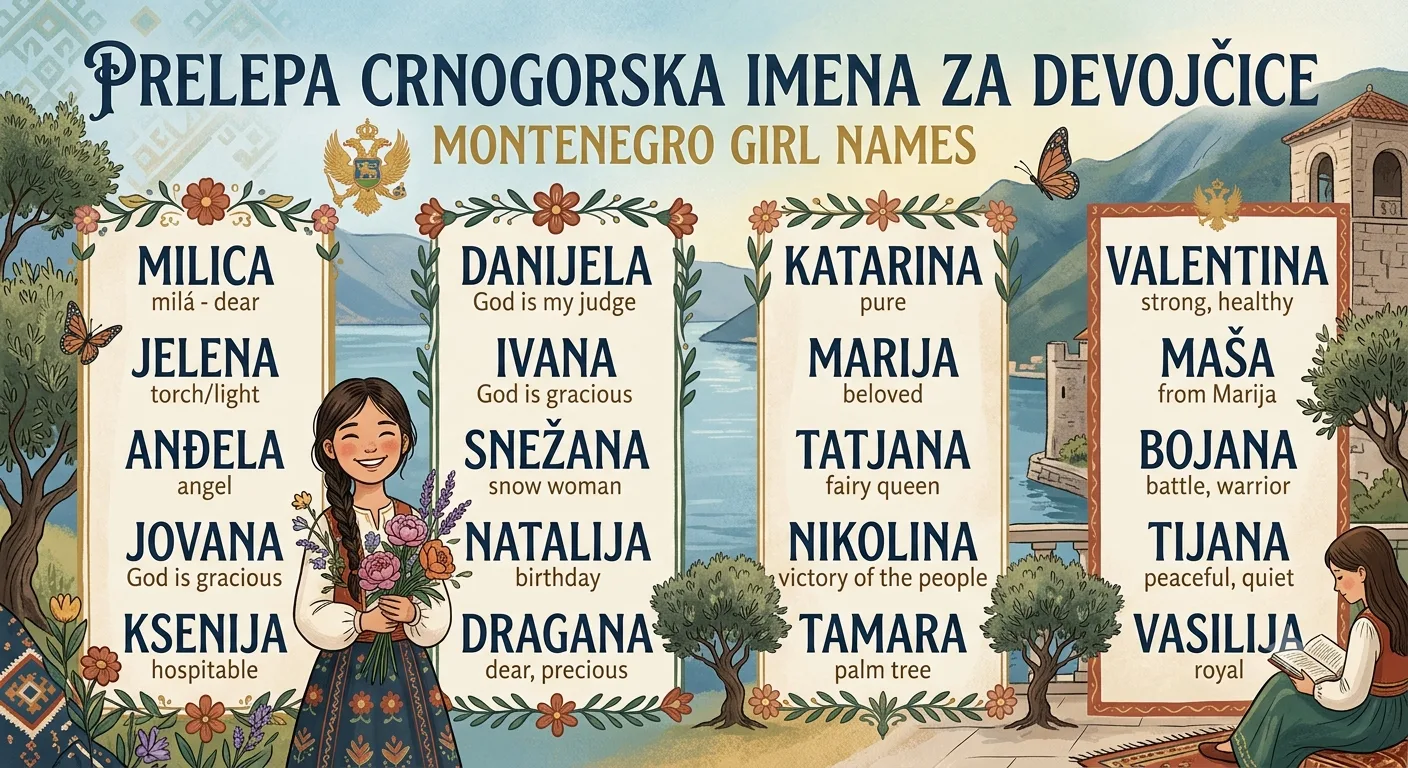
Traditional and Classical Montenegrin Girl Names That Never Go Out of Style
Traditional Montenegrin girl names carry the weight of centuries, the beauty of Slavic linguistic heritage, and the deep spiritual meaning of Orthodox Christian naming tradition. These classical names have been passed down through Montenegrin families for generations, often linked to celebrated saints of the Serbian Orthodox Church, beloved heroines of Montenegrin epic poetry, or simply the enduring beauty of the Slavic naming tradition. They carry a timeless dignity that modern Montenegrin parents are rediscovering with fresh appreciation.
|
Name |
Origin / Meaning |
Why It Endures |
|
Mara |
Hebrew via Slavic, bitter, strong one |
Ancient and deeply rooted in Slavic tradition |
|
Stana |
Slavic, she who stands, steadfast |
Traditional Montenegrin name of great character |
|
Danica |
Slavic, morning star, Venus |
One of the most beautiful traditional Slavic names |
|
Zorka |
Slavic, dawn, first light |
Poetic traditional name honoring the morning |
|
Biljana |
Slavic, herb, healing plant |
Nature-rooted traditional name, full of life |
|
Radmila |
Slavic, joy of the people, gladness |
Compound Slavic name with warm, joyful meaning |
|
Svetlana |
Slavic, holy light, sacred brightness |
Classic name meaning light and holiness |
|
Vukosava |
Slavic, wolf-glory, strength of the wolf |
Distinctly Montenegrin warrior heritage name |
|
Ljubica |
Slavic, beloved, little love |
Tender traditional name, widely cherished |
|
Nevena |
Slavic, marigold flower, ever new |
Floral traditional name, beautifully poetic |
|
Gordana |
Slavic, proud, dignified woman |
Classic name expressing dignity and pride |
|
Slavica |
Slavic, glory, Slavic people |
Proud name honoring Slavic heritage and glory |
Danica is arguably one of the most poetic and beautiful traditional Slavic names, meaning morning star or the planet Venus as it appears before sunrise. This name has been beloved in Montenegrin and broader South Slavic tradition for centuries because it captures the beauty of the natural world in a single graceful word. Danica has appeared in Slavic folk poetry and mythology as a personification of the morning light itself, which gives this name an almost mythological quality that makes it simultaneously ancient and timelessly beautiful.
Vukosava deserves special attention as a name that is distinctly Montenegrin in character and historical resonance. The wolf, or vuk in South Slavic languages, holds a sacred place in Montenegrin and broader Slavic symbolic culture, representing strength, loyalty, fierce protection of family and tribe, and the wild mountain spirit that Montenegrins have long associated with their own national character. Vukosava, meaning wolf-glory or glory of the wolf, is a name rooted in the warrior heritage of the Montenegrin mountain clans and carries a powerful pride in the country's history of fierce independence. While less commonly chosen today, it represents a proud tradition of names that honor Montenegro's distinctive mountain culture.
You can also use our Name Generator Tool to create unique names instantly. Sudan Girl Names
Rare and Unique Montenegro Girl Names That Truly Stand Out
For parents seeking something genuinely distinctive, the Montenegrin naming tradition offers a wealth of rare and uncommon choices that are deeply rooted in local history, mythology, and the extraordinary landscape of the Black Mountain country. These unique Montenegro girl names are perfect for families who want their daughter to have a name that is truly one of a kind, deeply meaningful, and connected to the rich specificity of Montenegrin culture and heritage.
|
Name |
Origin / Meaning |
Why It Stands Out |
|
Dunja |
Persian via Slavic, quince fruit, world |
Rare and beautiful, beloved in Montenegro |
|
Cvijeta |
Slavic, flower, blossom |
Rare floral name from Montenegrin literary tradition |
|
Stojanka |
Slavic, steadfast, she who endures |
Rare traditional name with powerful meaning |
|
Hristica |
Greek via Slavic, follower of Christ |
Rare religious name, deeply rooted in faith |
|
Zlata |
Slavic, golden, made of gold |
Beautiful rare name meaning golden treasure |
|
Ksenija |
Greek, hospitality, stranger welcome |
Rare and elegant, Orthodox saint name |
|
Milena |
Slavic, gracious, pleasant, dear |
Rare Slavic gem with warm, gentle meaning |
|
Roksana |
Persian, dawn, brilliant light |
Rare historical name with exotic beauty |
|
Smiljana |
Slavic, immortelle flower, everlasting |
Extremely rare floral name, hauntingly lovely |
|
Vojislava |
Slavic, warrior glory, battle fame |
Distinctly Montenegrin warrior heritage name |
|
Zorislava |
Slavic, glory of dawn, morning glory |
Rare compound name of extraordinary beauty |
|
Budimka |
Slavic, she who awakens, awakener |
Rare and uniquely Montenegrin, deeply poetic |
Cvijeta carries one of the most remarkable stories in all of Montenegrin cultural history. Cvijeta Zuzoric was a celebrated sixteenth century poet from Dubrovnik, the coastal city that was deeply connected to the Montenegrin and South Slavic cultural world during the Renaissance period, who wrote in both Italian and the local language and was renowned throughout the Adriatic as one of the most brilliant literary minds of her era. Choosing the name Cvijeta for a daughter today honors this forgotten heroine of South Slavic literary culture while also giving the child a name of rare and exquisite beauty, meaning simply flower or blossom in Slavic.
Zlata, meaning golden or made of gold, is a rare Slavic name of extraordinary beauty and warmth. Gold in Slavic culture carries associations not just with material wealth but with spiritual value, radiance, and the highest quality of character. A daughter named Zlata carries with her the suggestion of something precious and luminous at the very core of her being. While rarely chosen in Montenegro today, Zlata has a quiet, understated beauty that makes it a genuinely distinctive choice for parents who want something deeply rooted in Slavic tradition without being commonplace.
Nature-Inspired Montenegro Girl Names Reflecting the Black Mountain Land
Montenegro is blessed with some of the most dramatic and breathtaking natural scenery in all of Europe. From the crystal waters of the Adriatic coast and the ancient depths of Lake Skadar to the soaring peaks of the Durmitor massif, the roaring gorges of the Tara River Canyon, and the dense forests of the Biogradska Gora, this small country contains an astonishing variety of natural beauty. It is no surprise that nature-inspired girl names carry special resonance in Montenegro, where the landscape is woven into the very fabric of national identity and cultural pride.
|
Name |
Natural Connection |
Why It Is Beloved |
|
Vesna |
Slavic goddess of spring, seasonal herald |
Poetic nature name welcoming spring and life |
|
Danica |
Morning star, Venus before dawn |
Celestial beauty, ancient Slavic sky worship |
|
Zorka |
Dawn, first light of morning |
Nature-connected, poetic greeting of new day |
|
Nevena |
Marigold flower, calendula blossom |
Floral name celebrating garden and meadow |
|
Smiljana |
Immortelle, everlasting flower |
Mountain flower celebrated across Montenegro |
|
Tara |
Tara River, wild mountain waters |
Named for Montenegro's most iconic river |
|
Biljana |
Herb, healing plant, green life |
Earth-connected name honoring plant world |
|
Jasna |
Slavic, clear, bright as sunlight |
Nature light name, clear sky energy |
|
Planinka |
Slavic, mountain girl, highland woman |
Deeply Montenegrin, honoring mountain life |
|
Violeta |
Latin via Slavic, violet flower |
Beloved floral name across the Balkans |
|
Jelka |
Slavic, fir tree, evergreen |
Mountain tree name, quietly beautiful |
|
Dubravka |
Slavic, oak grove, forest of oaks |
Forest-rooted name honoring the sacred oak |
Tara holds a place of supreme natural and cultural importance in Montenegro. The Tara River Canyon, carved through the limestone mountains of northern Montenegro over millions of years, is the deepest canyon in Europe and one of the deepest in the entire world, reaching depths of over 1,300 meters in some places. The river is celebrated for its pristine turquoise waters, its extraordinary biodiversity, and its designation as a UNESCO World Heritage Site as part of the Durmitor National Park. Naming a daughter Tara in Montenegro is an act of deep love for the country's most spectacular natural wonder.
Vesna, the Slavic goddess of spring and the herald of the warmer seasons, represents one of the oldest and most poetic naming traditions in the South Slavic world. Before Christianity arrived in the Balkans, the Slavic peoples venerated nature spirits and seasonal deities, and Vesna was among the most beloved of these, celebrated as the one who brings the warmth, the flowers, and the renewal of life after the long mountain winter. Choosing the name Vesna for a daughter born in Montenegro today connects her to the very oldest layers of Slavic spiritual and cultural memory while giving her a name of genuine freshness and natural beauty.
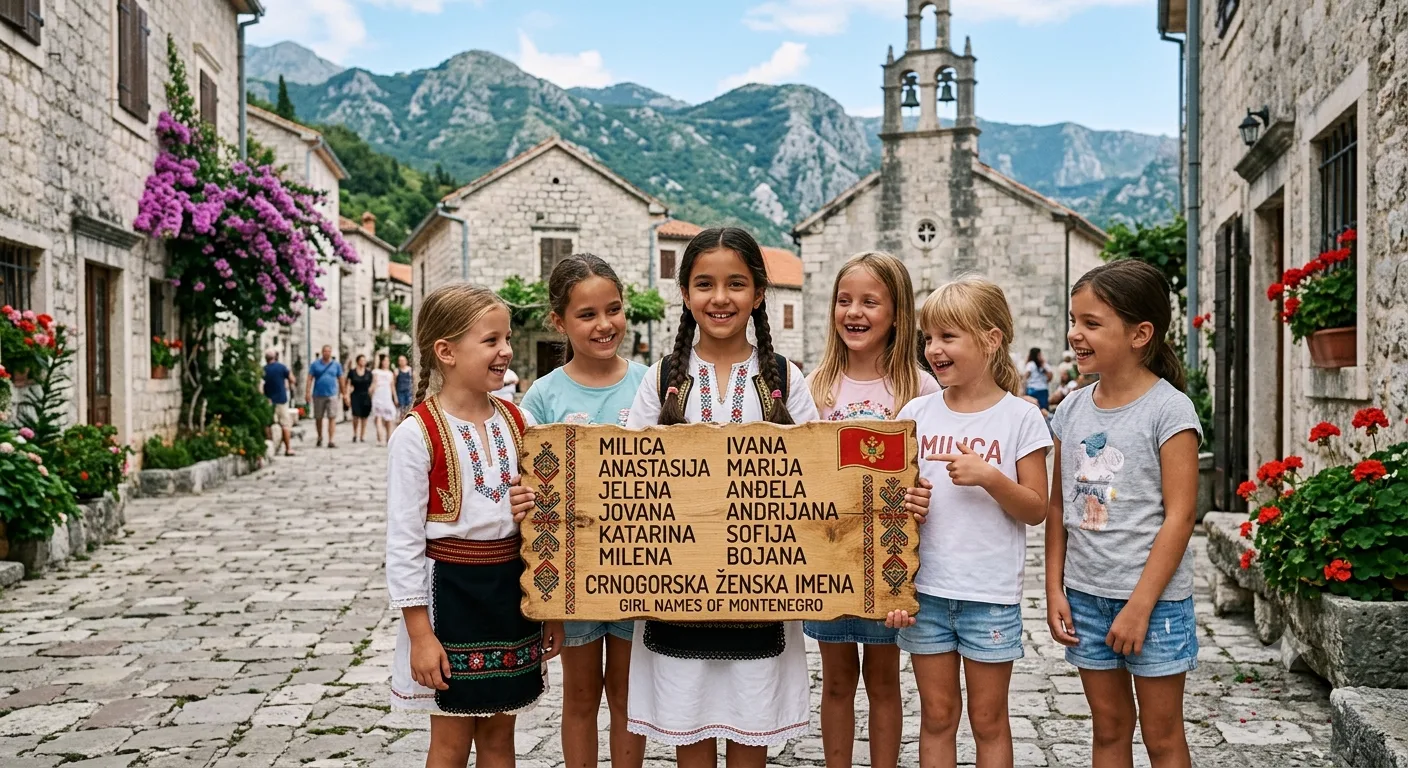
Montenegro Girl Names Rooted in Orthodox Christian Heritage
The Serbian Orthodox Church occupies a central and defining place in Montenegrin cultural and spiritual life. For centuries, the Orthodox faith has shaped not only the spiritual practices of the Montenegrin people but their naming traditions, their festivals, their art, and their understanding of what it means to live a meaningful and honoring life. Orthodox saint names form the backbone of the traditional Montenegrin naming tradition, and many of the most beloved girl names in Montenegro carry the memory of female saints venerated in the Orthodox calendar.
|
Name |
Saint or Religious Significance |
Cultural Role |
|
Marija |
Virgin Mary, mother of Christ |
Most sacred name in Orthodox tradition |
|
Teodora |
Saint Theodora, empress and martyr |
Royal saint, deeply venerated in Orthodoxy |
|
Paraskeva |
Saint Paraskeva, venerated healer |
Major Orthodox female saint across Balkans |
|
Irena |
Saint Irene, empress, bringer of peace |
Peace-bearing saint, widely loved |
|
Magdalena |
Mary Magdalene, faithful disciple |
New Testament saint, deeply meaningful |
|
Barbara |
Saint Barbara, protector of the dying |
Major female martyr saint in Orthodoxy |
|
Katarina |
Saint Catherine of Alexandria, martyr |
Great martyr of the Orthodox Church |
|
Anastazija |
Saint Anastasia, resurrection bearing |
Easter-connected saint name, joyful |
|
Vasilija |
Greek, queenly, royal |
Female form of saint Vasili, noble meaning |
|
Ksenija |
Saint Xenia of Petersburg, fool for Christ |
Deeply venerated Russian and Balkan saint |
|
Petronija |
Latin, feminine of Peter, rock |
Montenegrin female form of Peter, patron saint |
|
Anica |
Hebrew via Slavic, grace, favor |
Beloved diminutive of Ana, deeply traditional |
Paraskeva holds a particularly important place in the religious naming tradition of Montenegro and the broader Orthodox Balkan world. Saint Paraskeva of the Balkans, also known as Petka in Serbian and Macedonian tradition, is one of the most widely venerated female saints in the Orthodox Church and was a real historical figure who lived in the eleventh century in what is now Bulgaria and Romania. Her relics are believed to have miraculous healing powers, and she is the patron saint of many towns and villages across the Balkans. Choosing the name Paraskeva for a daughter is an act of deep Orthodox devotion and cultural pride.
The naming tradition of the Slava, the family patron saint day that is one of the most distinctive and beautiful practices of Serbian Orthodox culture, has deeply influenced how Montenegrin families think about names. Every Montenegrin Orthodox family celebrates a Slava, honoring a particular saint who has protected the family across generations, and it is common for daughters to receive names connected to the family's patron saint or the saints venerated on the days nearest to their birth. This tradition gives Montenegrin girl names a deeply personal and spiritually significant dimension that goes beyond simple aesthetics.
You can also use our Name Generator Tool to create unique names instantly. Suriname Girl Names
Beautiful Montenegro Baby Girl Name Ideas Inspired by History and Legend
Montenegro's history is rich with remarkable women who have inspired naming traditions across generations. From the heroines of Montenegrin epic poetry to the queens and noblewomen of medieval Zeta, from the brave women who supported their men in the mountain battles for independence to the cultural figures who shaped modern Montenegrin identity, the country's history offers a wealth of inspiration for parents seeking names with genuine historical weight and meaning.
|
Name |
Historical Connection |
Inspirational Story |
|
Desanka |
Slavic, she who comes down, gift |
Honored by beloved Yugoslav poetess Desanka |
|
Milunka |
Slavic, gracious warrior girl |
Inspired by Milunka Savic, legendary hero |
|
Jelena |
Greek-Slavic, bright light |
Name of medieval Serbian queens and saints |
|
Zoroslava |
Slavic, dawn-glory, morning fame |
Poetic compound name of the old Slavic world |
|
Vladislava |
Slavic, she who governs with glory |
Noble name of Slavic ruling tradition |
|
Bozana |
Slavic, divine, given by God |
Spiritual name honoring divine gift of life |
|
Kosara |
Slavic, from Kosovo field, basketweaver |
Name of heroic medieval princess of Zeta |
|
Jakvinta |
Latin via Slavic, hyacinth flower |
Rare historical name of coastal Montenegro |
|
Jelisaveta |
Hebrew via Slavic, my God is an oath |
Old Slavic form of Elizabeth, deeply noble |
|
Dobrica |
Slavic, good, kind, virtuous woman |
Virtue name celebrating goodness of character |
Milunka deserves particular attention as a name connected to one of the most extraordinary figures in all of Balkan military history. Milunka Savic was a Serbian and Montenegrin woman who fought disguised as a man in the Balkan Wars and First World War, becoming one of the most decorated female combatants in the history of warfare. She was awarded the French Legion of Honor, the Russian Medal of St. George, the Serbian Medal of Milos Obilic, and numerous other honors across allied nations. Her courage, her ferocity in battle, and her unbreakable spirit have made her a legendary figure in the national memory of Montenegro and Serbia alike.
Kosara holds a special place in the history of medieval Zeta, the precursor state to Montenegro. Princess Kosara was the daughter of the Zetan ruler Jovan Vladimir, and her story is one of the most romantic and tragic in the medieval history of the eastern Adriatic. Her name, connected to the Slavic word for a small basket or the Kosovo field, carries an ancient beauty that connects modern Montenegrin daughters to the very roots of their country's medieval history. Choosing the name Kosara today is a quiet act of honoring Montenegro's deepest historical memory.
Stylish Montenegro Girl Names Inspired by the Adriatic Coastline
The Montenegrin coast, though less than three hundred kilometers long, is one of the most strikingly beautiful stretches of shoreline in the entire Mediterranean world. The Bay of Kotor, often called the southernmost fjord in Europe, the ancient walled city of Kotor itself, the beach towns of Budva and Petrovac, and the fishing village of Perast with its two tiny island churches all contribute to a coastal cultural identity that is distinct from the mountain traditions of the interior. Names inspired by the Adriatic coast carry a lighter, more Mediterranean spirit.
|
Name |
Coastal or Mediterranean Connection |
Why It Shines |
|
Marina |
Latin, of the sea, sea-born |
Beloved across all Mediterranean coastal cultures |
|
Adriana |
Latin, from the Adriatic, sea woman |
Direct tribute to the Adriatic Sea itself |
|
Korana |
Connected to Kotor, Bay of Kotor |
Rare name inspired by Montenegro's gem city |
|
Petrija |
Latin-Slavic, rock, stone by the sea |
Coastal stone name, deep Montenegrin roots |
|
Dalmacija |
Latin, Dalmatia, coastal homeland |
Rare historical coastal region name |
|
Boka |
South Slavic, bay, inlet of the sea |
Direct inspiration from the Bay of Kotor |
|
Morena |
Latin-Slavic, of the sea, dark water |
Sea-connected name of coastal beauty |
|
Dobrota |
Slavic, goodness, kindness, bounty |
Name of beloved village on Bay of Kotor |
|
Svitlana |
Slavic, holy light, sea-reflected light |
Variant of Svetlana with coastal lightness |
|
Verica |
Slavic, faith, little believer |
Traditional name beloved on Montenegrin coast |
Marina is perhaps the most universally beloved coastal name in Montenegro and across the entire Mediterranean world, carrying the Latin root meaning of the sea or born from the sea. In a country where the Adriatic coastline is one of the defining features of national identity and natural beauty, Marina connects a Montenegrin daughter to the shimmering waters that have shaped coastal culture for millennia. The name is equally at home in the mountain villages of the interior as on the sunny terraces of Budva or the ancient alleyways of Kotor's old town.
Adriana carries a direct and beautiful tribute to the Adriatic Sea itself, named after the ancient Roman city of Adria near the mouth of the Po River in northeastern Italy. The Adriatic Sea forms Montenegro's entire western border and gives the country its most internationally celebrated natural attraction. For Montenegrin families with a deep connection to the coast, Adriana is a name of profound geographical and emotional resonance, connecting a daughter to the sea that has defined so much of her country's history, trade, culture, and beauty.
Understanding Montenegro Naming Traditions and Cultural Practices
Montenegro's approach to naming daughters reflects a rich interplay of Slavic tradition, Orthodox Christian faith, family loyalty, and the fierce clan culture that has characterized Montenegrin society for centuries. Understanding how names are chosen in Montenegro illuminates not just the individual names themselves but the deeper values and worldview that they express.
The Role of Orthodox Christianity in Montenegrin Naming
The Serbian Orthodox Church is the dominant spiritual institution of Montenegro, and its calendar of saints profoundly shapes naming traditions. Many Montenegrin families choose names from the Orthodox saints calendar, often giving a daughter a name connected to the feast day nearest to her birth or to the family's patron saint. This practice of saint naming, known in the broader Orthodox world as name day celebration, means that a Montenegrin girl's name is often connected to a specific spiritual protector whose feast day becomes an important annual celebration throughout her life.
Family Heritage and Clan Naming Traditions
Montenegro has historically been organized around a strong clan and tribal structure, with extended family networks called bratstvo and pleme forming the basic social unit of Montenegrin mountain society. Within this clan culture, naming practices often honored ancestors and kept the memory of beloved grandparents, great-grandparents, and clan heroes alive through the names given to new generations. It remains common in Montenegro today for daughters to receive names that honor their grandmothers or other respected female relatives, creating living chains of memory that connect the present to the past.
Modern Naming Influences in Contemporary Montenegro
Contemporary Montenegro is a young independent nation actively engaged with European and global culture. Television, social media, international music, and the country's growing tourism industry have all introduced new naming influences into the Montenegrin cultural landscape. Young Montenegrin parents today may be equally drawn to a traditional Slavic name like Milica or Dragana and to a more internationally recognizable name like Sara, Lena, or Sofia. This creative tension between tradition and modernity is producing a fascinating naming culture where old Slavic names sit comfortably alongside pan-European favorites.
Diminutives and Terms of Endearment in Montenegrin Naming
One of the most charming features of South Slavic naming culture, including Montenegrin tradition, is the extraordinarily rich system of diminutives and terms of endearment that grow from formal names. A girl named Milica may be called Mica, Milica, or Milicica at different ages and in different contexts. Ana becomes Anica, Anka, or Anicica. Jelena becomes Jeca, Jelka, or Jelenka. These diminutive forms are not mere nicknames but full expressions of affection and intimacy that carry enormous warmth in Montenegrin family and social life. When choosing a Montenegrin girl name, understanding the natural diminutive forms is an important and delightful part of the decision.
You can also use our Name Generator Tool to create unique names instantly. Morocco Girl Names
Latest Montenegrin Girl Naming Trends Shaping 2026
Montenegrin baby girl naming trends in 2026 reflect a fascinating and dynamic intersection of cultural pride, European integration aspirations, global pop culture, and a renewed appreciation for the beauty of traditional Slavic names. Several clear patterns are defining the naming landscape across Montenegro right now.
There is a strong and growing revival of beautiful traditional Slavic names that had fallen out of fashion in the Yugoslav era and the turbulent decade of the 1990s. Names like Danica, Zorka, Vesna, Nevena, and Ljubica are being rediscovered by young Montenegrin parents who feel a renewed sense of cultural pride in their Slavic heritage and want names that express this identity distinctively. These names carry a poetic, nature-connected beauty that feels fresh and meaningful in the context of a newly independent nation building its cultural identity.
Short international names continue to gain popularity alongside these traditional revivals. Sara, Lena, Mia, Lea, and Ema reflect Montenegro's growing integration with European culture and its younger generation's comfort moving between Montenegrin and broader European social contexts. These names work beautifully in both South Slavic and international environments, which is a practical consideration for Montenegrin families who travel, work abroad, or have children in international schools.
Nature-inspired names are experiencing a surge of popularity that mirrors global trends but carries a specifically Montenegrin character. The extraordinary natural beauty of Montenegro, recognized through its UNESCO World Heritage Sites, its national parks, and its international reputation as a destination of outstanding natural splendor, is inspiring parents to choose names that honor the mountains, rivers, forests, and coastal waters of their country. Names like Tara, Planinka, Zorka, Zorislava, and Dubravka all carry this nature-honoring spirit.
There is also growing interest in genuinely rare and historically significant Montenegrin names among younger parents who want something that is distinctly from their own culture rather than shared across the broader Slavic world. Names like Kosara, Cvijeta, Vukosava, and Smiljana represent this trend toward deep cultural specificity, connecting daughters to the particular history and heritage of Montenegro rather than just the broader South Slavic tradition.
Expert Tips for Choosing the Perfect Stylish Montenegrin Girl Name
Start with meaning and personal resonance. A name that carries a meaning you find genuinely beautiful or that connects to something important in your family's story will always feel more special than a name chosen only for its current popularity. In Montenegrin tradition, the meaning of a name is understood to be a blessing and a statement of value, so choosing a name whose meaning genuinely moves you is the most important first step.
Honor your family's religious and cultural heritage. If your family has a particular patron saint whose feast day shapes your year, consider names connected to that saint or to the broader Orthodox saint tradition. If your family has a specific clan or regional identity within Montenegro, explore the naming traditions of that heritage for names that carry local significance alongside their general beauty.
Consider how the name sounds in both formal and affectionate contexts. In Montenegrin culture, the diminutive and endearment forms of names are used constantly in daily family and social life. Make sure you love not just the formal name but the natural Montenegrin diminutive forms that will likely emerge as your daughter grows. Milica becomes Mica. Dragana becomes Draga. Ana becomes Anica. These tender forms are as much a part of the name as the formal version.
Think about meaning in the context of national identity and pride. Montenegro is a small and young nation with an outsized sense of cultural pride rooted in centuries of fierce independence. A name that honors this heritage, whether through its connection to Orthodox sainthood, Slavic nature poetry, the warrior tradition, or the extraordinary landscape of the country, carries a special resonance that purely fashionable names may lack.
Balance tradition with practicality for a child growing up in a connected world. Montenegro is a country with strong European aspirations and a significant diaspora community around the world. A name that works well in both Montenegrin and broader European contexts gives a child linguistic flexibility and ease across different social environments. Many beautiful traditional Montenegrin names like Lena, Nina, Maja, Tamara, and Aleksandra achieve exactly this balance naturally.
Generate More Names: Girl Names Generator
Conclusion: Celebrating the Rich Beauty of Montenegro Girl Names
Montenegro girl names are among the most beautiful, culturally layered, and historically rich in all of southeastern Europe. They tell the story of a small but extraordinary nation shaped by the fierce independence of mountain clan culture, the deep spiritual life of Orthodox Christianity, the poetic beauty of the Slavic language tradition, the shimmering influence of the Adriatic coastline, and the extraordinary natural landscape that has defined Montenegrin identity across generations.
Whether you choose a timeless traditional name like Milica, Jelena, or Danica, a modern favorite like Sara, Lena, or Sofia, a nature-inspired gem like Tara, Vesna, or Zorka, a historically significant choice like Kosara, Cvijeta, or Milunka, a rare and distinctive pick like Zlata, Smiljana, or Zorislava, or a deeply faith-rooted name like Marija, Teodora, or Paraskeva, you are giving your daughter a name with genuine beauty, depth, and meaning rooted in one of Europe's most fascinating and overlooked cultural traditions.
The most important thing about choosing a Montenegro girl name in 2026 is choosing one that resonates with your heart, honors your family's unique story, and carries the values and beauty you hope your daughter will embrace and embody throughout her life. A name is the first and most lasting gift you give your child. In the rich, deep, and endlessly generous world of Montenegrin naming tradition, there is a perfect name waiting for every girl born into this remarkable Black Mountain land and its worldwide family.
May your daughter grow up proud of her name, connected to the extraordinary heritage it carries, and ready to write her own chapter in the long and beautiful story of the Montenegrin people.