 Moroccan Girl Name Generator
Discover beautiful Moroccan girl names with Arab and Berber roots
Guides & Articles
Morocco Girl Names: A Complete Guide to Stylish, Popular and Meaningful Choices
Discover the most beautiful, trending, unique and culturally rich Moroccan girl names for 2026
Introduction: The Enchanting World of Moroccan Girl Names
Choosing a name for your baby girl is one of the most heartfelt and meaningful decisions any parent will ever face. In Morocco, this decision carries deep layers of cultural tradition, Islamic heritage, Amazigh identity, and modern global influences that make Moroccan girl names among the most beautiful and diverse in the entire Arab and African world. A name in Morocco is not simply a label but a blessing, a prayer, and a story told from the very first breath of a child's life.
Morocco is a country of extraordinary cultural richness. Situated at the crossroads of Africa, the Arab world, and the Mediterranean, it has been shaped over thousands of years by Amazigh (Berber) civilization, Arab Islamic tradition, Andalusian heritage, Sub-Saharan African connections, and more recently by French and Spanish colonial influences. All of these currents flow together in the remarkable landscape of Moroccan girl names, creating a naming tradition that is layered, poetic, and endlessly beautiful.
In 2026, Moroccan baby girl naming trends are evolving in fascinating ways. Parents in cities like Casablanca, Rabat, Marrakech, and Fes are increasingly drawn to names that honor their deep Islamic and Amazigh roots while also feeling fresh and modern in a connected global society. Whether you are searching for popular Moroccan girl names, rare and unique Amazigh picks, traditional Arabic names with Quranic significance, or modern Moroccan names that blend cultural pride with contemporary style, this comprehensive guide covers every dimension of stylish Moroccan girl names today.
This article explores popular Moroccan girl names with beautiful meanings, modern and trending options, traditional and cultural names, rare and unique picks, Amazigh names with ancient roots, and the deep cultural forces shaping Moroccan naming traditions in 2026. A detailed FAQ section answers the questions parents most commonly ask when choosing the perfect Moroccan name for their daughter.
Popular Moroccan Girl Names That Families Love Most
Certain Moroccan girl names have earned their place in the hearts of Moroccan families across generations, appearing consistently among the most loved choices for baby girls throughout the country. These popular Moroccan baby girl names combine beautiful Arabic sounds, powerful Quranic meanings, and strong cultural resonance that feels right both in Morocco and across the wider Arab and Muslim world.
|
Name |
Origin and Meaning |
Why It Stands Out |
|
Fatima |
Arabic, one who abstains or weans |
Most sacred name in Islam, beloved across Morocco |
|
Maryam |
Hebrew-Arabic, beloved, wished for |
Quranic name of Virgin Mary, top ranked always |
|
Khadija |
Arabic, premature child, trustworthy |
Name of Prophet's wife, deeply honored |
|
Zineb |
Arabic, beauty, adornment of the father |
Classic Moroccan name, widely popular |
|
Nour |
Arabic, light, radiance |
Short, luminous, universally loved in Morocco |
|
Salma |
Arabic, peace, safe, healthy |
Soft and beautiful, consistently popular |
|
Hajar |
Arabic, stone, emigrant |
Name of Ibrahim's wife, profound significance |
|
Layla |
Arabic, night, dark beauty |
Poetic and romantic, beloved across the Arab world |
|
Amina |
Arabic, trustworthy, faithful |
Name of Prophet's mother, deeply traditional |
|
Hind |
Arabic, group of camels, ancient Arabia |
Ancient Arabic name, uniquely Moroccan feel |
|
Widad |
Arabic, love, affection |
Warm and affectionate, widely used in Morocco |
|
Souad |
Arabic, happiness, good fortune |
Classic Moroccan favorite, warmly beloved |
Fatima stands in a category completely apart in Moroccan and Islamic naming tradition. As the name of the daughter of the Prophet Muhammad, Fatima carries a sacred resonance that makes it the most consistently chosen girl name across Morocco, Algeria, Tunisia, and the wider Muslim world. Choosing Fatima for a daughter in Morocco is both a profound spiritual act and a beautiful connection to a woman celebrated for her piety, intelligence, and grace.
Khadija and Amina carry similar spiritual weight as the names of the most important women in early Islamic history. Khadija was the Prophet's first wife, a successful businesswoman and the first person to embrace Islam, making her name a symbol of strength, wisdom, and faith. These names are chosen not simply for their beauty but because they connect a daughter to the very foundations of Islamic civilization.
Modern and Trending Moroccan Girl Names in 2026
Moroccan parents in 2026 are increasingly drawn to girl names that feel contemporary, stylish, and forward-looking while still honoring the country's deep cultural and spiritual roots. Modern trending Moroccan names tend to have a fresh, vibrant quality that feels right for a child growing up in today's connected Morocco, a country that is simultaneously deeply rooted and confidently global.
|
Name |
Meaning |
Why Trending |
|
Lina |
Arabic, tender, delicate palm tree |
Short, elegant, hugely fashionable in Morocco |
|
Rania |
Arabic, gazing, content, joyful queen |
Royal feel, modern elegance, rising fast |
|
Sara |
Hebrew-Arabic, princess, pure |
Clean and global, top trending across Morocco |
|
Aya |
Arabic, miracle, sign of God |
Short and meaningful, enormously popular |
|
Yasmine |
Arabic-Persian, jasmine flower |
Fragrant and beautiful, timeless yet fresh |
|
Rim |
Arabic, white gazelle, graceful |
Short and graceful, widely used in cities |
|
Doha |
Arabic, morning brightness, forenoon |
Fresh and luminous, rising in popularity |
|
Nada |
Arabic, generosity, morning dew |
Soft and lovely, modern and approachable |
|
Manal |
Arabic, attainment, achievement |
Meaningful and strong, rising steadily |
|
Ghita |
Amazigh-Arabic, nature, life |
Uniquely Moroccan, modern cultural pride |
|
Ines |
Spanish-Arabic, pure, gentle |
Andalusian heritage, chic and modern |
|
Rim |
Arabic, graceful gazelle |
Minimal and beautiful, widely embraced |
One of the clearest patterns defining modern Moroccan girl names in 2026 is the growing preference for short, elegant names that feel effortless in both Arabic and French contexts. Morocco is a genuinely bilingual country where names need to work comfortably in both languages, and names like Lina, Aya, Sara, Nada, and Rim achieve exactly that quality. They sound natural whether spoken in Darija, Modern Standard Arabic, or French, which gives them a universal appeal in contemporary Moroccan society.
Ghita is a particularly interesting case study in modern Moroccan naming identity. With roots that blend Amazigh and Arabic linguistic traditions, Ghita has become one of the most distinctively Moroccan names available, used across the country as a symbol of local cultural pride. Urban Moroccan parents today are increasingly drawn to names like Ghita that feel genuinely rooted in Moroccan soil rather than borrowed from wider Arab or Western naming traditions.
Traditional and Cultural Moroccan Girl Names That Never Fade
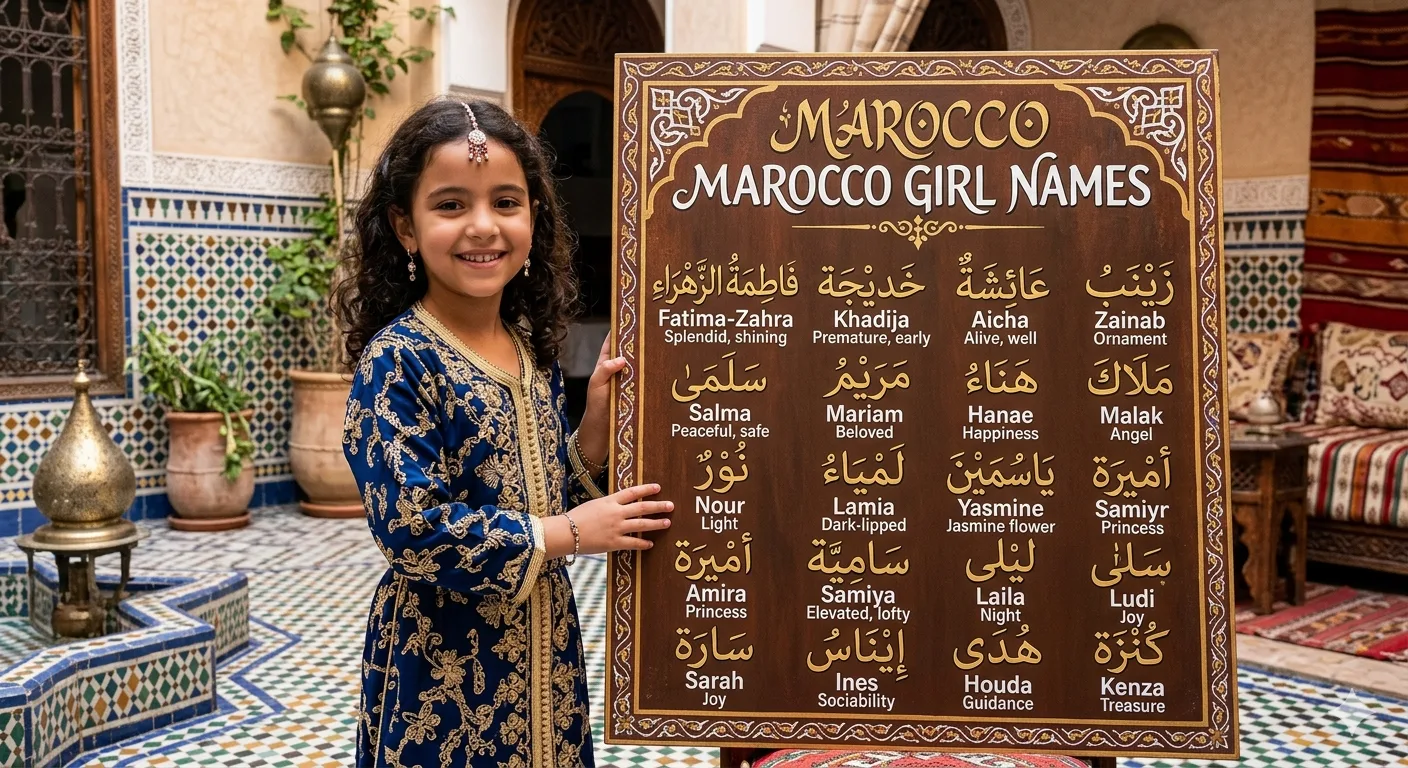
Traditional Moroccan girl names carry the weight of centuries of Islamic scholarship, Amazigh cultural memory, and the refined civilization of cities like Fes and Marrakech that were among the greatest urban centers of the medieval world. These classic Moroccan names have been beloved by Moroccan families for generations and continue to be chosen with pride today because of their enduring grace and cultural depth.
|
Name |
Origin and Meaning |
Why It Endures |
|
Fatima-Zahra |
Arabic, radiant Fatima, luminous |
Compound royal name, historically significant |
|
Aicha |
Arabic, living, full of life |
Name of Prophet's wife, most used classic |
|
Zahira |
Arabic, radiant, brilliant, shining |
Beautiful and luminous, deeply traditional |
|
Rahma |
Arabic, mercy, compassion of God |
Quranic quality name, spiritually meaningful |
|
Malika |
Arabic, queen, sovereign |
Regal and strong, honored across Morocco |
|
Touria |
Arabic, earth, soil, grounded |
Deeply Moroccan, quietly beautiful |
|
Bouchra |
Arabic, good news, bearer of joy |
Traditional Moroccan classic, warm meaning |
|
Naima |
Arabic, bliss, comfort, grace |
Soft and peaceful, centuries of tradition |
|
Saida |
Arabic, happy, fortunate, blessed |
Simple and joyful, enduringly popular |
|
Kenza |
Arabic, treasure, precious gem |
Uniquely Moroccan feel, deeply beloved |
|
Loubna |
Arabic, storax tree, sweetness |
Ancient and poetic, distinctly Moroccan |
|
Meriem |
Arabic, Moroccan form of Maryam |
Local form of sacred name, widely used |
Aicha holds a special place in Moroccan cultural life that goes beyond simply being a popular name. As the name of the Prophet Muhammad's beloved wife Aicha bint Abi Bakr, one of the most important scholars and transmitters of Islamic knowledge in history, Aicha carries an immense spiritual and intellectual heritage. In Morocco, where Islamic scholarship has a thousand-year tradition rooted in the University of Al-Qarawiyyin in Fes, choosing Aicha is an act of deep cultural and religious reverence.
Kenza and Loubna are names with a particularly distinctive Moroccan character. While both have roots in classical Arabic, their usage patterns and the warmth with which they are embraced make them feel quintessentially Moroccan rather than broadly pan-Arab. Kenza, meaning treasure or precious gem, has become one of the most widely used names among Moroccan women of the current generation, and it is frequently cited by Moroccan parents as a name that captures the spirit of what a beloved daughter represents.
You can also use our Name Generator Tool to create unique names instantly. Greece Girl Names
Amazigh Girl Names: Ancient Treasures from Morocco's Berber Heritage
Morocco's Amazigh population represents the indigenous people of North Africa, a civilization with roots stretching back thousands of years before the Arab conquest of the seventh century. Amazigh names carry the sounds of Tamazight language, the imagery of mountain landscapes, and the memory of an ancient culture that has survived and flourished across millennia. Choosing an Amazigh name for a Moroccan girl today is an act of deep cultural pride and connection to Morocco's oldest and most foundational heritage.
|
Name |
Amazigh Meaning |
Cultural Significance |
|
Tafat |
Tamazight, light, brightness |
Deeply Amazigh, symbol of enlightenment |
|
Tamazight |
Tamazight, the free people |
Named after the language itself, powerful |
|
Tiziri |
Tamazight, moonlight, silver glow |
Poetic and beautiful, truly Amazigh |
|
Tilelli |
Tamazight, freedom, liberty |
Profound cultural meaning, rising in use |
|
Tamurt |
Tamazight, land, homeland, earth |
Deep connection to Amazigh identity |
|
Tayri |
Tamazight, love, affection |
Simple and beautiful, widely embraced |
|
Azelarab |
Tamazight, tender, delicate heart |
Soft and poetic, rare and distinctive |
|
Massa |
Tamazight, river in southern Morocco |
Geographic Amazigh name, quietly beautiful |
|
Tinhinan |
Tamazight, she who brings gifts |
Ancient Tuareg queen name, legendary |
|
Tarwa |
Tamazight, children, progeny |
Traditional Amazigh family name |
|
Tafawt |
Tamazight, sunrise, first light |
Luminous and hopeful, deeply Amazigh |
|
Amghar |
Tamazight, elder, noble |
Traditional and respected, rarely used |
Tiziri is perhaps the most poetic of all Amazigh girl names, meaning moonlight or the silver glow of the moon on a landscape. In Amazigh culture, which has deep roots in the Atlas Mountains and the Saharan regions of southern Morocco, the moon has always been a powerful cultural symbol, and Tiziri captures that celestial beauty in a name that sounds as lovely as its meaning. As Amazigh cultural identity has gained growing recognition in Morocco following the official recognition of Tamazight as a national language in the 2011 constitution, names like Tiziri have seen a meaningful revival.
Tilelli, meaning freedom or liberty in Tamazight, carries a political and cultural significance that resonates deeply in the context of the Amazigh cultural movement. Parents who choose Tilelli for their daughter today are making a quiet but powerful statement about their pride in Amazigh identity and their hope that their daughter will grow up free, confident, and connected to her deepest roots. It is a name that carries both beauty and meaning in equal measure.
Rare and Unique Moroccan Girl Names That Truly Stand Apart
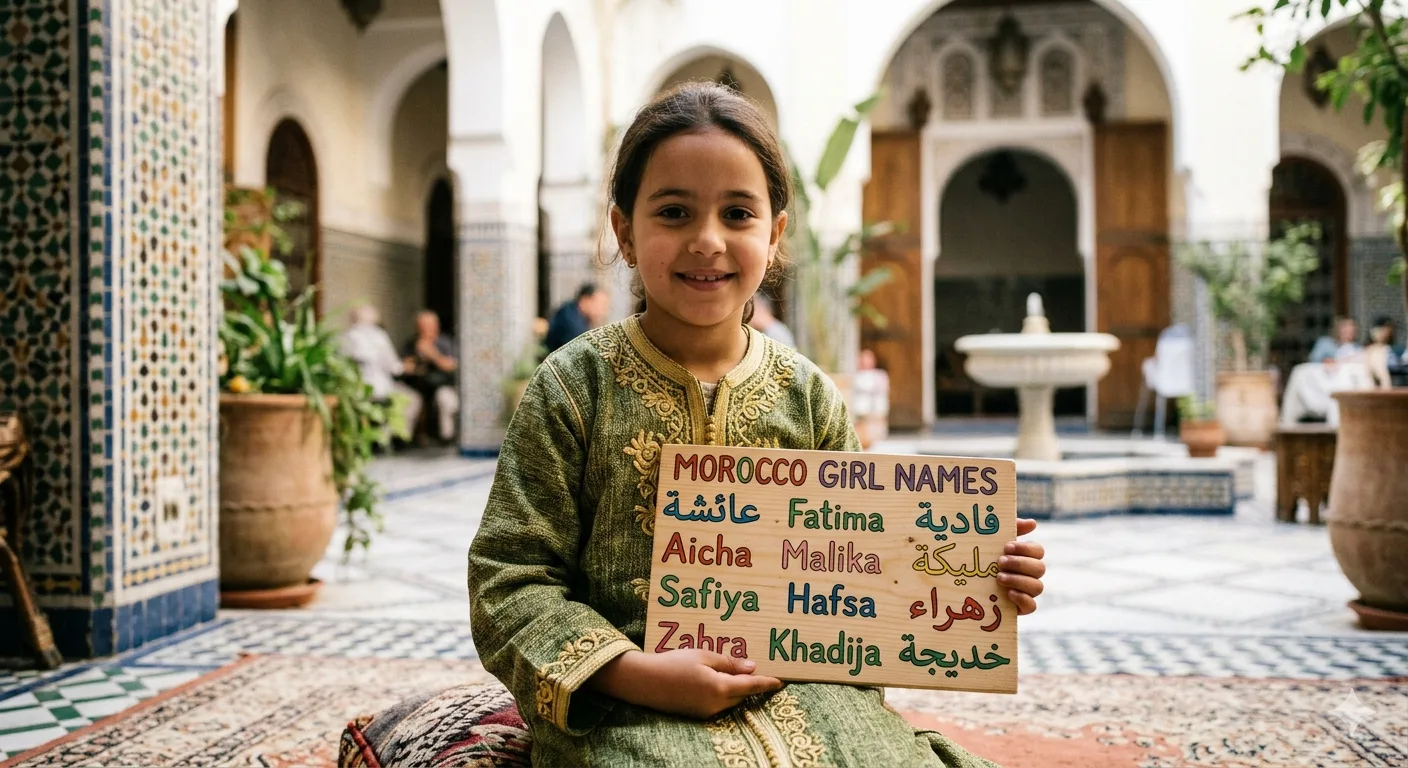
For parents who want something genuinely distinctive, the Moroccan naming tradition offers a wealth of rare and uncommon choices. These unique Moroccan girl names are perfect for families who want their daughter to carry a name that is beautiful, deeply meaningful, and unlikely to be shared with several classmates. Both classical Arabic literature and the Amazigh oral tradition are rich with rare gems waiting to be rediscovered.
|
Name |
Origin and Meaning |
Why It Stands Out |
|
Nadira |
Arabic, rare, precious, exceptional |
Beautiful rarity in Moroccan naming |
|
Zuhra |
Arabic, Venus, brilliance, flowering |
Celestial and rare, deeply poetic |
|
Jannah |
Arabic, paradise, the garden of Eden |
Spiritual and beautiful, rarely used |
|
Thuraya |
Arabic, the Pleiades star cluster |
Celestial and rare, hauntingly lovely |
|
Wafaa |
Arabic, loyalty, faithfulness, devotion |
Virtue name, rare and meaningful |
|
Najwa |
Arabic, whisper, secret, intimate talk |
Poetic and intimate, rarely heard today |
|
Asma |
Arabic, exalted, sublime, noble |
Classical name making a quiet return |
|
Mounira |
Arabic, radiant, luminous, enlightened |
Beautiful light name, rarely chosen |
|
Houda |
Arabic, right guidance, right path |
Spiritual virtue name, quietly rare |
|
Aziza |
Arabic, powerful, cherished, beloved |
Strong and rare, truly distinctive |
|
Sabah |
Arabic, morning, dawn of a new day |
Fresh and luminous, poetic rarity |
|
Ilham |
Arabic, inspiration, divine inspiration |
Creative and rare, deeply meaningful |
Thuraya is one of the most celestially beautiful of all rare Arabic girl names, taking its meaning from the Pleiades star cluster that has guided travelers and poets across the Arab world for millennia. In classical Arabic poetry, Thuraya was invoked as a symbol of beauty, distance, and longing, giving the name a rich literary history that makes it genuinely extraordinary. A Moroccan girl named Thuraya carries not just a beautiful sound but an entire constellation of cultural meaning.
Ilham, meaning inspiration or divine inspiration in Arabic, is a name with a particular resonance in Moroccan cultural life, where the Islamic concept of inspired knowledge and spiritual insight has always been deeply valued. It is a name that speaks to creativity, spiritual depth, and the gift of seeing the world with fresh and illuminated eyes, qualities that any parent would wish for their daughter. Its current rarity makes it all the more precious for families seeking something genuinely distinctive.
Moroccan Girl Names Inspired by Nature and the Beautiful Landscape
Morocco's extraordinary natural environment, from the dramatic peaks of the Atlas Mountains and the vast golden stretches of the Sahara Desert to the lush green valleys of the Draa River and the wild Atlantic and Mediterranean coastlines, has always inspired its poets, musicians, and parents. Nature-inspired Moroccan girl names carry the beauty of this remarkable landscape into the lives of the children who bear them.
|
Name |
Natural Connection |
Why It Is Beloved |
|
Nour |
Arabic, radiant light, sunlight |
Universal light name, enormously popular |
|
Warda |
Arabic, rose flower, bloom |
Floral and romantic, deeply traditional |
|
Yasmine |
Arabic-Persian, jasmine blossom |
Fragrant and beautiful, widely beloved |
|
Bahija |
Arabic, joyful as spring, blooming |
Seasonal freshness, warmly beloved |
|
Sahra |
Arabic, desert, vast and free |
Connected to Sahara, uniquely Moroccan |
|
Amal |
Arabic, hope, aspiration like water |
Flowing and hopeful, widely used |
|
Samira |
Arabic, pleasant breeze, entertainer |
Breezy and warm, consistently popular |
|
Tafat |
Tamazight, light, morning glow |
Amazigh nature name, deeply rooted |
|
Safa |
Arabic, purity, clarity of water |
Pure and clear, deeply Quranic meaning |
|
Rawda |
Arabic, garden, green meadow |
Lush and beautiful, garden of paradise |
|
Nawal |
Arabic, gift, gift of nature |
Gentle and generous, warmly beloved |
|
Hana |
Arabic, bliss, happiness like spring |
Fresh and joyful, modern and beloved |
Yasmine is perhaps the most internationally recognized Moroccan girl name rooted in the natural world, taking its meaning from the jasmine flower that perfumes the gardens and medinas of Morocco with extraordinary intensity during the warmer months. The jasmine flower holds a special place in Moroccan culture, used in traditional medicine, woven into celebratory garlands, and associated with the sensory richness of Moroccan home life. A girl named Yasmine carries all of that fragrant beauty with her wherever she goes.
Sahra, the Arabic word for desert and the root of the name Sahara, is a bold and beautiful choice that connects a Moroccan girl directly to one of the most awe-inspiring landscapes on earth. Morocco is home to a portion of the Sahara Desert in its southeastern regions, and the desert holds a profound place in Moroccan cultural imagination as a symbol of spiritual depth, endurance, and the vast possibilities of an open horizon. Sahra is a name that speaks of freedom, scale, and the quiet grandeur of the natural world.
You can also use our Name Generator Tool to create unique names instantly. Grenada Girl Names
How Names Are Chosen in Moroccan Culture and Society
The Role of Islam in Moroccan Naming Traditions
Islam is the central organizing force of Moroccan social and cultural life, and its influence on baby naming is profound and pervasive. Islamic naming tradition encourages parents to choose names that carry beautiful meanings, names that honor the Prophet and his companions and family members, and names that invoke Quranic concepts of divine light, mercy, guidance, and blessing. Many of the most popular Moroccan girl names are either Quranic names mentioned directly in the holy text or names with deep roots in early Islamic history.
The Prophet Muhammad is reported to have said that the best names are those of the prophets and those that carry good meanings, guidance that has shaped Moroccan naming practice for over fourteen centuries. In Morocco, it is common for families to hold a naming ceremony called the Aqiqa on the seventh day after a child's birth, during which the baby receives her name officially, an animal is slaughtered as a sacrifice, and prayers are said for the child's health, happiness, and spiritual wellbeing. This ceremony underlines the deeply sacred character that Moroccan culture attaches to the act of naming.
Amazigh Cultural Identity and Naming Pride
Morocco's Amazigh population has maintained its distinctive language, culture, and naming traditions despite centuries of Arab and later European influence. Following the 2011 Moroccan constitution, which officially recognized Tamazight as a national language alongside Arabic, there has been a meaningful revival of interest in Amazigh names among Moroccan parents of all backgrounds. Choosing an Amazigh name for a daughter today is seen by many Moroccan families as an affirmation of the country's full cultural heritage and an act of pride in Morocco's deepest historical roots.
Family Tradition and Honoring Ancestors
Moroccan families place enormous value on family continuity and the honoring of ancestors through naming practices. It is common in Morocco for children to receive the names of beloved grandparents, great-grandparents, or other honored family members who have passed away. This practice creates living connections between generations and keeps family stories alive in a culture that deeply values the bonds between past, present, and future. In many Moroccan families, the choice of a baby girl's name will be discussed and debated by grandparents, aunts, uncles, and other family members before a final decision is made.
The Influence of Royal and Historical Figures
Morocco's royal family has always exerted a powerful influence on naming trends throughout the country. Names associated with the royal household, including Lalla Salma, Princess Lalla Meryem, Lalla Hasnaa, and other members of the Alaoui dynasty, have consistently influenced popular naming choices among Moroccan families who feel a deep bond of loyalty and admiration toward the monarchy. Historical and literary figures from Morocco's rich past, including scholars, mystics, and poets from the great medieval cities of Fes and Marrakech, also inspire naming choices among more culturally conscious Moroccan parents.
You can also use our Name Generator Tool to create unique names instantly. Mozambique Girl Names
Latest Naming Trends Shaping Moroccan Girl Names in 2026
Moroccan baby girl naming trends in 2026 reflect a fascinating and dynamic intersection of Islamic tradition, Amazigh cultural revival, global connectivity, and a distinctly Moroccan sense of aesthetic beauty. Several clear patterns are defining the naming landscape across the country right now, from the streets of Casablanca to the mountain villages of the Rif and Atlas.
Short and elegant names are dominant across urban Morocco. Names of one or two syllables like Aya, Rim, Nour, Lina, and Sara are overwhelmingly popular in cities because they feel effortlessly stylish, easy to use in both Arabic and French professional contexts, and deeply resonant with beautiful meanings. Urban Moroccan parents today appreciate names that feel globally confident without losing their roots.
The Amazigh name revival is one of the most significant cultural movements in Moroccan naming today. Names like Tiziri, Tilelli, Tafat, and Ghita are being chosen with increasing frequency by parents across both Amazigh and Arab Moroccan communities as a way of honoring the country's pre-Islamic indigenous heritage. This trend has been encouraged by the official recognition of Tamazight and a broader cultural conversation about Moroccan identity that embraces all of the country's deep roots.
Quranic and spiritually meaningful names remain the foundation of Moroccan naming culture. Names drawn directly from the Quran or carrying names of the Prophet's family and companions continue to be chosen by the majority of Moroccan families because they carry both beautiful sounds and the blessing of sacred meaning. Aya, meaning a sign or miracle of God and also a verse of the Quran, exemplifies perfectly how spiritual depth and modern stylishness can coexist in a single name.
International and cross-cultural names are growing in urban Morocco. The influence of global media, travel, and the large Moroccan diaspora community in France, Belgium, Spain, and elsewhere has introduced names that work comfortably in multiple languages into the Moroccan naming mainstream. Names like Sara, Sofia, Ines, and Nadia are now widely used across Morocco because they feel natural in both Arabic and European contexts, reflecting Morocco's genuine position at the crossroads of cultures.
Compound names with deep spiritual significance remain a cherished Moroccan tradition. Names like Fatima-Zahra, combining the Prophet's daughter with the epithet meaning the radiant one, or Nour-El-Houda, meaning the light of right guidance, create beautifully meaningful combinations that honor multiple layers of Islamic tradition simultaneously. This tradition of compound naming gives Moroccan girl names a depth and complexity that single names sometimes cannot achieve on their own.
Tips for Choosing the Perfect Stylish Moroccan Girl Name
Honor your roots with intention. A Moroccan girl name that connects your daughter to her Islamic heritage, her Amazigh cultural identity, or her family's regional traditions will always feel more meaningful than a name chosen purely for its sound. The most beautiful Moroccan girl names are those that carry a story your daughter will be proud to tell throughout her life.
Think about how the name works in both Arabic and French contexts. Morocco's bilingual reality means that names need to feel comfortable in both linguistic worlds. Names that sound natural in Darija and Modern Standard Arabic while also being pronounceable in French will serve your daughter well throughout her education, her professional life, and her social world.
Consider the full name combination. In Morocco, a girl typically carries her father's name as part of her official identity, so the rhythm and sound of her first name alongside the family name deserves careful consideration. Say the full combination aloud many times to hear whether it flows naturally and whether any unintended sounds or patterns emerge.
Explore the meaning deeply before deciding. Arabic and Tamazight are languages of extraordinary semantic richness, and many names carry multiple layers of meaning depending on their root, their historical usage, and their cultural associations. Taking time to understand the full depth of a name's meaning will help you feel genuinely confident in your choice.
Consult with family and honor elders. Moroccan naming culture places great value on family consensus and the wisdom of older generations. Grandparents and other family elders often have deep knowledge of naming traditions, family history, and the cultural weight of specific names that younger parents may not yet fully appreciate. Including them in the naming conversation is both culturally respectful and practically valuable.
Trust the spiritual dimension of naming. In Moroccan Islamic tradition, a name is understood as a form of prayer and blessing for the child who carries it. Choosing a name with a genuinely beautiful meaning, one that speaks of light, mercy, grace, strength, wisdom, or faith, is believed to contribute to the character and destiny of the child herself. Let the meaning guide you as much as the sound.
Generate More Names: Girl Names Generator
Conclusion: Celebrating the Beauty and Depth of Moroccan Girl Names
Moroccan girl names are among the most beautiful, layered, and culturally rich in the entire world. They tell the story of a civilization shaped by Amazigh indigeneity, Islamic spirituality, Arab literary tradition, Andalusian refinement, African connections, and Mediterranean openness. Whether you choose a timeless classic like Fatima or Aicha, a modern favorite like Aya or Lina, a celestially beautiful pick like Tiziri or Thuraya, a culturally rooted Amazigh choice like Tilelli or Tafat, or a rare and distinctive gem like Ilham or Nadira, you are giving your daughter a name with genuine beauty, profound depth, and a story that stretches back across centuries of remarkable civilization.
The most important thing about choosing a Moroccan girl name in 2026 is choosing one that resonates with your heart, honors your family's unique story, reflects the spiritual and cultural values you hope your daughter will carry throughout her life, and sounds beautiful both in the intimate world of home and in the wider world she will inhabit. A name is the first and most lasting gift you give your child, and in the endlessly generous world of Moroccan naming tradition, there is a perfect name waiting for every girl born into this extraordinary country.
We hope this complete guide to Moroccan girl names has inspired you, deepened your appreciation of Morocco's remarkable naming culture, and helped you discover beautiful possibilities you might not have encountered before. May your daughter grow up proud of her name, connected to her heritage, and ready to write her own chapter in the long and magnificent story of Morocco.