 Belarusian Girl Name Generator
Discover beautiful Belarusian girl names from Slavic and Eastern European heritage
Guides & Articles
Belarus Girl Names: A Complete Guide to Stylish, Popular and Meaningful Choices
Explore the most beautiful, trending, unique and culturally rich Belarusian girl names for 2026
Introduction: The Enchanting World of Belarus Girl Names
Choosing a name for your baby girl is one of the most beautiful and meaningful decisions you will ever make as a parent. In Belarus, a country with a rich Slavic heritage, deep folkloric traditions, and a language that carries centuries of poetry and history, the act of naming a child is considered a profound cultural and spiritual ceremony. Belarusian girl names are among the most melodious and distinctive in the entire Slavic world, shaped by an ancient history that stretches from the forests of Eastern Europe to the courts of medieval principalities.
Belarus sits at the heart of Eastern Europe, bordered by Russia, Ukraine, Poland, Lithuania, and Latvia. This central position has given Belarusian culture a uniquely layered identity, drawing from Orthodox Christian traditions, old Slavic mythology, the Polish-Lithuanian Commonwealth, Soviet-era influences, and a proud national revival that began in the late twentieth century. All of these forces have left their mark on the names Belarusian parents give their daughters, creating a naming landscape that is simultaneously ancient and evolving.
In 2026, Belarusian baby girl naming trends are experiencing a fascinating dual movement. On one side, there is a growing revival of authentic Belarusian names rooted in the Slavic and native Belarusian linguistic tradition, names that were suppressed or overlooked during the Soviet period and are now being reclaimed with pride. On the other side, modern international names continue to be popular among urban families in Minsk and other cities, reflecting Belarus's connections to European culture and the wider world.
Whether you are searching for popular Belarusian girl names with beautiful meanings, rare and unique Belarusian baby names that stand out, traditional Slavic names with deep cultural roots, modern and trending choices, or names inspired by the stunning natural landscape of Belarus with its ancient forests, pristine lakes, and sweeping plains, this complete guide covers everything you need to know. You will also find expert insights into how names are chosen in Belarus, the cultural and religious forces that shape naming traditions, and a comprehensive FAQ section answering the questions parents most want to explore.
Explore 500+ free name generators for gaming, social media, Girl or Boy names, and more — find your perfect stylish name in seconds at Stylish Names Generator.
Popular Belarus Girl Names with Beautiful Meanings
Some names hold their place in Belarusian hearts across generations, appearing consistently among the most beloved choices for baby girls throughout the country. These popular Belarusian girl names combine musical sounds, powerful meanings, and strong cultural resonance that connects daughters to their heritage while giving them names that feel warm and familiar in any Belarusian household.
|
Name |
Origin / Meaning |
Why It Stands Out |
|
Anastasiya |
Greek, resurrection, rebirth |
Deeply beloved across Belarus and all Slavic countries |
|
Darya |
Persian-Slavic, holds the good |
Classic elegance, consistently top-ranked |
|
Alyona |
Greek via Slavic, bright light |
Warm and radiant, beloved by Belarusian families |
|
Katsiaryna |
Greek, pure, clear |
The Belarusian form of Catherine, timeless dignity |
|
Natalya |
Latin, Christmas child, birthday |
Festive and warm, universally loved in Belarus |
|
Volha |
Old Norse-Slavic, holy, sacred |
Purely Belarusian form of Olga, deeply rooted |
|
Yuliya |
Latin, youthful, full of life |
Bright and beautiful, popular across generations |
|
Maryna |
Latin, of the sea |
Musical and graceful, a Belarusian classic |
|
Irina |
Greek, peace |
Simple, serene, and eternally fashionable |
|
Svetlana |
Slavic, light, radiant, luminous |
A name that glows with warmth and Slavic pride |
|
Hanna |
Hebrew, grace, God has favored me |
The Belarusian form of Anna, enduring and beloved |
|
Tatsyana |
Latin-Slavic, fairy queen |
The Belarusian Tatiana, poetic and musical |
Anastasiya holds a truly special place in Belarusian naming culture. Its meaning, drawn from the Greek word for resurrection, gives it a deep spiritual resonance in this Orthodox Christian country where Easter is one of the most sacred celebrations of the year. The name carries a sense of renewal, light returning after darkness, and hope reborn, which feels deeply appropriate for a country that has endured so much history and emerged with its cultural identity intact.
Volha deserves particular attention as one of the most authentically Belarusian names on this list. While the Russian form Olga is well known internationally, Volha is the native Belarusian spelling and pronunciation, rooted in the Belarusian language that has its own distinct identity separate from both Russian and Ukrainian. Parents who choose Volha for their daughter are making a deliberate and proud statement of Belarusian cultural identity, honoring a tradition of using the native language forms of names rather than their Russified equivalents.
Modern and Trending Belarusian Girl Names in 2026
Belarusian parents in 2026 are choosing girl names that balance contemporary freshness with cultural depth. The most fashionable names today in Belarus tend to have a certain elegance and musicality that suits both the flowing rhythms of the Belarusian language and the desires of modern parents who want their daughters to have names that feel stylish, meaningful, and perfectly suited to a young woman growing up in today's world.
|
Name |
Meaning |
Why It Is Trending |
|
Mia |
Scandinavian-Latin, beloved, mine |
Short, stylish, internationally loved |
|
Sofia |
Greek, wisdom, knowledge |
Timeless elegance with a modern feel |
|
Alisa |
Germanic, noble kind, truthful |
The Belarusian Alice, fresh and fashionable |
|
Milana |
Slavic, gracious, dear one |
Soft and beautiful, hugely popular now |
|
Eva |
Hebrew, life, living, breath |
Short, powerful, universally appealing |
|
Vika |
Latin, victory |
Beloved nickname-as-name, modern and bright |
|
Polina |
Greek via Slavic, sunlight, gift of Apollo |
Radiant and fresh, consistently rising |
|
Nika |
Greek, victory |
Short, strong, very current in Belarus |
|
Zlata |
Slavic, golden, gold |
Purely Slavic gem, beautifully distinctive |
|
Yana |
Hebrew-Slavic, God is gracious |
Simple, modern, widely fashionable |
|
Liza |
Hebrew, my God is an oath |
Bright and energetic, very popular now |
|
Sonya |
Greek, wisdom |
The Slavic Sophia nickname, warm and stylish |
Milana represents one of the most interesting naming trends in contemporary Belarus. The name blends the distinctly Slavic root mil, meaning dear or gracious, with the modern Italian city of Milan, creating a name that feels simultaneously rooted in Slavic tradition and cosmopolitan in its appeal. This kind of name, one foot in the cultural heritage and one foot in the wider world, captures exactly what many modern Belarusian parents are looking for.
Zlata is a purely Slavic name meaning golden, and its rising popularity among young Belarusian parents reflects the broader cultural revival of authentic Slavic names that had been overshadowed by more internationally familiar choices during the Soviet era. Zlata sounds distinctly Eastern European, carries a warm and luminous meaning, and has a strength and clarity that makes it memorable. For parents who want a name that is undeniably Belarusian in its roots while being completely beautiful in its sound, Zlata is a perfect choice.
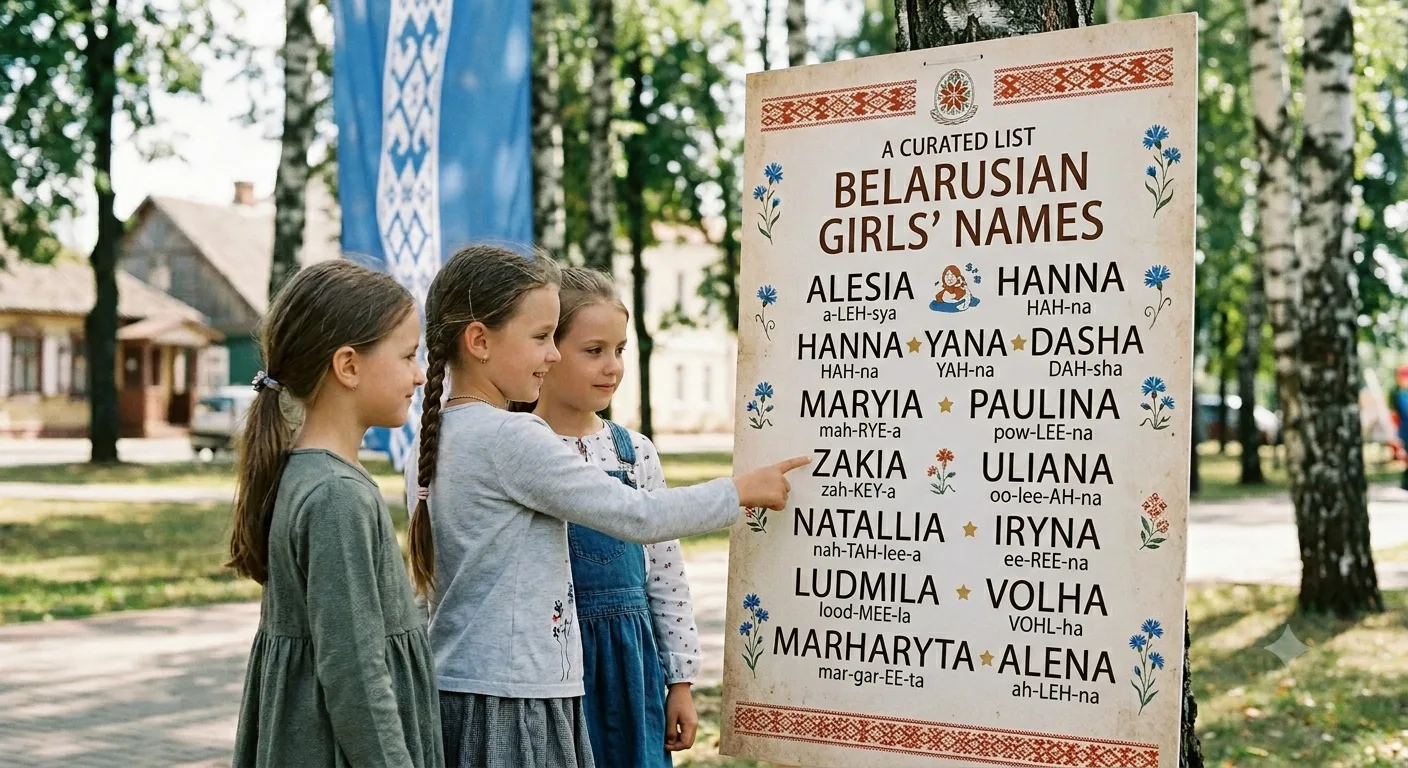
Traditional and Cultural Belarus Girl Names That Stand the Test of Time
Traditional Belarusian girl names carry the weight of centuries, drawing from Old Slavic mythology, Orthodox Christian tradition, and the deep wellspring of Belarusian folk culture. These names connect daughters to the ancient stories of their people and to the generations of Belarusian women who carried these names with pride through the forests and fields of this beautiful land.
|
Name |
Origin / Meaning |
Cultural Significance |
|
Liudmila |
Slavic, dear to the people |
One of the most iconic traditional Slavic names |
|
Oksana |
Ukrainian-Belarusian, praise to God |
Beautiful and deeply Slavic in character |
|
Halina |
Greek via Slavic, calm, serene |
The Belarusian form of Galina, gracefully old |
|
Zhanna |
Hebrew via French-Slavic, God is gracious |
The Slavic Jeanne, poetic and classic |
|
Larisa |
Greek, cheerful, citadel |
Beloved throughout Slavic tradition |
|
Vera |
Slavic-Latin, faith, truth, belief |
Pure virtue name with deep Orthodox roots |
|
Nadzeya |
Slavic, hope |
The native Belarusian form of Nadezhda |
|
Lyubov |
Slavic, love |
A name that is literally the word for love |
|
Tamara |
Hebrew, palm tree, date palm |
Biblical and Georgian, widely beloved in Belarus |
|
Valyantsina |
Latin, strong, healthy |
The Belarusian Valentine, proud and dignified |
|
Zynaida |
Greek, born of Zeus, divine |
Rare and powerful, deeply classical in feeling |
|
Praskovya |
Greek, eve of the Sabbath |
Rare traditional name with Orthodox roots |
Liudmila is one of the most iconic names in Belarusian and broader Slavic culture. Its meaning, dear to the people, captures a value that is deeply embedded in Belarusian society: the importance of community, of belonging, of being loved by and connected to the people around you. The name was borne by medieval Slavic saints and has appeared in some of the greatest works of Slavic literature and poetry. Choosing Liudmila for a daughter today is a profound act of cultural connection.
Nadzeya holds a particularly special place in Belarusian culture because it is the native Belarusian form of the name meaning hope, written and pronounced according to the rules of the Belarusian language rather than the Russian Nadezhda. In a country where language itself has become an expression of national identity and cultural pride, choosing Nadzeya over Nadezhda is a meaningful statement. Vera, meaning faith, and Lyubov, meaning love, complete a trio of classic Slavic virtue names that have deep roots in the Orthodox Christian tradition and in Belarusian family life.
You can also use our Name Generator Tool to create unique names instantly. Senegal Girl Names
Rare and Unique Belarusian Girl Names That Truly Stand Out
For parents who want something genuinely extraordinary, the Belarusian naming tradition offers a treasure chest of rare and uncommon choices. These unique Belarusian baby girl names draw from ancient Slavic mythology, the rich folklore of the Belarusian countryside, historical figures of Belarusian heritage, and the deep well of the Old Belarusian language that predates centuries of political change. These are names that will set a daughter apart while connecting her to something ancient and beautiful.
|
Name |
Origin / Meaning |
Why It Is Special |
|
Miroslava |
Slavic, peace and glory |
Old Slavic compound name, rarely heard today |
|
Radmila |
Slavic, care for people, joyful |
Ancient Slavic name with warmth and beauty |
|
Tsistsyana |
Latin via Belarusian, of Cicero |
Purely Belarusian, very rare and striking |
|
Branislava |
Slavic, glorious protection |
Warrior-princess energy, deeply ancient |
|
Stasya |
Greek via Slavic, resurrection |
Rare nickname form of Anastasiya |
|
Dazhdzbohava |
Slavic, gift of the sun god |
Mythological depth, extremely rare |
|
Lubava |
Slavic, loving, dear one |
Old Belarusian folk name, poetic and rare |
|
Radzislava |
Slavic, joyful and glorious |
Ancient Belarusian compound, very unusual |
|
Yaroslava |
Slavic, bright and glorious |
The feminine of Yaroslav, rare and powerful |
|
Miraslava |
Slavic, glory of peace |
Rare variant form, gentle and distinguished |
Miroslava is one of the most beautiful rare names in the Belarusian and Slavic tradition, combining the roots mir, meaning peace or world, and slava, meaning glory. Names built on the slava root have been given to warriors, princes, saints, and poets throughout Slavic history, and a name meaning glory of peace captures a longing that resonates deeply in this part of the world. For parents seeking a name that is both rare and rich with meaning, Miroslava is a magnificent choice.
Lubava comes directly from Belarusian folk tradition and old rural naming practices, carrying the simple and beautiful meaning of loving or dear one. It appears in old Belarusian folk songs and fairy tales, which gives it a lyrical, almost magical quality. In an era when many parents are searching for names that feel genuinely rooted in their specific cultural heritage rather than being shared across the whole Slavic world, Lubava stands out as something deeply and specifically Belarusian.
Nature-Inspired Belarus Girl Names Rooted in the Belarusian Landscape
Belarus is a country of breathtaking natural beauty. It is home to one of the last primeval forests in Europe, Bialowieza, where European bison still roam beneath ancient oak and hornbeam trees. Its landscape is dotted with thousands of pristine lakes, winding rivers, vast marshlands, and meadows that bloom with wildflowers each spring. It is no surprise that this intimate relationship with the natural world has found expression in the names Belarusian parents give their daughters.
|
Name |
Natural Connection |
Why It Is Beloved |
|
Zara |
Arabic-Slavic, dawn, flower |
Bright and fresh as a spring morning |
|
Liliya |
Latin, lily flower |
The lily is beloved in Belarusian folk art |
|
Yasna |
Slavic, clear, bright, shining |
Evokes clear skies and pure nature |
|
Zorka |
Slavic, little star, dawn star |
A native Belarusian word for a small star |
|
Kvetka |
Belarusian, flower, blossom |
Directly means flower in Belarusian language |
|
Reka |
Slavic, river, flowing water |
Connected to Belarus's beautiful rivers |
|
Berezinya |
Belarusian, birch tree spirit |
The birch is the national tree of Belarus |
|
Viasna |
Belarusian, spring season |
The Belarusian word for spring |
|
Snyazhana |
Slavic, snowy, of the snow |
Evokes Belarus winters, delicate and pure |
|
Lyasna |
Belarusian, of the forest |
Rooted in the great forests of Belarus |
Zorka is a name that deserves special attention because it is formed from a Belarusian word, zorka, meaning little star or the star that appears at dawn, the morning star. Using a word that exists natively in the Belarusian language as a girl's name is a beautiful act of linguistic and cultural pride. Zorka sounds poetic and lovely, carries the luminous imagery of starlight over a dark Belarusian landscape, and is genuinely distinctive outside of Belarusian-speaking communities.
Berezinya connects a daughter to one of the most beloved symbols of Belarusian national identity: the birch tree. In Belarusian folk tradition, the birch is a tree of grace, resilience, and feminine beauty, associated with springtime, new beginnings, and the protective spirits of the forest. The birch forest is one of the defining images of the Belarusian landscape, and a name drawn from this tradition carries the quiet magic of the natural world that has shaped Belarusian culture for millennia.
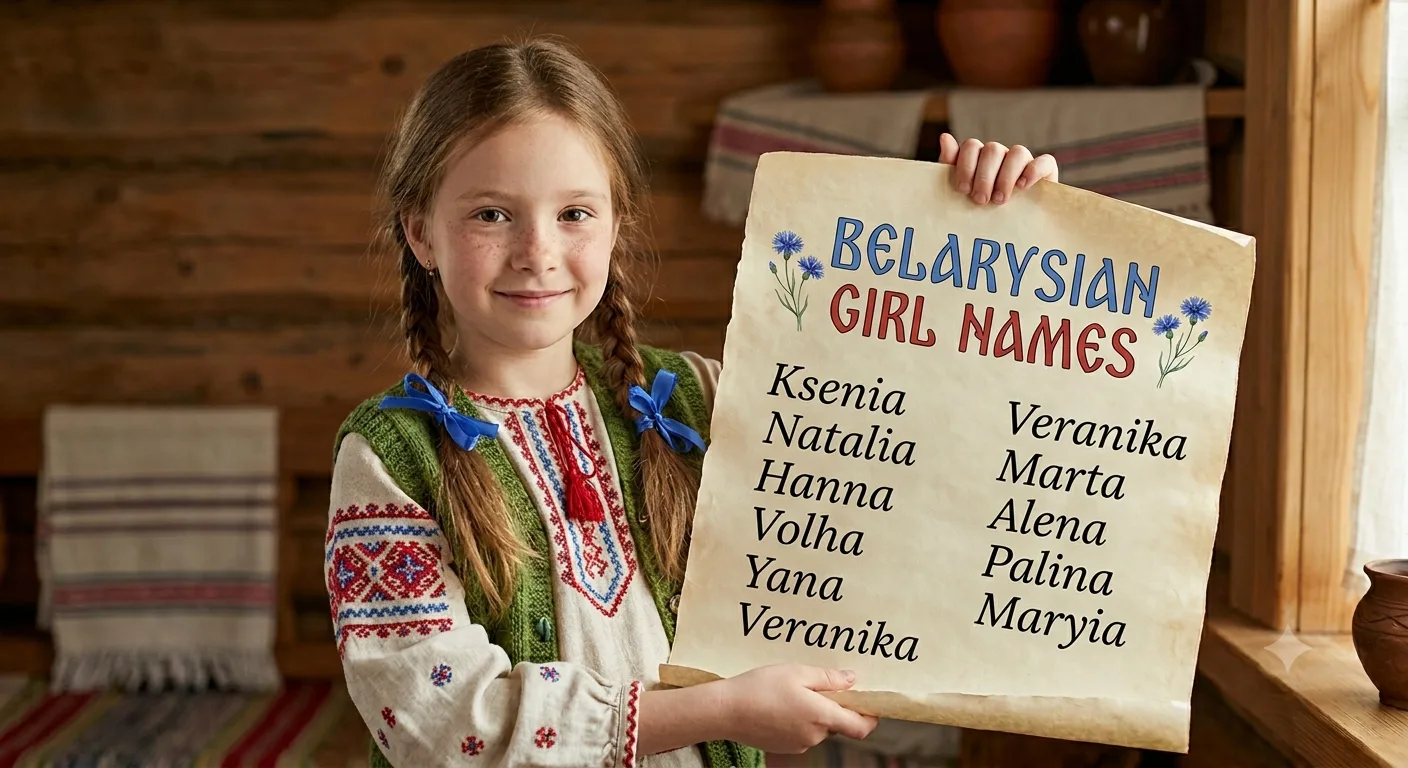
Latest Naming Trends in Belarus for 2026
Belarusian baby naming in 2026 is shaped by a fascinating tension between two powerful forces: the revival of authentic Belarusian cultural heritage and the influence of international trends reaching the country through the internet, music, film, and the experiences of Belarusians living abroad. Understanding these trends helps parents make informed and intentional choices for their daughters.
The Belarusian Language Revival Movement
One of the most significant naming trends in contemporary Belarus is the deliberate choice to use authentically Belarusian forms of names rather than their Russian equivalents. Names like Volha instead of Olga, Hanna instead of Anna, Katsiaryna instead of Katerina, and Nadzeya instead of Nadezhda represent a conscious cultural and political statement by parents who want to celebrate and preserve the Belarusian language and identity. This trend is particularly strong among intellectuals, artists, and educated urban families in Minsk and university cities.
Slavic Mythology and Ancient Names
There is a growing fascination among Belarusian parents with names drawn from pre-Christian Slavic mythology and ancient Belarusian folk tradition. Names connected to the old Slavic deities, the spirits of the natural world, and the ancient tribal traditions of Eastern Europe are being researched and chosen by parents who want to give their daughters a name that reaches back to the deepest roots of Slavic civilization. This trend reflects a broader cultural interest in reclaiming pre-Soviet and pre-Christian heritage.
Short International Names Alongside Long Slavic Ones
A clear contrast is visible in modern Belarusian baby name lists between very short, internationally familiar names like Mia, Eva, Nika, and Liza on one side, and long, historically rich Slavic names like Anastasiya, Katsiaryna, and Liudmila on the other. There is relatively little middle ground, suggesting that Belarusian parents are either choosing names that feel modern and globally connected or making a deliberate statement of cultural rootedness with a long traditional name.
Soviet-Era Names Fading Away
Names that were heavily promoted during the Soviet period, including ideologically coined names and certain Russian-language names that were standardized across the Soviet Union, are now falling out of fashion as younger Belarusian parents consciously move away from that naming legacy. This creates space for the authentic Belarusian and pre-Soviet names to return, which is one of the reasons the revival of genuinely old Belarusian names is so strong right now.
You can also use our Name Generator Tool to create unique names instantly. Serbia Girl Names
Cultural and Religious Influences on Belarusian Girl Names
To truly understand Belarusian naming traditions, it is essential to understand the cultural forces that have shaped them over centuries. Belarus has been influenced by multiple cultural and religious streams, each of which has left a deep imprint on the names that Belarusian families have given their daughters across the generations.
Orthodox Christianity and the Calendar of Saints
The Eastern Orthodox Church has been the dominant faith of Belarus for over a thousand years, and its influence on naming practices has been profound. In traditional Orthodox naming practice, a child was given the name of the saint on whose feast day they were born or baptized, creating a direct and sacred connection between the child and their heavenly patron. This practice means that many of the most common Belarusian girl names are names that have been carried by Orthodox saints: Anastasiya, Hanna, Katsiaryna, Irina, Tatsyana, and Natalya all have feast days in the Orthodox calendar and were chosen for generations of Belarusian girls as spiritual names rather than merely aesthetic ones.
Catholic and Uniate Traditions in Western Belarus
The western regions of Belarus, particularly those near the Polish border, have a stronger Catholic heritage due to centuries of influence from the Polish-Lithuanian Commonwealth. Catholic naming traditions brought different saints and different name forms into the Belarusian tradition, including names with Polish influence like Yadviga, Agata, and Martsyana. The Greek Catholic or Uniate tradition, which combines Eastern liturgy with Roman authority, also had its own influence on naming patterns in parts of the country.
Slavic Folk Tradition and Pre-Christian Names
Before the arrival of Christianity in Belarus, the Slavic people had their own rich tradition of names drawn from the natural world, from the qualities they hoped their children would embody, and from the old Slavic deities and spirits. Names like Vladislava, meaning glorious ruler, Miroslava, meaning glorious peace, and Svetlana, meaning light, all have roots that predate Christian influence. These old Slavic compound names built from elements like mir, sviat, slava, rad, and lyub were the original naming tradition of the Belarusian people, and their revival today represents a reconnection with that ancient heritage.
Soviet Influence and Modern International Names
The Soviet period introduced its own naming culture, encouraging Russian-language names and even coining entirely new ideological names. The post-Soviet period has seen a reaction against this legacy, with Belarusian parents increasingly choosing names that feel either authentically Belarusian in their linguistic form or internationally fashionable rather than Soviet in character. The internet and global media have accelerated the penetration of internationally popular names into the Belarusian naming landscape, creating the dual trend of cultural revival and international adoption that defines naming in Belarus today.
How Names Are Chosen in Belarus: Traditions and Modern Practices
Understanding how Belarusian families approach the naming of their daughters reveals the depth of cultural values and family bonds that define Belarusian society.
Honoring Family and Ancestors
In traditional Belarusian family culture, it is common to name a child after a grandparent or other beloved family member as a gesture of honor and connection across generations. This practice keeps the memory of ancestors alive in the living family and creates a sense of continuity that is deeply valued in Belarusian society. A grandmother named Liudmila might have a granddaughter named Liudmila or Mila in her honor, carrying forward not just a name but a family story and a family identity.
The Name Day Tradition
Belarus, like other Orthodox and Catholic countries in Eastern Europe, has a strong tradition of celebrating name days, known as imyaniny, as well as birthdays. A name day is the feast day of the saint whose name you bear, and in traditional Belarusian culture it was sometimes considered even more important than a birthday. This tradition reinforces the spiritual dimension of naming: a name is not just a label but a sacred connection to a patron saint who watches over you throughout your life.
Consulting with the Family
Name choosing in Belarus is typically a family affair rather than a purely individual parental decision. Grandparents, aunts, uncles, and other close family members are often consulted and their preferences and suggestions are given genuine weight. This collective approach to naming reflects the strong family culture of Belarusian society, where major life decisions are made in community rather than in isolation.
Modern Trends in Urban Belarus
In contemporary Minsk and other Belarusian cities, young parents are increasingly doing their own research, browsing name websites, exploring the meanings and historical backgrounds of names, and making choices that feel personally meaningful rather than following purely traditional practices. Social media and parenting communities have created new shared spaces where Belarusian parents discuss and debate name choices, share what is trending, and explore the rich history of their naming tradition with fresh curiosity.
You can also use our Name Generator Tool to create unique names instantly. Belgium Girl Names
Tips for Choosing the Perfect Stylish Name for Your Belarusian Baby Girl
Choosing a name is one of the most personal and meaningful decisions you will make as a parent. Here are some thoughtful guidelines for families exploring Belarusian girl names.
Consider the sound of the name with your family surname. Belarusian surnames often end in characteristic suffixes, so testing how a first name sounds flowing into the family name will help you find combinations that feel harmonious and musical.
Think about the language form that matters to you. If you want to celebrate the Belarusian language and cultural identity, choosing the native Belarusian form of a name rather than its Russian equivalent is a meaningful statement. Volha instead of Olga, Hanna instead of Anna, Tatsyana instead of Tatiana are all examples of this kind of choice.
Explore the meaning deeply. Belarusian names often carry rich and layered meanings rooted in Slavic language, Orthodox Christianity, or ancient mythology. A name whose meaning resonates with your hopes and values for your daughter is a gift that she will carry with her throughout her life.
Consider the nickname options. Many Belarusian names come with beloved nickname forms that are used in everyday family life. Anastasiya becomes Nastya or Stasya. Katsiaryna becomes Katya. Liudmila becomes Mila. Knowing which nicknames are associated with a name helps you understand the full range of ways your daughter might be called.
Balance the traditional and the modern according to your family values. There is no single right answer about whether a deeply traditional Belarusian name or a modern fashionable choice is better. The right name is the one that feels true to who you are as a family and honors both your heritage and your hopes for your daughter's future.
Generate More Names: Girl Names Generator
Conclusion: The Living Beauty of Belarusian Girl Names
The world of Belarusian girl names is a living treasure of history, culture, language, and beauty. From the ancient Slavic compound names that carry the stories of a people who lived among the great forests of Eastern Europe for thousands of years, to the Orthodox Christian names that arrived with the conversion of the Slavic peoples and gave generations of Belarusian girls their sacred patron saints, to the modern international names that speak to Belarus's place in a connected contemporary world, the full range of Belarusian naming culture is extraordinary.
Choosing a Belarusian girl name for your daughter is an act of love that reaches across time. Whether you choose a name that connects her to the ancient Slavic past, to the deep roots of Belarusian Orthodox faith, to the beautiful natural landscape of this forested land of lakes and rivers, or to the modern global culture in which she will grow up, you are giving her a name that carries meaning, beauty, and a sense of who she is and where she comes from.
The revival of authentic Belarusian names and the return to names in the native Belarusian language form are signs of a culture that is alive, proud, and confident in its own identity. In a country whose language and culture have been under pressure throughout much of its modern history, every parent who chooses Zorka over Zvezda, Volha over Olga, or Nadzeya over Nadezhda is making a small and beautiful act of cultural affirmation that matters.
We hope this guide has opened a window into the magnificent world of Belarus girl names and inspired you to explore the full depth of this remarkable naming tradition as you search for the perfect name for your daughter.