 Angolan Boy Name Generator
Discover meaningful Angolan boy names from Bantu and Portuguese heritage
Guides & Articles
Angola Boy Names with Meanings (2026) Unique, Modern & Traditional Names
The Cultural Soul Behind Angolan Boy Names
Angola is one of Africa's most vibrant, diverse, and historically rich nations. Stretching across the southwestern coast of the continent, Angola carries a naming tradition as vast and layered as its landscape, drawing from Kimbundu, Ovimbundu, Kikongo, Chokwe, Portuguese colonial heritage, and a deep current of spiritual belief that runs through every community from the Atlantic coast to the highlands of Huila and the savannas of the east. An Angolan boy name is far more than a simple label. It is a declaration of family, heritage, faith, and aspiration carried from birth into every corner of a child's life.
The official language of Angola is Portuguese, a legacy of centuries of colonial history, and this has left a profound mark on Angolan naming patterns. Many Angolan families today give their sons Portuguese first names that carry Catholic religious significance, combining them with traditional Bantu or indigenous middle names that honor ancestral heritage. This layering of Portuguese and indigenous naming creates a distinctive Angolan identity that is unlike any other African naming culture.
In 2026, Angola is a young and dynamic nation with one of the fastest-growing populations on the continent. More than 60 percent of Angolans are under the age of 25, which means the question of what to name a new baby boy is one that hundreds of thousands of Angolan families face every year. The naming landscape reflects this energy perfectly, balancing deep respect for tradition with a growing appreciation for modern, stylish, and globally recognized names.
Whether you are looking for a classic Angolan name rooted in Kimbundu heritage, a modern Portuguese name that sounds elegant and confident, a rare indigenous name that honors the ancient peoples of the interior, a culturally rich Bantu name with a powerful meaning, or a contemporary baby name that will carry your son forward in a connected world, this complete guide covers every dimension of naming in this remarkable African nation.
Popular Angola Boy Names with Meanings
Popular Angolan boy names have earned their enduring place through the intertwined forces of Catholic religious tradition, Portuguese linguistic influence, and the genuine pride Angolan families take in names that have proven themselves across generations. These are the names heard most frequently in Luanda, Huambo, Benguela, and the growing cities and towns that define modern Angola. They are popular not because of passing trend but because they carry virtues, spiritual significance, and a sonic elegance that resonates deeply with Angolan families across all regions and ethnic communities.
|
Name |
Origin |
Meaning |
|
Amaro |
Portuguese/Latin |
Immortal, everlasting; timeless strength |
|
Joao |
Portuguese/Hebrew |
God is gracious; Angolan form of John |
|
Diogo |
Portuguese/Greek |
Supplanter; strong and determined |
|
Manuel |
Portuguese/Hebrew |
God is with us; a name of divine presence |
|
Carlos |
Portuguese/Germanic |
Free man; strong and manly leader |
|
Antonio |
Portuguese/Latin |
Priceless, praiseworthy; beyond value |
|
Paulo |
Portuguese/Latin |
Small, humble; great strength in simplicity |
|
Francisco |
Portuguese/Latin |
Free man; one who roams freely and boldly |
|
Eduardo |
Portuguese/Germanic |
Wealthy guardian; protector of prosperity |
|
Fernando |
Portuguese/Germanic |
Bold voyager; adventurous and brave spirit |
|
Rodrigo |
Portuguese/Germanic |
Famous ruler; renowned and glorious leader |
|
Henrique |
Portuguese/Germanic |
Home ruler; master of hearth and household |
|
Miguel |
Portuguese/Hebrew |
Who is like God; closest to the divine |
|
Filipe |
Portuguese/Greek |
Lover of horses; noble and spirited |
|
Lucas |
Portuguese/Latin |
Bringer of light; one who illuminates all |
These names represent the rich intersection of Angolan identity. When a family names their son Antonio or Joao or Manuel, they are connecting him to centuries of shared Catholic tradition, to the broad Portuguese-speaking world that stretches from Brazil to Mozambique to Portugal itself, and to a linguistic heritage that has become genuinely Angolan through generations of daily use. These names carry weight, history, and the quiet confidence of proven cultural value.
Modern and Stylish Angola Boy Names in 2026
The modern Angolan parent navigates a rich and exciting naming landscape. Angola's rapid urbanization, its growing middle class, its expanding connections to the wider Portuguese-speaking world, and the influence of global media and digital culture have all combined to create a new wave of stylish Angolan boy names that feel both fresh and meaningful. Modern Angolan boy names in 2026 tend to favor shorter forms, names with strong spiritual meanings, names that travel easily between Portuguese, English, and indigenous Angolan languages, and names that carry a confident, forward-looking energy suited to a generation that will shape a rising African nation.
|
Name |
Pronunciation |
Meaning |
Why Trending |
|
Kalani |
Angolan/Bantu |
Of the sky; heaven-sent child |
Rising fast, spiritual meaning |
|
Zion |
Hebrew/Global |
Highest point; place of promise |
Strong modern spiritual appeal |
|
Elias |
Portuguese/Hebrew |
My God is Yahweh; deeply faithful |
Surging across Africa and Europe |
|
Mateus |
Portuguese/Hebrew |
Gift of God; divine blessing |
Modern Angolan favorite |
|
Enzo |
Italian/Portuguese |
Home ruler; stylish and confident |
Trendy across Lusophone nations |
|
Leo |
Latin/Global |
Lion; courageous and bold |
Top pick across Southern Africa |
|
Davi |
Portuguese/Hebrew |
Beloved; God's own dear one |
Modern Portuguese form, beloved |
|
Noah |
Hebrew/Global |
Rest, comfort; one who brings peace |
International reach, growing fast |
|
Tiago |
Portuguese/Hebrew |
Supplanter; determined and resilient |
Modern Angolan birth registrations up |
|
Caio |
Portuguese/Latin |
Rejoice; joyful spirit and energy |
Stylish, short, and vibrant |
One of the clearest patterns in modern Angolan baby name preferences is the growing love for names that carry spiritual or divine meaning while sounding melodically elegant. The influence of evangelical Christianity, which has grown enormously in Angola over the past two decades, can be seen in the rise of biblical names like Elias, Mateus, Davi, and Noah. At the same time, the cosmopolitan energy of Luanda and Angola's international trade connections mean that globally recognized short names like Leo, Enzo, and Caio are rising steadily among urban Angolan families.
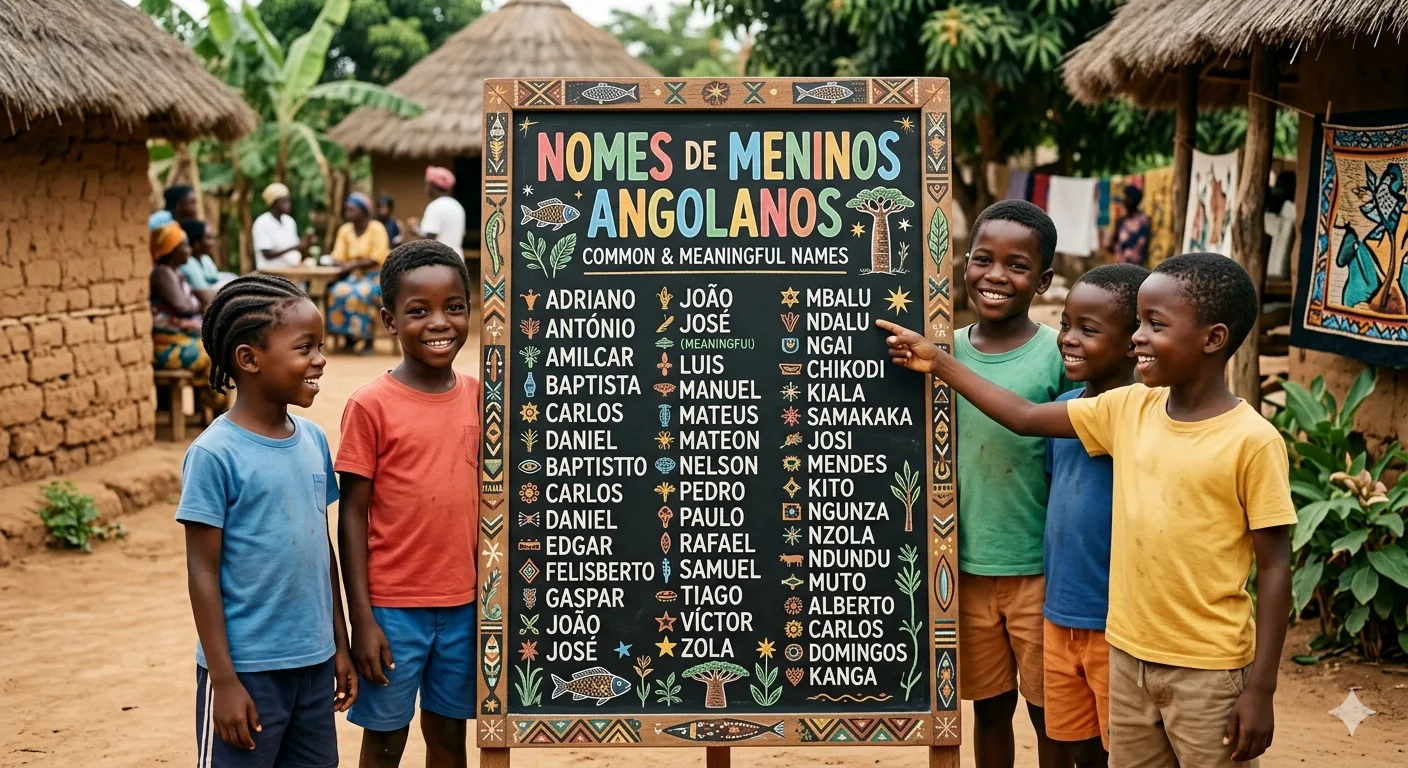
Traditional Angola Boy Names Rooted in Culture and History
Traditional Angolan names carry the memory of ancient kingdoms, sacred rivers, warrior traditions, agricultural communities, and the profound spiritual worldview of the Bantu peoples who have inhabited Angola for thousands of years. These names connect sons to a heritage of proud kings, brave hunters, skilled traders, and communities who understood the land with an intimacy that shaped every dimension of life including the naming of children.
Kimbundu and Bantu Heritage Names
The Kimbundu people, centered around Luanda and the Malanje plateau, have one of the richest naming traditions in Angola. Kimbundu names are often descriptive, circumstantial, or spiritual, reflecting the conditions at the time of birth, the qualities the family hopes the child will embody, or the connection between the child and the ancestral spirit world. These names carry a depth of meaning that Portuguese names, however beautiful, cannot fully replicate.
|
Name |
Language |
Meaning and Significance |
|
Kipanga |
Kimbundu |
Sword; a name of fierce strength and valor |
|
Mukenga |
Kimbundu |
Chief; one born to lead and guide |
|
Mbala |
Kimbundu |
Clever as a monkey; sharp and resourceful |
|
Tumelo |
Bantu/Sotho |
Faith; one who lives with deep belief |
|
Nzinga |
Kimbundu |
River that bends; flexible and enduring strength |
|
Kasongo |
Luba/Bantu |
Wanderer; one who moves with purpose |
|
Mulenga |
Bemba/Bantu |
Rain; the one who brings abundance and life |
|
Zumbi |
Kimbundu |
Great spirit; supernatural power and presence |
Names of Angolan Catholic Religious Tradition
Roman Catholicism arrived in Angola with the Portuguese in the 15th century and has shaped Angolan cultural identity profoundly for over five centuries. The names of Catholic saints carry deep reverence in Angolan families, particularly among communities in western Angola where the Church established its earliest and deepest roots. These Portuguese-form saints names are central to the Angolan naming tradition and continue to be given to boys across all regions of the country.
|
Name |
Meaning |
Religious Significance |
|
Benedito |
Portuguese/Latin |
Blessed; one who carries God's blessing |
|
Salvador |
Portuguese/Latin |
Savior; one who rescues and redeems |
|
Batista |
Portuguese/Greek |
Baptist; the one who baptizes in faith |
|
Domingos |
Portuguese/Latin |
Of the Lord; belonging entirely to God |
|
Santos |
Portuguese/Latin |
Saints; one connected to holy tradition |
|
Conceicao |
Portuguese/Latin |
Conception; life given through divine will |
|
Agostinho |
Portuguese/Latin |
Venerable; worthy of great reverence and honor |
Rare and Unique Angola Boy Names Worth Discovering
As commonly shared names spread across cities and online communities, many Angolan families are reaching deeper into their regional heritage, ancient kingdom histories, and geographic identity to find truly unique and rare Angolan boy names. Some of the most distinctive choices come from the names of Angola's rivers, provinces, ancient peoples, and historic places, transformed into personal names that carry the soul of the nation in a single word.
|
Name |
Origin |
Rarity |
Meaning and Significance |
|
Cubango |
Angolan Geographic |
Very Rare |
Named after the Cubango River; deeply rooted in Angolan geography |
|
Dembos |
Kimbundu |
Very Rare |
Ancient region of Angola; a name of fierce historical pride |
|
Kavango |
Angolan Bantu |
Rare |
River and region name; nature and homeland in one beautiful word |
|
Mbanza |
Kimbundu |
Rare |
Capital, royal court; a name of great dignity and authority |
|
Quissama |
Kimbundu |
Very Rare |
Ancient Angolan people and region; a name of fierce identity |
|
Lumbala |
Luvale/Bantu |
Rare |
Name of Angolan district; carries regional pride and heritage |
|
Catete |
Kimbundu |
Very Rare |
Historic Angolan town; deeply local and strikingly distinctive |
|
Uige |
Kimbundu |
Rare |
Northern Angolan province; a strong and unusual geographic name |
|
Malanje |
Bantu |
Very Rare |
Angolan province; angular and bold, uniquely African sound |
|
Saurimo |
Angolan Regional |
Very Rare |
Angolan diamond city; rare, noble, associated with great wealth |
Choosing a rare Angolan name gives your son a genuinely singular identity while honoring the deepest layers of Angolan geographic and historical heritage. Names like Mbanza and Kipanga carry the ancient dignity of Kimbundu royal tradition. Names like Kwanza and Cubango connect a child to the great rivers that have shaped Angolan civilization from its earliest days. These names are rare because they have not yet reached wider consciousness outside Angola, but they carry an authenticity and power that common names cannot match.
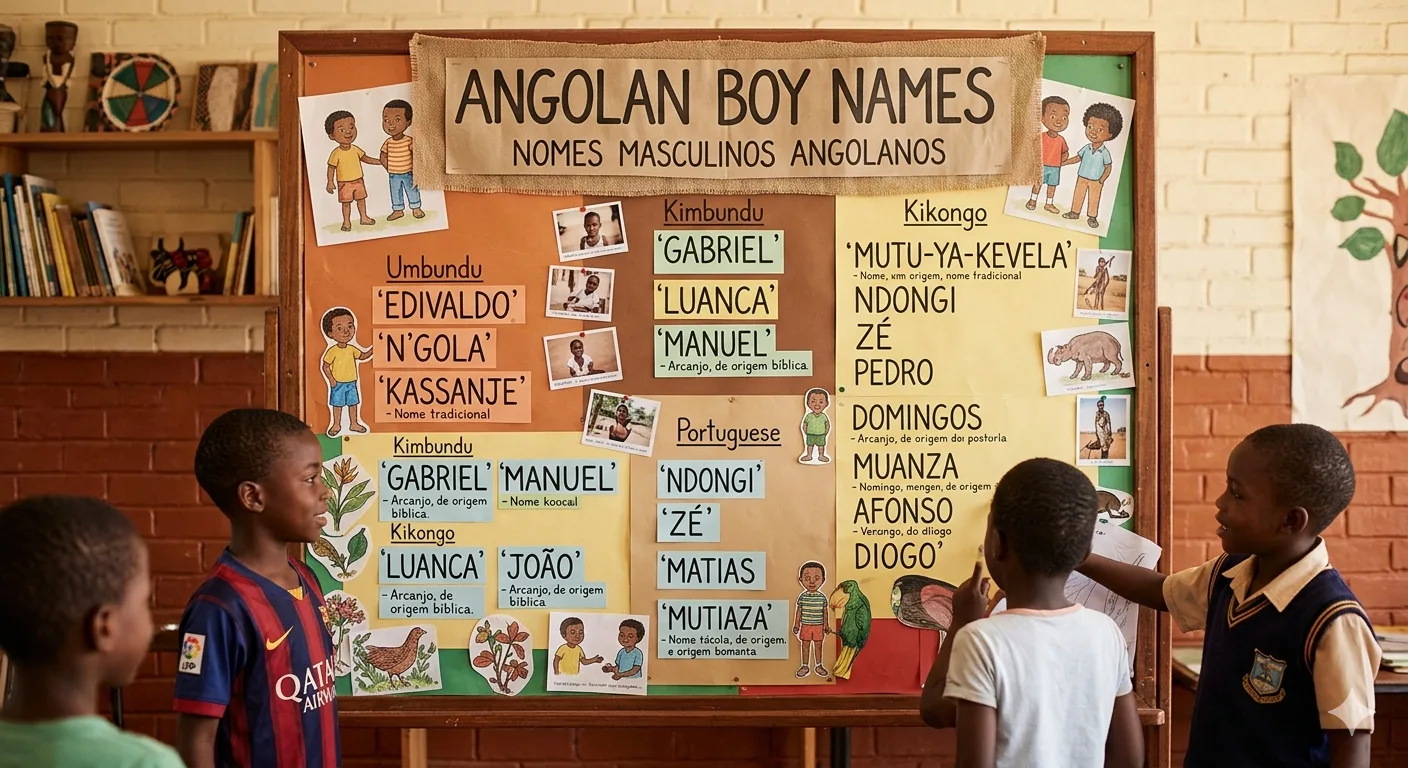
Baby Naming Ideas for Angolan Boys
Choosing the perfect name for your son is one of the most meaningful acts of parenthood. Angola offers an extraordinarily rich pool of naming inspiration because it sits at the intersection of multiple great naming traditions from the Bantu kingdoms of the interior to the Portuguese maritime world and the modern global culture of a fast-growing nation. Here are some themed categories of baby name ideas drawn from Angolan heritage to guide your choice.
Nature-Inspired Angolan Boy Names
Angola's dramatic and beautiful landscape, from the Atlantic coastline to the Namib Desert in the south, the central highland plateau, the vast Congo Basin rainforests of the north, and the Okavango Delta source regions in the east, has inspired a category of names that reflect the natural world with particular power. These names carry an elemental freshness and groundedness that feels both timeless and deeply African.
|
Name |
Natural Element |
Meaning |
|
Kuito |
Angolan River |
After the Cuito River of central Angola |
|
Longa |
Angolan River |
River name; one who flows long and far through life |
|
Kwanza |
Kimbundu |
Named after Angola's great national river |
|
Mucusso |
Angolan Region |
Dense forest; one of depth and natural richness |
|
Savimbi |
Ovimbundu |
Meaning related to land and earth strength |
|
Bengo |
Kimbundu Province |
River province; cool, elemental, deeply Angolan |
Short and Powerful Angolan Boy Names
Short names carry a particular striking quality in both Portuguese and Kimbundu, and many of the most stylish modern Angolan boy names are those that pack tremendous meaning into just two or three syllables. These names are easy to call across a courtyard, easy to remember in a city, and carry a confident directness that suits a boy growing into his identity in one of Africa's most energetic nations.
|
Name |
Letters |
Meaning |
|
Zé |
2 |
Short for José; God will increase |
|
Ado |
3 |
Short, noble; a compact name of dignity |
|
Beto |
4 |
Beloved pet form of Alberto or Roberto |
|
Davi |
4 |
Beloved; the David of modern Angola |
|
Caio |
4 |
Rejoice; vibrant and joyful short name |
|
Leo |
3 |
Lion; courageous and compact |
|
Gil |
3 |
Servant of God; ancient and brief |
Latest Naming Trends for Angolan Boys in 2026
Angolan baby naming trends in 2026 reflect the nation's extraordinary position as a young, rapidly urbanizing, deeply spiritual, and globally connected African country. Several distinct and significant trends define how Angolan families are naming their sons right now.
The Rise of Biblical and Evangelical Names
Angola has experienced dramatic growth in evangelical Protestant Christianity since the 1990s, and this spiritual shift has had a clear and powerful effect on naming patterns. Biblical names, particularly those from the Old Testament, are surging in popularity. Names like Elias, Davi, Mateus, Samuel, Jonas, and Noah are appearing with increasing frequency on birth registrations across Angola, reflecting the influence of evangelical churches that now reach into every province and social class. These names carry both spiritual significance and a modern global sound that appeals to young Angolan families.
Short and Modern Names Are Dominating
The global trend toward shorter, more impactful names is strongly visible in urban Angola. Names of two to three syllables with open vowel endings are highly favored by modern Angolan parents because they feel contemporary, are easy to use across Portuguese, English, and Bantu languages, and carry a confident energy suited to a generation that will grow up in an increasingly digital and connected world. Names like Leo, Davi, Caio, Tiago, and Enzo exemplify this trend perfectly.
Pride in Indigenous and Kimbundu Names Is Growing
Following decades in which Portuguese names dominated birth registrations, a new generation of culturally conscious Angolan parents is reclaiming indigenous Kimbundu, Ovimbundu, and Chokwe names as a statement of African identity and pride. Names like Mukenga, Kipanga, Nzinga, and Zumbi are being chosen with increasing deliberateness by families who want to honor their Bantu heritage and distinguish their sons from the sea of common Portuguese names. This movement is particularly strong among educated urban families in Luanda and Huambo.
International Names With Angolan Resonance
Angola's Portuguese-speaking connections to Brazil, which shares many cultural and musical influences with Angola, have brought Brazilian Portuguese name trends into the Angolan naming conversation. Names like Davi, Caio, and Enzo, which are enormously popular in Brazil, feel natural and stylish to Angolan ears precisely because of the deep Afro-Brazilian cultural connection. This cross-Atlantic naming influence is unique to the Lusophone world and gives Angolan names a particular richness of association.
|
Name |
Trend Status |
Meaning |
|
Mateus |
Consistent Top Pick |
Gift of God |
|
Tiago |
Rising Steadily |
Supplanter; determined |
|
Davi |
New Entry, Climbing |
Beloved |
|
Zion |
Cultural Pride Pick |
Highest point |
|
Kalani |
Spiritual Trend |
Of the sky |
|
Elias |
Surging |
My God is Yahweh |
|
Leo |
Consistently Popular |
Lion |
|
Enzo |
Stylish Modern Pick |
Home ruler |
|
Noah |
International Favorite |
Rest, comfort |
|
Caio |
Short Name Trend |
Rejoice |
How Angolan Families Choose a Name for Their Son
The process of naming a child in Angola is a rich social and spiritual event that involves the family, the community, and in many traditions the guidance of elders or religious leaders. Understanding how Angolan names are chosen illuminates why these names carry such depth and why certain names persist across generations while others fade or return with new energy.
Read More: Antigua and Barbuda
Catholic Baptism and the Saints Calendar
For the large majority of Catholic Angolan families, baptism plays a central role in the formal naming of a child. Many families choose names tied to the feast day of a Catholic saint near the date of the child's birth. This means the Catholic liturgical calendar has had an enormous shaping influence on Angolan naming patterns for centuries. A boy born in June might naturally receive the name Antonio after Sant Antonio, whose feast day falls on the 13th of that month and who is one of the most beloved saints in all of Angola.
Traditional Bantu Naming Ceremonies
In many Angolan communities, particularly those where Kimbundu, Ovimbundu, and Chokwe traditions remain strong, the naming of a child is accompanied by a ceremony involving the extended family and community elders. The name given in these ceremonies often reflects the circumstances of the birth, the time of year, a significant event happening in the community, a quality the parents hope the child will carry, or the name of an ancestor whose spirit is believed to live on in the new child. This practice, known across many Bantu cultures as ancestral naming, gives Angolan names a living spiritual dimension.
Family Continuity and Ancestral Names
Like many African cultures, Angolan families frequently honor grandparents and significant ancestors by passing their names to a new generation. A son named after his paternal grandfather carries that ancestor's reputation, spiritual protection, and family legacy into a new generation. In rural communities where oral history and family memory are central to social identity, these naming patterns create deep threads of continuity across time.
Modern Influences and Digital Culture
Today's Angolan parents, particularly in Luanda and other urban centers, have access to a wide world of naming inspiration through social media, streaming content from Brazil and Portugal, and online naming databases. The enormous influence of Brazilian telenovelas and music in Angola means that names popular in Brazil, especially short, melodic Portuguese names, travel quickly into Angolan naming conversations. This digital and cultural connectivity is accelerating the spread of modern stylish names alongside the enduring tradition of deep indigenous and Catholic naming.
Cultural and Religious Influence on Angolan Boy Names
Angola's naming culture is shaped by a constellation of forces that create one of the most layered and meaningful naming traditions anywhere in Africa. The Portuguese colonial legacy brought the Catholic Church and the Portuguese language deeply into Angolan life. The Bantu peoples of Angola, including the Ovimbundu in the central highlands, the Kimbundu around Luanda, the Bakongo in the north, and the Chokwe in the northeast, each carry their own ancient naming wisdom that survives and thrives today.
The Catholic Church remains the largest religious institution in Angola, and its influence on naming is pervasive. The feast days of saints, the tradition of godparents who often influence naming choices, and the theological significance of giving a child a name connected to a holy intercessor all ensure that Catholic names dominate Angolan birth registrations. At the same time, the explosive growth of evangelical Protestant churches has introduced a new wave of Old and New Testament names that carry deep meaning for the millions of Angolan families who have embraced these faith communities.
The Kimbundu name Nzinga deserves special mention not only as a boy name possibility but as a symbol of Angolan cultural pride. Queen Nzinga of Ndongo and Matamba was one of the most brilliant and fierce leaders in Angolan history, and the name carries her legacy of resistance, intelligence, and absolute determination. Names connected to the great figures of Angolan precolonial history carry this kind of weight and meaning, giving a child a connection to heroic ancestry.
Tips for Choosing the Perfect Angolan Boy Name
Whether you are an Angolan family deeply rooted in the naming traditions of your region or an international family drawn to the beauty and power of Angolan names, these thoughtful and practical tips will help guide your choice.
• Learn the correct pronunciation of any Kimbundu or Bantu name you consider. Many of these names have a musical quality when spoken correctly that changes completely the impression they make. Listen to native speakers if possible before finalizing your choice.
• Say the full name including your family surname out loud several times in a row. Ensure the rhythm and sound of the complete name flows naturally, avoids awkward consonant clusters, and feels good to say quickly in daily life.
• Consider how the name will function across the languages your son may use. In Angola today, Portuguese is essential, but English is increasingly important for business and education, and indigenous languages remain alive in family and community settings. A name that works gracefully across these contexts is a genuine advantage.
• Research the historical and spiritual significance of any name you are considering. Many Angolan and Kimbundu names carry stories tied to ancient kings, sacred rivers, legendary battles, or ancestral spirits that add tremendous depth to a simple name.
• Consult family elders before finalizing a name. In many Angolan traditions, older family members have insight into family naming patterns, ancestral names that carry blessings, and names that should be avoided because of difficult associations within the family history.
• Consider the nickname potential of the name. Portuguese names often have affectionate short forms used in childhood, like Zé for José or Beto for Alberto. Knowing the likely nickname ensures you love both the formal name and its everyday diminutive.
• Think carefully about the meaning of the name in terms of the qualities and destiny you wish for your son. In Angolan cultural tradition, a name is considered to have the power to shape a child's character and life path. Names rooted in strength, wisdom, divine favor, and light carry a subtle but real blessing.
• If choosing a rare indigenous Angolan name, ensure it is accessible enough for your son to use comfortably in all the contexts of his life, from school to work to international settings, without constant explanation or mispronunciation causing frustration.
Generate More Boy Names: Boy Names Generator
Conclusion: Giving Your Son the Gift of an Angolan Name
An Angolan boy name is far more than a sound attached to a child at birth. It is a declaration of belonging, a thread connecting your son to one of Africa's most complex and compelling histories, to the musical beauty of the Portuguese language as spoken in Africa, to the ancient wisdom of the Kimbundu and Bantu peoples who shaped Angolan civilization long before any European ship sailed to its shores, and to the vibrant, forward-looking energy of a nation that is writing one of Africa's most dramatic stories of growth and transformation.
Whether you choose the timeless Catholic dignity of Manuel or Francisco or Antonio, the poetic depth of Arnau or Bernat or Mukenga or Kipanga, the modern elegance of Mateus or Davi or Zion or Elias, or the rare and profound distinction of Mbanza or Quissama or Galdric, you are giving your son something that will accompany him through every chapter of his life. Angolan names draw from a culture that has survived centuries of extraordinary challenge, retained its linguistic diversity, its spiritual depth, and its communal warmth through everything, and is now entering a period of genuine possibility and pride.
Take your time, speak the name aloud in every context you can imagine, consult your family and your community, reflect deeply on the meaning, and choose the name that feels as though it was always destined for your son. The right Angolan name will carry him from the streets of his childhood all the way to wherever his remarkable life takes him.