 Korean Girl Name Generator
Discover beautiful Korean names with elegant meanings
Guides & Articles
South Korean Girl Names: A Complete Guide to Stylish, Popular and Meaningful Choices
Discover the most beautiful, trending, unique and culturally rich South Korean girl names for 2026
Introduction: The Beautiful World of South Korean Girl Names
Choosing a name for your baby girl is one of the most deeply meaningful decisions any parent will make, and in South Korea, this decision carries profound cultural, philosophical, and familial significance. South Korean girl names are among the most elegant, nuanced, and symbolically rich names anywhere in the world. They reflect a civilization shaped by thousands of years of Confucian values, Buddhist philosophy, and a uniquely Korean aesthetic sensibility that prizes beauty, harmony, intelligence, and moral virtue.
Korea has one of the most thoughtful naming traditions on earth. Unlike many Western naming cultures where names are often chosen primarily for how they sound, Korean names are traditionally selected with enormous care for the meaning of the Chinese characters (hanja) used to write them. The combination of characters chosen for a name creates a unique personal message about the hopes and values a family holds for their daughter, turning every Korean name into a small poem about who that child is meant to become.
In 2026, South Korean girl names are at a fascinating crossroads of tradition and modernity. The global popularity of Korean culture through K-pop, K-dramas, Korean cinema, Korean skincare, and Korean cuisine has made Korean names more widely recognized and admired around the world than ever before. At the same time, within South Korea itself, naming trends are evolving rapidly, with modern Korean parents balancing deep respect for traditional naming conventions with a desire for names that feel fresh, contemporary, and internationally accessible.
Whether you are of Korean heritage searching for a name that honors your roots, a parent anywhere in the world drawn to the elegance of Korean baby girl names, or simply someone who loves the beauty of names and the cultures behind them, this complete guide covers everything you need to know about South Korean girl names. You will find popular names, modern trending names, traditional and classical names, rare and unique picks, names with deep cultural meaning, and expert insights into how Korean names are chosen and what makes them so special.
Popular South Korean Girl Names with Beautiful Meanings
Certain names have held their place in Korean hearts for years, consistently appearing among the most loved choices for baby girls across the country. These popular South Korean girl names combine beautiful sounds, profound meanings, and strong cultural resonance. If you want a name that feels warmly familiar in Korean society while carrying genuine depth, these are the names to explore first.
|
Name (Romanized) |
Meaning / Hanja Roots |
Why It Stands Out |
|
Ji-yeon |
Wisdom and grace, lotus beauty |
Elegant classic, consistently top-ranked |
|
Seo-yeon |
Auspicious, beautiful and graceful |
One of Korea's most beloved modern names |
|
Min-jun |
Smart and handsome, bright |
Widely loved, versatile and timeless |
|
Ha-eun |
Grateful and blessed grace |
Soft and beautiful, widely popular |
|
Ji-woo |
Wisdom and rainwater, nurturing |
Poetic, natural imagery, much loved |
|
Ye-jin |
Precious and beautiful, artistic |
Elegant and refined, top trending |
|
Soo-yeon |
Gifted and graceful, beautiful lotus |
Classic and enduring, deeply loved |
|
Na-yeon |
Graceful and beautiful lotus |
Flowing sound, widely adored |
|
Hye-jin |
Wise and precious, brilliant gem |
Sophisticated, strong cultural roots |
|
Ji-eun |
Wisdom and grace, silver kindness |
Delicate and meaningful, popular |
|
Eun-ji |
Silver and wisdom, graceful talent |
Harmonious combination, widely chosen |
|
Da-eun |
Virtuous and kind, graceful |
Warm and gentle, consistently beloved |
Names like Seo-yeon and Ji-yeon have dominated the top positions in South Korean baby girl name rankings for many years because they combine the two qualities Korean parents prize above all others in a name, which are meaningful depth and beautiful sound. Seo-yeon uses characters meaning auspicious and beautiful together with graceful, creating a name that expresses a wish for a daughter who will move through life with both good fortune and elegance.
The character combination in Korean names is deeply intentional. Parents often consult naming experts, family elders, or even professional name consultants who use the ancient system of saju, based on the four pillars of birth year, month, day, and hour, to determine which character combinations are most auspicious for a particular child. This practice turns the naming process into a deeply considered ritual that honors the child as an individual before she has even been born.
Modern and Trending South Korean Girl Names in 2026
South Korean parents in 2026 are drawn to girl names that feel fresh, contemporary, and forward-looking while still respecting the meaningful depth that Korean naming tradition values. Modern trending Korean names often have a lighter, more musical sound than traditional names, with cleaner syllable structures that feel comfortable in an increasingly globalized world.
|
Name (Romanized) |
Meaning |
Why Trending |
|
Seo-ah |
Auspicious and beautiful |
Fresh and elegant, hugely fashionable |
|
Ha-rin |
Summer and kind, graceful |
Light and modern, rising fast |
|
Yoo-na |
Gentle and delicate, unique |
Soft musicality, widely loved |
|
Ji-ah |
Wisdom and beauty |
Short and sweet, very contemporary |
|
Chae-won |
Colorful and original source |
Vibrant and creative, trending now |
|
Rae-won |
Foundation and beginning |
Strong and unique, gaining popularity |
|
Hani |
Grace and beauty, kind spirit |
Simple and charming, rising fast |
|
Soo-ah |
Gifted and beautiful |
Elegant and modern, very popular |
|
Da-in |
Virtuous and kind, gentle |
Simple, meaningful, widely chosen |
|
Ye-na |
Art and delicate grace |
Creative feel, fashionable in 2026 |
|
Ji-soo |
Wisdom and excellence |
Strong and beautiful, top trending |
|
Ri-na |
Upright and graceful, delicate |
International appeal, rising fast |
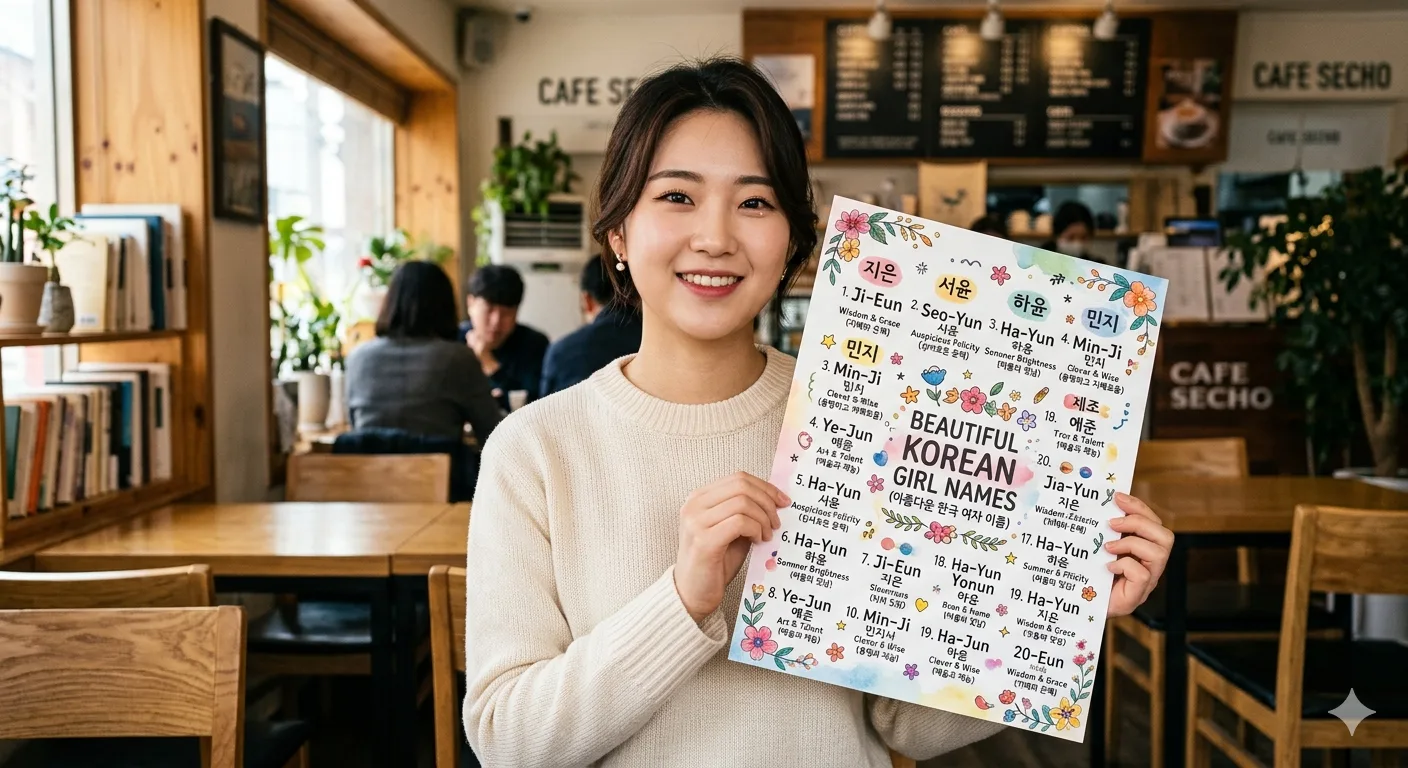
One of the clearest patterns defining modern South Korean girl names in 2026 is the preference for two-syllable combinations that feel clean, bright, and melodically satisfying. Names like Seo-ah, Ha-rin, and Ji-ah represent a modern Korean aesthetic that values simplicity and elegance over complexity. These names are easy for both Korean and international speakers to pronounce correctly, which is a growing consideration in South Korea as global connections become increasingly central to Korean professional and social life.
The influence of K-pop idols and K-drama actresses on baby naming trends in South Korea is enormous and immediate. When a beloved idol or actress with a particular name achieves extraordinary popularity, the effect on baby naming statistics can be dramatic. Names like Yoo-na and Ji-soo have seen significant rises in popularity that correlate with the success of entertainers who carry those names, reflecting how deeply popular culture shapes naming choices in contemporary South Korean society.
Traditional and Classical South Korean Girl Names That Never Go Out of Style
Traditional South Korean girl names carry the weight of centuries of history, the beauty of time-tested elegance, and the comfort of deep cultural familiarity across generations. These classical names have been beloved by Korean families for a hundred years or more and continue to be chosen with respect and pride today because of their enduring beauty and profound cultural roots.
|
Name (Romanized) |
Meaning / Hanja Roots |
Why It Endures |
|
Ok-soon |
Jade and purity, pure gem |
Classic dignity, generations of use |
|
Bong-soon |
Phoenix purity, noble spirit |
Ancient royal associations, timeless |
|
Soon-hee |
Pure and bright, joyful radiance |
Warm and beautiful, cherished classic |
|
Mal-soon |
Tenth daughter, pure heart |
Traditional family naming, historic |
|
Bok-soon |
Happiness and purity |
Deeply traditional, loving meaning |
|
Jeong-sook |
Virtuous and pure, moral beauty |
Classical Confucian values expressed |
|
Hye-sook |
Wise and pure, pure wisdom |
Timeless elegance, much respected |
|
Young-ja |
Brave and outstanding, flower |
Historic beauty, enduring appeal |
|
Gyeong-sook |
Respect and purity |
Classical virtue name, deeply Korean |
|
In-sook |
Benevolence and purity |
Confucian ideal, time-honored choice |
|
Sun-ja |
Good and outstanding, fine child |
Traditional family name, beloved |
|
Myung-hee |
Bright and beautiful, luminous joy |
Radiant meaning, classic elegance |
Traditional Korean girl names from earlier generations often incorporate the character soon meaning pure or sook meaning virtuous, reflecting the deep Confucian emphasis on moral character that shaped Korean society for centuries. These names were not simply aesthetic choices but genuine statements of values, expressing what parents and families hoped their daughters would embody throughout their lives.
Names like Hye-sook and Jeong-sook carry a kind of classical Korean authority that speaks to the profound influence of Confucian philosophy on Korean civilization. Hye, meaning wisdom, combined with sook, meaning pure or virtuous, creates a name that encapsulates one of the highest ideals of traditional Korean womanhood, intelligence elevated by moral refinement. While many young Korean parents today gravitate toward more contemporary name styles, there is a growing appreciation for these traditional names as expressions of cultural depth and ancestral connection.
You can also use our Name Generator Tool to create unique names instantly. Bolivian Girl Names
Nature-Inspired South Korean Girl Names Blooming in 2026
Korea's extraordinary natural landscape, from the dramatic mountain ranges of Taebaek and Jirisan to the pristine coastlines, ancient forests, and the four vivid seasons that mark Korean life with beauty, has always inspired parents to choose names that honor the natural world. Nature-inspired girl names have a particularly strong tradition in Korean culture, where flowers, seasons, celestial elements, and natural phenomena carry deep symbolic meaning.
|
Name (Romanized) |
Natural Connection |
Why It Is Beloved |
|
Bom |
Spring season, new beginnings |
Pure and fresh, deeply poetic |
|
Kkot |
Flower, blooming beauty |
Beautiful symbolism, charming |
|
Ha-eul |
Sky and heaven, limitless |
Open and free, ethereally lovely |
|
Byeol |
Star, celestial brightness |
Dreamy and poetic, rising fast |
|
Nari |
Lily flower, graceful beauty |
Natural elegance, widely loved |
|
Bora |
Purple color, lavender hue |
Vibrant and creative, colorful |
|
Haet-sal |
Sunlight, warmth and radiance |
Warm and luminous, poetic feel |
|
Sae-byeol |
Morning star, dawn light |
Hopeful and beautiful, lyrical |
|
Naeun |
Gentle spring rain, tender |
Soft and nourishing, deeply Korean |
|
Sol |
Pine tree, strength endurance |
Evergreen symbol, deeply rooted |
|
Chae |
Color and vibrancy, colorful |
Creative and bright, fashionable |
|
Da-som |
Love like nature, caring warmth |
Warm and meaningful, uniquely Korean |
Bom, meaning spring in Korean, is one of the most poetically beautiful girl names in the Korean language. It is a pure Korean word name, known as a sunurimal name, that requires no Chinese characters to carry its meaning. Spring in Korean culture is associated with renewal, hope, warmth after the long winter, and the blooming of the cherry blossoms that define the most celebrated season in Korean aesthetic culture. Naming a daughter Bom is a wish for a life full of warmth, new beginnings, and natural beauty.
The Korean naming tradition has two distinct streams, names written in Chinese characters called hanja names, and pure Korean word names that draw directly from the Korean language itself. Nature-inspired names often come from this second category, using beautiful Korean words for natural phenomena. Byeol meaning star, Sol meaning pine tree, and Bom meaning spring are examples of this pure Korean naming tradition that is experiencing a significant revival as Korean parents rediscover the beauty of their native language.
Rare and Unique South Korean Girl Names That Truly Stand Out
For parents who want something genuinely one of a kind, the Korean naming tradition offers a wealth of rare and uncommon choices. These unique South Korean girl names are perfect for families who want their daughter to have a name that is distinctive, deeply meaningful, and unlikely to be shared with classmates. Korea's rich literary and philosophical heritage offers countless rare naming gems that most people have never encountered.
|
Name (Romanized) |
Meaning / Origin |
Why It Stands Out |
|
Ga-on |
Center of the world, core beauty |
Rare and profound, poetically Korean |
|
Ruri |
Lapis lazuli, precious blue gem |
Gem name, rare and beautiful |
|
Seulgi |
Wisdom and cleverness |
Pure Korean word, rare and strong |
|
A-reum |
Beauty, pure Korean word |
Elegantly rare, deeply meaningful |
|
I-seum |
Dew, morning freshness |
Rare and poetic, quietly lovely |
|
Seol |
Snow, pure and pristine |
Winter beauty name, rare gem |
|
Nuri |
World, the universe, everything |
Expansive meaning, wonderfully rare |
|
Da-hye |
Virtuous wisdom, kind intelligence |
Classic combination, uncommon choice |
|
Haneul |
Heaven and sky, infinite |
Rare pure Korean name, breathtaking |
|
Gyeoul |
Winter season, quiet beauty |
Seasonal name, rare and poetic |
A-reum is a particularly beautiful example of a pure Korean word name, meaning beauty itself in the Korean language. Unlike many Korean names that draw their meaning from Chinese characters, A-reum is a native Korean word that requires no translation or interpretation. It simply means beauty in the most direct and complete sense, making it one of the most elegantly meaningful girl names in the entire Korean naming tradition. Its rarity today makes it all the more precious as a naming choice.
Haneul, meaning heaven or sky in pure Korean, is another extraordinarily beautiful rare name that carries a sense of infinite possibility and spiritual elevation. In Korean culture, the sky and heaven have long been associated with divine presence, purity, and limitless potential. Naming a daughter Haneul is a profound wish for a life that reaches upward toward the highest possibilities of human experience, wrapped in a word that is both phonetically beautiful and culturally deep.
South Korean Girl Names with Deep Cultural and Spiritual Significance
Korean culture has been shaped by three great philosophical and spiritual traditions that continue to influence naming choices today, Confucianism, Buddhism, and a modern Korean Christianity that now encompasses a significant portion of the South Korean population. Each of these traditions contributes a distinct stream of names and naming values to the rich Korean naming landscape.
|
Name (Romanized) |
Cultural Tradition / Meaning |
Significance |
|
Yeon-hwa |
Lotus flower, Buddhist purity |
Lotus symbolizes enlightenment |
|
Da-mi |
Virtue and beauty, moral grace |
Confucian virtue expressed |
|
Eun-hye |
Grace and favor, blessed kindness |
Christian grace tradition |
|
Bo-ram |
Worth and value, meaningful life |
Deep philosophical meaning |
|
Hye-won |
Wise and original source |
Wisdom tradition, Confucian ideal |
|
Yeong-ji |
Eternal wisdom, lasting knowledge |
Buddhist-Confucian blend |
|
Grace |
Divine grace, blessed by God |
Christian naming, widely used |
|
Ji-hyun |
Wisdom and virtue, moral wisdom |
Classic Confucian combination |
|
In-hye |
Benevolence and grace |
Confucian highest virtue expressed |
|
Myung-won |
Bright source, enlightened origin |
Buddhist luminosity tradition |
The lotus flower holds a place of supreme importance in Korean Buddhist symbolism and its influence on Korean girl names has been profound and lasting. The lotus, known as yeon-hwa in Korean, grows from mud and murky water to bloom in perfect purity and beauty above the surface, making it one of Buddhism's most powerful symbols of spiritual achievement and the possibility of rising above difficult circumstances to find enlightenment and beauty. Names containing the lotus character or meaning carry this ancient spiritual resonance into everyday Korean life.
Confucian values have shaped Korean naming culture more deeply and consistently than any other single influence. The Confucian virtues of benevolence or in, righteousness or ui, propriety or ye, wisdom or ji, and trustworthiness or sin have been woven into Korean girl names for centuries, with parents expressing their deepest hopes for their daughters through the careful selection of characters that embody these qualities. A name like Ji-hyun, combining wisdom with virtue, is a small Confucian manifesto about the kind of person a daughter is meant to grow into.
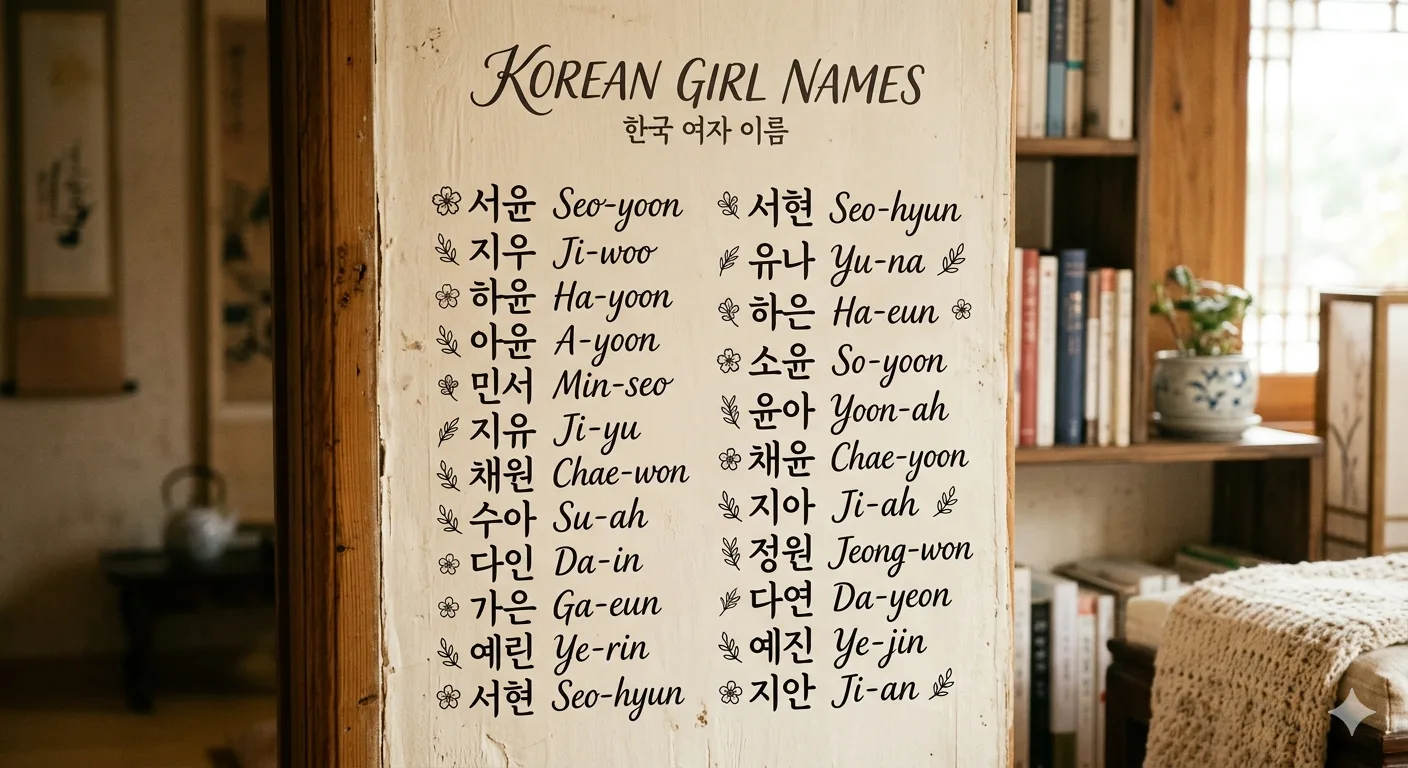
How Names Are Chosen in South Korean Culture and Society
Understanding how Korean families approach the naming process reveals the remarkable depth and care that Korean culture brings to this most fundamental human ritual. South Korean naming traditions are among the most sophisticated and thoughtfully structured in the world.
The Hanja System and Character Selection
The most distinctive feature of traditional Korean naming practice is the use of hanja, Chinese characters adopted into the Korean writing system, to create names with specific, layered meanings. When Korean parents select a name for their daughter, they are not simply choosing a sound but selecting specific characters whose meanings combine to create a unique personal wish for their child. A name can mean something as poetic as beautiful like a lotus in summer or as grounding as wise and virtuous, depending on the character choices made.
Professional name consultants, known in Korea as jakeomgaem, are widely consulted by Korean families when naming a child. These specialists consider not only the meanings of the characters chosen but also the stroke counts of the hanja, the balance of yin and yang energies in the name, the compatibility of the name with the family's surname, and the child's saju, the four pillars of birth based on the traditional Korean calendar. This consultation process reflects how seriously Korean culture treats the naming of a child as a decision that can shape the entire trajectory of a person's life.
Generational Name Characters
Many Korean families use a generational name character called a dollimja that is shared by all children of the same generation within a family or clan. This character, which typically occupies either the first or second syllable of a Korean name, creates a visible thread of connection between siblings and cousins, allowing anyone who knows the family's naming tradition to immediately recognize who belongs to which generation. This practice of generational naming has deep roots in Korean Confucian family culture and continues to be maintained by many traditional Korean families today.
You can also use our Name Generator Tool to create unique names instantly. Bosnian Girl Names
Modern Shifts in Korean Naming Practice
Contemporary South Korean parents are navigating a fascinating tension between traditional naming practices and modern preferences. Many young Korean parents are moving away from the hanja-based naming system toward pure Korean word names or phonetically chosen names that prioritize sound and modern aesthetic appeal over the complex meanings encoded in Chinese characters. This shift reflects broader changes in Korean society, including declining Confucian traditionalism, increasing individualism, and the influence of a global popular culture where Korean names are heard and appreciated by international audiences.
K-Pop and K-Drama Influenced South Korean Girl Names
The extraordinary global impact of Korean popular culture in the twenty-first century has created a new and powerful stream of influence on South Korean girl names. The names of beloved K-pop idols, K-drama heroines, and famous Korean actresses have become significant forces in shaping naming trends both within South Korea and among Korean communities worldwide.
|
Name (Romanized) |
Cultural Connection |
Current Appeal |
|
Ji-soo |
Famous idol and actress name |
Elegant and widely loved |
|
Chaeyeon |
K-pop idol association |
Colorful and graceful, trending |
|
Tzuyu |
K-pop global icon name |
International recognition, rising |
|
Wendy |
K-pop stage name, widely loved |
Western-Korean blend, popular |
|
Irene |
Classic and modern blend |
Sophisticated, K-pop associated |
|
Winter |
K-pop idol stage name |
Fresh English word name, rising |
|
Karina |
International K-pop name |
Glamorous and modern, trending |
|
Yuna |
Gentle and delicate beauty |
K-pop and animation beloved |
|
Minji |
Smart and precious, bright gem |
K-pop fresh face popularity |
|
Hanni |
Grace and kind spirit |
Rising fast, globally recognized |
The global success of K-pop has created a remarkable phenomenon in which Korean names are now recognized and admired by young people in countries as diverse as the United States, Brazil, France, Thailand, and Nigeria. Names like Tzuyu, Karina, and Winter, whether given names or stage names of beloved idols, have become aspirational names for a generation of fans worldwide. This global dimension of Korean naming culture is genuinely unprecedented in Korean history and reflects the extraordinary soft power that Korean popular culture has achieved.
Within South Korea itself, the naming choices of K-pop groups have created measurable effects on baby name trends. When a member of a beloved group achieves particular fame, the characters in their name often see a surge of use among new parents who want to honor the association while creating something fresh and personal for their own child. This pop culture dimension of Korean naming is as dynamic and fast-moving as the industry that generates it.
You can also use our Name Generator Tool to create unique names instantly. South Sudanese Girl Names
South Korean Baby Girl Naming Ideas for Every Family
Whether you are looking for something traditional and deeply rooted in Korean heritage, something modern and internationally friendly, something nature-inspired and poetically Korean, or something that honors specific values or wishes for your daughter, the Korean naming tradition offers beautiful options in every direction.
For families who want a name rooted in traditional Korean virtue, combinations using the characters for wisdom (ji or hye), grace (eun or yeon), beauty (mi or ah), or purity (sook or soon) have endured for generations and continue to carry deep meaning. A name like Hye-jin combining wisdom with precious gem creates a wish for a daughter who will shine with intelligent beauty throughout her life.
For families drawn to the more lyrical and natural side of Korean naming, the pure Korean word names offer extraordinary beauty. Bom for spring, Byeol for star, Seol for snow, and Haneul for sky are names that need no translation to convey their beauty and meaning. They are among the most poetically Korean names available, drawing directly from the language that Korean people have spoken for thousands of years before the adoption of Chinese characters.
For families connected to the Korean Christian tradition, names that combine Korean aesthetic sensibility with values drawn from Christian faith are widely used and deeply meaningful. Names like Eun-hye, meaning grace and favor, or Da-mi, combining virtue and beauty, carry a spiritual dimension that Korean Christian families find deeply resonant. Many Korean Christian families also combine a Western baptismal name with a Korean name, creating a dual naming practice that honors both their faith and their cultural heritage.
Latest South Korean Girl Name Trends Shaping 2026
South Korean baby girl naming trends in 2026 reflect a fascinating convergence of cultural pride, global awareness, and a new generation of Korean parents who are making deeply individual choices while still honoring the traditions that make Korean naming culture so distinctive.
Pure Korean word names are experiencing their strongest revival in decades. Names drawn directly from the Korean language itself, without dependence on Chinese character meanings, are being chosen at growing rates by young Korean parents who want to express both Korean identity and linguistic pride. Bom, Byeol, Nuri, Haneul, and A-reum represent this beautiful trend toward names that sound unmistakably and lovingly Korean.
Short two-syllable names remain overwhelmingly dominant in South Korea, with single-syllable pure Korean names also gaining ground. The preference for clean, simple syllable structures reflects both traditional Korean phonetic aesthetics and the practical reality of a globalized world where names need to travel and be pronounced correctly by speakers of many different languages.
English and international names used alongside Korean names are becoming more common among Korean families with strong international connections, particularly among families who live abroad or work in globally connected industries. Names like Grace, Clara, Ella, and Sophie are being given as complementary Western names alongside Korean names by many families, creating a dual identity that reflects modern Korea's confident engagement with the world.
Gender-inclusive name sounds are gaining traction. While Korean names are culturally gendered in their character combinations, certain name sounds feel increasingly flexible and strong for girls in contemporary Korea. Names like Ji-woo, Ji-an, and Rae-won have a confidence and clarity that appeals to parents who want their daughters to have names that project strength alongside beauty.
Vintage Korean names are making a quiet but meaningful comeback. Names that might have seemed old-fashioned to a previous generation of Korean parents, names like Ok-soon, Bong-soon, and Hye-sook, are being rediscovered by some younger Korean parents as expressions of cultural depth and ancestral honor. This trend mirrors a global pattern of vintage name revivals and reflects a growing appreciation in South Korea for the richness of the country's own naming heritage.
Expert Tips for Choosing the Perfect South Korean Girl Name
Consider the hanja meaning carefully and deeply. In Korean naming culture, the meaning encoded in the characters chosen for a name is not a secondary consideration but the primary one. Take time to research the specific characters you are considering, their individual meanings, how their meanings interact when combined, and whether the resulting combination expresses something you genuinely want your daughter to carry with her throughout her life.
Check the name with your family surname. In Korean, the surname comes first and the given name follows, so the combination of surname and given name creates the full name that your daughter will use. Say the full name aloud many times and consider how the tones and syllables flow together. Certain surname and given name combinations create beautiful rhythmic sequences while others may feel awkward or inadvertently create problematic homophones with Korean words.
Explore both hanja names and pure Korean word names. The Korean naming tradition offers two beautiful streams, names written in Chinese characters with layered meanings, and pure Korean word names that draw directly from the Korean language. Both have genuine beauty and cultural depth. Pure Korean word names carry a particular freshness and directness that many contemporary Korean parents find appealing.
Consider the name's compatibility across cultures if international context matters. If your daughter will grow up in an international environment, a name that is both genuinely Korean and reasonably accessible to non-Korean speakers can be a valuable gift. Names like Seo-yeon, Ha-eun, and Ji-ah are authentically Korean while also being reasonably pronounceable for speakers of other languages.
Honor generational and family naming traditions where they feel meaningful. The dollimja system of generational character sharing creates beautiful visible connections between family members across generations. Consulting with family elders about whether your family has a generational naming tradition and whether you wish to honor it is a meaningful step in the Korean naming process.
Generate More Names: Girl Names Generator
Conclusion: Celebrating the Timeless Beauty of South Korean Girl Names
South Korean girl names are among the most thoughtfully constructed, symbolically rich, and culturally meaningful names in the world. They reflect a civilization shaped by centuries of Confucian philosophy, Buddhist spirituality, the extraordinary beauty of the Korean natural landscape, and the extraordinary creative energy of a modern nation that has shared its culture with the entire world through music, drama, cinema, and art.
Whether you choose a timeless classic like Hye-sook or Ji-yeon, a modern favorite like Seo-yeon or Ha-rin, a nature-inspired gem like Bom or Byeol, a K-culture influenced choice like Ji-soo or Yuna, or a rare and poetic pick like A-reum or Haneul, you are giving your daughter a name with genuine beauty, depth, and cultural meaning that will be a gift throughout her entire life.
The most important thing about choosing a South Korean girl name in 2026 is choosing one that resonates with your heart, honors the cultural heritage your family values, carries the hopes and wishes you hold for your daughter, and sounds beautiful to your ear. In the rich and endlessly generous world of Korean naming tradition, there is a perfect name waiting for every girl, a small poem written in sound and meaning that will accompany her through everything she will experience and achieve.
We hope this complete guide to South Korean girl names has inspired you, informed you, and helped you discover possibilities you might never have encountered before. May your daughter grow up proud of her name, connected to her beautiful heritage, and ready to make her own unique mark on the world.