 Japanese Girl Name Generator
Discover beautiful Japanese names with rich cultural heritage
Guides & Articles
Japanese Girl Names: A Complete Guide to Stylish, Popular and Meaningful Choices
Discover the most beautiful, trending, unique and culturally rich Japanese girl names for 2026
Introduction: The Timeless Beauty of Japanese Girl Names
Choosing the perfect name for your baby girl is one of the most meaningful and heartfelt decisions any parent will ever make. When it comes to Japanese girl names, this decision is elevated to an art form. Japan has one of the most poetic and carefully considered naming traditions in the entire world, where every syllable carries intention, every character holds visual beauty, and every meaning is chosen to shape the spirit of the child who will carry it through life.
Japanese girl names are celebrated globally for their elegance, lyrical quality, and the extraordinary depth of meaning packed into just a few beautiful sounds. Names like Sakura, Yuki, Haruki, and Aoi evoke the natural world, the changing seasons, light, flowers, and the sky in ways that feel both ancient and completely fresh. In Japan, a name is never merely a label. It is a carefully crafted wish, a piece of poetry, and a lifelong identity woven from the beautiful complexity of the Japanese writing system.
What makes Japanese girl names so special is the unique way in which meaning is layered through the kanji characters used to write them. A single pronunciation can be written with dozens of different kanji combinations, each producing a subtly different meaning and a different visual impression. This means Japanese parents put extraordinary thought into choosing not just how a name sounds but how it looks, what characters compose it, and what those characters say about the hopes and dreams they have for their daughter.
In 2026, interest in Japanese girl names is growing rapidly among parents around the world, not just in Japan. Parents in the United States, Europe, and across Asia are discovering the beauty of Japanese names and choosing them for daughters of every cultural background. Whether you are a Japanese family honoring the rich naming traditions of your culture, a family with Japanese heritage living abroad, or simply a parent who has fallen in love with the poetic elegance of Japanese names, this complete guide covers everything you need to know.
This article explores popular Japanese girl names with beautiful meanings, modern and trending options, traditional and cultural names deeply rooted in Japanese heritage, rare and unique picks, baby naming ideas, and the cultural forces that shape how Japanese parents choose names today. You will also find a comprehensive section on the latest Japanese naming trends in 2026 and a detailed FAQ section answering the questions parents most want to explore.
Popular Japanese Girl Names with Beautiful Meanings
Certain Japanese girl names have held their place in the hearts of Japanese families for generations while also gaining widespread international admiration. These popular Japanese girl names combine beautiful sounds, powerful meanings, and strong cultural resonance. If you want a name that feels warmly familiar while carrying genuine depth and poetic beauty, these beloved choices are the perfect place to begin your search.
|
Name |
Meaning |
Why It Stands Out |
|
Sakura |
Cherry blossom, spring beauty |
National symbol of Japan, universally beloved |
|
Yuki |
Snow, happiness, courage |
Soft and pure, endlessly popular across Japan |
|
Aoi |
Blue, hollyhock flower |
Simple, elegant, top-ranked in modern Japan |
|
Hana |
Flower, blossom, grace |
Universally loved, warm and beautifully simple |
|
Rin |
Dignified, cold, companion |
Short and strong, consistently fashionable |
|
Mei |
Bright, beautiful, sprout |
Sweet and modern, widely popular in Japan |
|
Yui |
Bind, tie together, superior |
Top-ranked Japanese girl name for many years |
|
Saki |
Blossom, hope, early summer |
Bright and fresh, beloved across generations |
|
Nana |
Seven, greens, apple tree |
Gentle and sweet, widely chosen by Japanese families |
|
Koharu |
Small spring, warm autumn |
Poetic seasonal name, charming and unique |
|
Mio |
Beautiful cherry blossom |
Soft, lovely, rising consistently in popularity |
|
Riko |
Child of reason, jasmine child |
Modern and stylish, very popular in contemporary Japan |
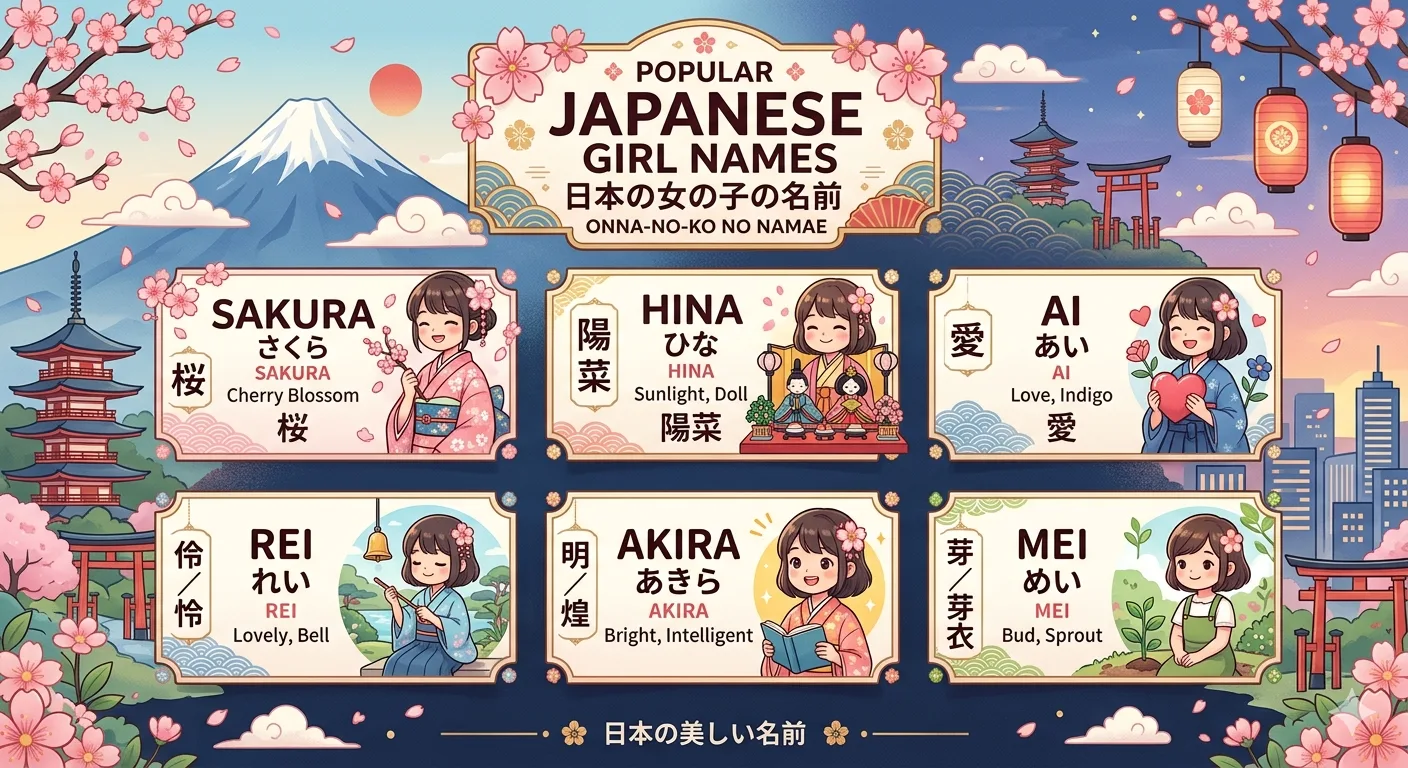
Sakura holds a place of extraordinary cultural importance in Japan that goes far beyond its status as a baby name. The cherry blossom is Japan's national flower, the subject of centuries of poetry, art, and philosophy, and the symbol of the fleeting beauty and preciousness of life that sits at the very heart of Japanese aesthetics. Choosing Sakura for a daughter is an act of deep cultural pride, a way of giving a child a name that connects her to one of the most beautiful and spiritually significant symbols in all of Japanese culture.
Yui has ranked among the top Japanese girl names for many consecutive years and represents exactly the kind of name that modern Japanese parents love. It is short, easy to say, visually beautiful in its kanji forms, and carries a meaning centered on connection and unity. Aoi, meaning blue or hollyhock, is another name that perfectly balances simplicity with poetic depth, offering a beautiful sound that feels equally elegant in Japanese and in international settings.
Modern and Trending Japanese Girl Names in 2026
Japanese parents in 2026 are drawn to girl names that feel contemporary, stylish, and forward-looking while still honoring the poetic traditions that make Japanese naming so beautiful. Modern trending Japanese girl names tend to have a clean, fresh quality that feels right for a child growing up in today's globally connected world. Here are the names gaining the most momentum across Japan and among Japanese-influenced naming communities worldwide right now.
|
Name |
Meaning |
Why Trending |
|
Hina |
Sunlight, warmth, little one |
Bright and cheerful, consistently top-ranked |
|
Kohana |
Little flower, small blossom |
Cute and poetic, beloved by young parents |
|
Ena |
Flame, picture, blessed |
Short and modern, rising fast in 2026 |
|
Ichika |
One thousand flowers, a flower |
Fresh and unique, very fashionable now |
|
Kotone |
Sound of the koto harp |
Musical, elegant, gaining rapid momentum |
|
Sora |
Sky, universe, vast blue |
Gender-fluid sky name, hugely popular |
|
Yuna |
Gentle, kind, moon |
Soft and beautiful, widely fashionable |
|
Misaki |
Beautiful blossom, cape |
Poetic place name, classically modern |
|
Akari |
Light, brightness, glow |
Luminous meaning, top trending choice |
|
Noa |
From the Bible, love, affection |
International crossover, rising fast |
|
Runa |
Moon love, flowing beauty |
Celestial and sweet, very current |
|
Kokoro |
Heart, mind, spirit, soul |
Deeply meaningful, emotionally resonant |
Akari, meaning light and brightness, has emerged as one of the most talked-about Japanese girl names of 2026. Its meaning carries the kind of warmth and optimism that resonates deeply with modern parents, and its sound is equally beautiful whether spoken in Japanese or in an international context. The name feels simultaneously rooted in Japanese culture and perfectly suited to a globally connected world, which is exactly what many contemporary parents are looking for.
Sora, meaning sky, represents a powerful trend toward names that evoke the natural world and a sense of limitless possibility. This gender-fluid name has become especially popular as Japanese parents increasingly embrace names that feel open and strong rather than narrowly defined. Kokoro, meaning heart, mind, and spirit, captures the Japanese philosophical concept of the inner self in a single beautiful word, making it one of the most emotionally resonant naming choices available in the Japanese language.
Traditional and Cultural Japanese Girl Names That Never Go Out of Style
Traditional Japanese girl names carry the weight of centuries of cultural history, the beauty of classical literature and poetry, and the comfort of deep familiarity across generations of Japanese families. These classic names have been cherished in Japan for hundreds of years and continue to be chosen today because of their enduring elegance, their connections to nature and philosophy, and the deep cultural pride they represe
|
Name |
Meaning |
Why It Endures |
|
Keiko |
Blessed child, respectful child |
Traditional and dignified, beautifully timeless |
|
Yoshiko |
Good child, joyful child |
Classic virtue name, beloved across generations |
|
Haruko |
Spring child, sunlight child |
Seasonal poetry, quintessentially Japanese |
|
Fumiko |
Child of writing, literary child |
Scholarly beauty, respected traditional choice |
|
Kazuko |
Harmonious child, peace child |
Deeply serene, culturally meaningful |
|
Michiko |
Child of the path, wise child |
Royal association, supremely elegant |
|
Nobuko |
Faithful child, noble child |
Dignified and strong, enduringly beloved |
|
Sumiko |
Child of clarity, clear beauty |
Serene and beautiful, classical grace |
|
Tomoko |
Wise child, friend child |
Warm and wise, consistently well-loved |
|
Hiroko |
Generous child, tolerant child |
Open-hearted meaning, graceful tradition |
|
Masako |
Elegant child, true child |
Royal and dignified, deeply respected |
|
Akiko |
Bright child, autumn child |
Luminous and seasonal, eternally beloved |
The suffix ko, meaning child, is one of the most distinctive and beautiful elements of traditional Japanese girl naming. Names ending in ko such as Keiko, Yoshiko, Haruko, Michiko, and Masako dominated Japanese baby naming throughout the twentieth century and carry a quality of gentle warmth and dignity that many Japanese families continue to love deeply. Michiko is particularly celebrated as the name of the beloved Empress of Japan, giving it an association with grace, intelligence, and quiet strength.
Haruko, meaning spring child, is a beautiful example of the Japanese tradition of using the names of the four seasons and the natural world to express wishes for a daughter. Naming a child after spring is an act of poetic hope, a wish that her life will always be filled with the warmth, renewal, and delicate beauty that the season brings. This tradition of seasonal naming is one of the most poetically rich aspects of Japanese girl naming culture and continues to inspire parents in Japan and around the world.
You can also use our Name Generator Tool to create unique names instantly. Bahrain Girl Names
Nature-Inspired Japanese Girl Names Celebrating the Natural World
Japan has one of the most profound and philosophically developed relationships with the natural world of any culture on earth. The Japanese aesthetic concepts of mono no aware, the bittersweet awareness of the transience of all beautiful things, and wabi-sabi, finding beauty in imperfection and impermanence, are both deeply connected to the natural world. It is no surprise that Japanese girl names drawn from nature are among the most beautiful and culturally meaningful available.
|
Name |
Natural Connection |
Why It Is Beloved |
|
Sakura |
Cherry blossom, spring's fleeting beauty |
National icon, extraordinarily poetic |
|
Hana |
Flower, all blooming things |
Universal floral beauty, widely cherished |
|
Yuki |
Snow, winter's pure white |
Serene and pure, deeply evocative |
|
Natsuki |
Summer moon, summer hope |
Seasonal poetry, warmly romantic |
|
Tsuki |
Moon, moonlight |
Celestial and luminous, quietly beautiful |
|
Kiku |
Chrysanthemum, autumn grace |
Imperial flower, culturally profound |
|
Ume |
Plum blossom, early spring |
Ancient and poetic, historically beloved |
|
Kaede |
Maple leaf, autumn color |
Vivid autumn imagery, increasingly popular |
|
Fuji |
Wisteria, mountain peak |
Iconic natural symbol, hauntingly beautiful |
|
Suki |
Beloved, clear water, sand |
Light and lovely, naturally beautiful |
|
Aoba |
Fresh green leaves, new growth |
Spring renewal, poetic and fresh |
|
Momoka |
Peach blossom, peach summer |
Soft floral beauty, sweetly charming |
The chrysanthemum, known in Japanese as kiku, holds a place of imperial significance in Japanese culture as the symbol of the Emperor and the Imperial family. Choosing the name Kiku for a daughter is a choice of extraordinary cultural depth, connecting her to the oldest and most revered traditions of Japanese aristocratic culture. The chrysanthemum appears on the Japanese Imperial seal, on passports, and on the highest state decorations, making it one of the most culturally loaded floral symbols in Japanese life.
Ume, the plum blossom, is one of the oldest and most beloved nature names in Japanese culture. While cherry blossoms bloom in the warmth of spring, plum blossoms brave the last cold days of winter, which is why ume has long been associated with courage, perseverance, and the ability to find beauty even in difficult circumstances. Names like Umeko or simply Ume carry this centuries-old symbolism of resilient beauty, making them deeply meaningful choices for a daughter.
Rare and Unique Japanese Girl Names That Truly Stand Out
For parents who want something genuinely exceptional, the Japanese naming tradition offers a wealth of rare and uncommon choices that are deeply beautiful, culturally meaningful, and unlikely to be widely shared. These rare Japanese girl names draw on classical literature, ancient mythology, poetic imagery, and the extraordinary richness of the Japanese language to create names that are truly one of a kind.
|
Name |
Meaning |
Why It Stands Out |
|
Izumi |
Fountain, spring of water |
Rare and lyrical, deeply evocative |
|
Hotaru |
Firefly, summer light |
Magical and rare, hauntingly beautiful |
|
Kagami |
Mirror, reflection, truth |
Philosophical and rare, quietly profound |
|
Shiori |
Weave, poem, guide |
Literary and rare, deeply poetic |
|
Tsubaki |
Camellia flower, winter blossom |
Floral rarity, rich cultural history |
|
Nanami |
Seven seas, beautiful waves |
Oceanic poetry, distinctive and lovely |
|
Kohaku |
Amber, golden light |
Color and light, rare and luminous |
|
Suzume |
Sparrow, small bird |
Rare avian name, charming and unique |
|
Chitose |
Thousand years, eternity |
Extraordinarily rare, profound meaning |
|
Midori |
Green, verdant life |
Nature color name, rare and vivid |
|
Tomoyo |
Wise generation, helpful world |
Rare and thoughtful, classically beautiful |
|
Kiyomi |
Pure beauty, clear beauty |
Virtue and beauty combined, truly rare |
Hotaru, meaning firefly, is one of the most enchanting rare Japanese girl names available. In Japanese culture, fireflies are deeply poetic symbols associated with summer evenings, the souls of departed loved ones in certain folk traditions, and the fleeting nature of beauty. A girl named Hotaru carries all of this magical symbolism in a name that is genuinely rare in modern Japan, making it a truly distinctive choice for parents who want a name with extraordinary depth and beauty.
Chitose, meaning a thousand years or eternity, is among the rarest and most profound Japanese girl names. It appears in ancient Japanese poetry and in ceremonial contexts, carrying a wish that the child who bears it will live a life of extraordinary longevity, joy, and abundance. This name is so richly steeped in classical Japanese culture and so rarely used as a modern baby name that choosing it for a daughter is a genuinely exceptional act of cultural and poetic tribute.
Baby Naming Ideas: Beautiful Japanese Girl Name Combinations
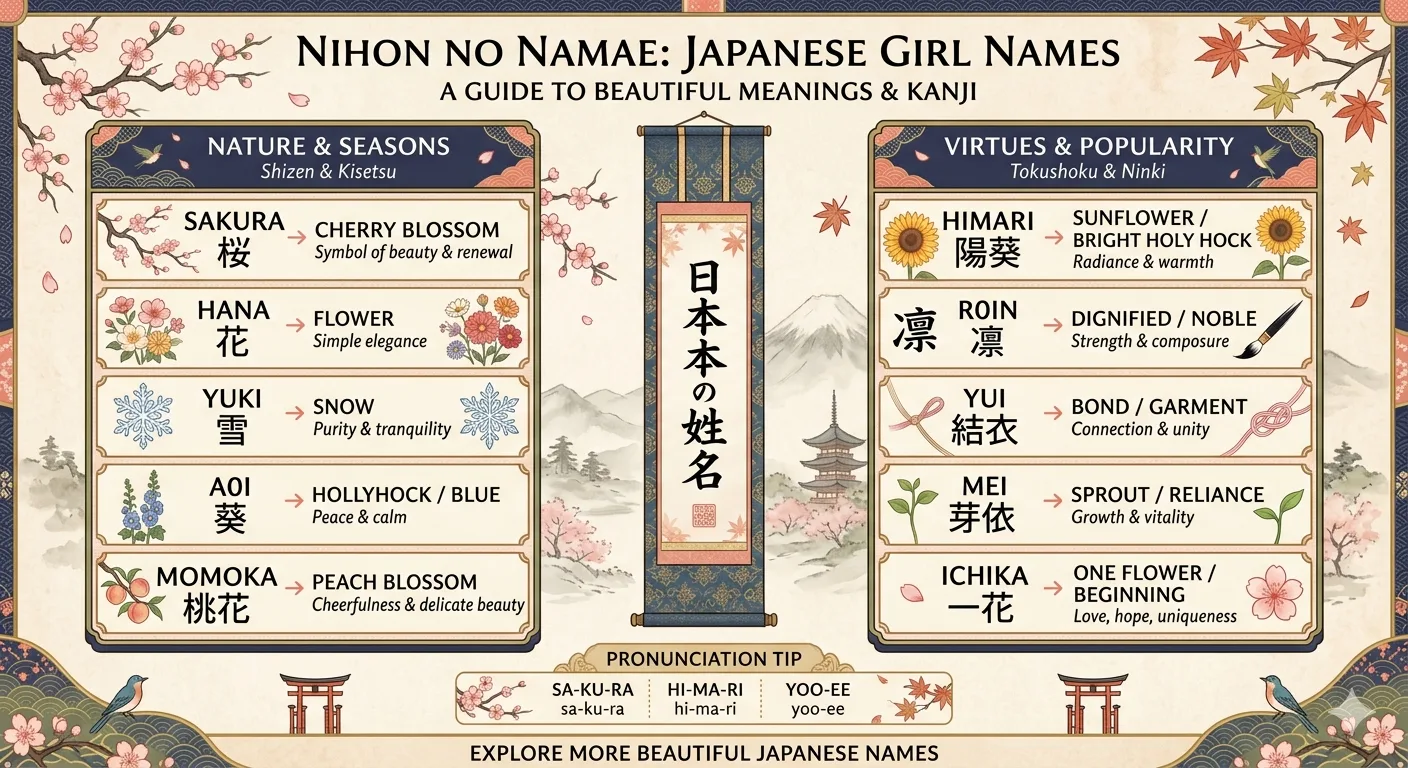
One of the most fascinating aspects of Japanese naming culture is the way that meanings can be layered and combined to create names of extraordinary poetic richness. Japanese parents often spend months exploring different kanji combinations for the same pronunciation, looking for the combination that perfectly captures the spirit and hopes they have for their daughter. Here are some beautiful Japanese girl name ideas organized by the themes and wishes they express.
Names That Express Light and Radiance
• Akari means bright light and glow, a name that wishes a daughter a life filled with luminosity and clarity
• Hikari means light itself, one of the most beautiful and direct expressions of radiance available in Japanese
• Teruko means shining child, a traditional name with a beautiful luminous meaning
• Kirara means glittering, sparkling light, rare and visually magical
• Haruka means distant light, spring light, carrying both seasonal beauty and a sense of expansive horizons
Names That Express Natural Beauty
• Hanako means flower child, one of the most classically beautiful combinations of nature and childhood
• Yukiko means snow child, gentle and pure with the quiet beauty of a winter morning
• Momiji means autumn leaves, vivid and poetic with the warmth of maple in fall
• Shirakawa means white river, rare and evocative of pristine flowing water
• Nagisa means beach, shoreline, evoking the meeting place of sea and land
Names That Express Wisdom and Strength
• Satomi means wise beauty, a powerful combination of intelligence and elegance
• Tomoe means earth friend, loyal companion, carrying wisdom and deep loyalty
• Kanae means complete, to grant a wish, expressing the fulfillment of dreams
• Chiyo means a thousand generations, eternal wisdom carried forward through time
• Sayuri means small lily, clarity, combining gentleness with inner strength
You can also use our Name Generator Tool to create unique names instantly. Bangladesh Girl Names
Cultural and Religious Influences on Japanese Girl Names
Understanding the cultural and spiritual forces that shape Japanese girl naming is essential to appreciating the extraordinary depth of meaning carried by these beautiful names. Japan's naming traditions have been shaped by thousands of years of cultural history, philosophical thought, religious practice, and artistic sensibility.
The Influence of Shinto and Buddhism
Japan's two major spiritual traditions, Shinto and Buddhism, have profoundly influenced the country's naming culture for more than a thousand years. Shinto, Japan's indigenous spiritual tradition, is deeply connected to nature, to the kami or divine spirits believed to inhabit natural phenomena, and to a sense of harmony between human life and the natural world. This connection to nature is reflected in the extraordinary prevalence of nature-inspired names in Japanese naming culture.
Buddhism, introduced to Japan in the sixth century, brought with it a philosophical vocabulary of extraordinary richness and a set of values centered on compassion, wisdom, impermanence, and the beauty of the present moment. Names that express these Buddhist values, names meaning wisdom, clarity, purity, and compassion, have been part of the Japanese naming tradition ever since. The Buddhist concept of mono no aware, the poignant awareness of the transience of all things, is beautifully reflected in the Japanese love of names connected to cherry blossoms, which bloom brilliantly for just a week before falling.
The Importance of Kanji in Japanese Naming
Perhaps the most distinctive feature of Japanese girl naming is the extraordinary role played by kanji, the Chinese-derived characters that form the core of the Japanese writing system. Each kanji carries both a pronunciation and a meaning, and Japanese parents choose kanji with tremendous care, looking for combinations that are visually beautiful on paper, carry the right meaning, and sound harmonious when spoken aloud.
A single Japanese girl's name can often be written with multiple different kanji combinations, each producing a subtly different meaning and visual impression. The name Yuki, for example, can be written with kanji meaning snow, happiness, or courage, among other possibilities. The name Hana can mean flower, used grace, or blossom depending on which kanji is chosen. This extraordinary complexity means that choosing a Japanese girl's name is a deeply creative and personal act, producing names that are truly unique to each individual child even when the pronunciation is shared with others.
Regional Variations in Japanese Girl Naming
While Japan is a relatively small and culturally unified country compared to many nations, meaningful regional variations in naming preferences do exist. The Kansai region, which includes Osaka and Kyoto, has historically favored names with a warmer, more playful quality, often ending in sounds that feel cheerful and light. Tokyo and the Kanto region tend toward names that feel more refined and contemporary. Rural areas often preserve traditional naming patterns that have been passed down through families for generations, including the use of classic suffixes like ko and traditional nature references.
Modern Japanese Naming Preferences and How Parents Choose Today
Japanese baby naming practices have evolved dramatically over the past few decades, shifting away from the heavy predominance of traditional ko-ending names that dominated the twentieth century toward a more diverse and creative landscape of naming possibilities. Understanding these modern preferences helps reveal how Japanese society itself is changing.
The Shift Away from Ko Endings
For most of the twentieth century, adding the suffix ko, meaning child, to a Japanese girl's name was the overwhelming norm. Names like Keiko, Yoshiko, Haruko, Michiko, and Noriko dominated birth records across Japan for generations. Beginning in the 1980s and accelerating through the 1990s and into the twenty-first century, Japanese parents began moving away from ko-ending names in favor of shorter, more melodic two-syllable names without the suffix. Today, names like Yui, Aoi, Rin, Hina, and Mei dominate the top of Japanese girl name rankings, reflecting a preference for names that feel more modern, international, and elegantly minimal.
The Rise of Kira and Yomi Names
A notable and sometimes controversial trend in modern Japanese naming is the rise of what critics call kira kira names, literally glittering or flashy names. These are names with unusual readings, invented kanji combinations, or pronunciations borrowed from foreign languages that would not be guessed from the kanji used to write them. While traditional Japanese naming emphasized clear, predictable relationships between kanji characters and pronunciation, some modern parents are creating names with unexpected readings as a way of expressing their child's unique identity and their own creativity. This trend has sparked significant public debate in Japan about the balance between individual expression and cultural tradition in naming.
International Influences on Japanese Girl Names
Globalization has brought a wave of internationally influenced names into Japanese naming culture. Names like Noa, Emma, Mia, and Sophia have been adapted into Japanese naming patterns, often written with kanji that approximate the foreign pronunciation while adding Japanese meaning. This reflects Japan's increasingly global orientation and the desire of many young Japanese parents to give their daughters names that will travel comfortably across cultural and linguistic boundaries.
You can also use our Name Generator Tool to create unique names instantly. Jordan Girl Names
Latest Japanese Girl Name Trends Shaping 2026
Japanese baby girl naming trends in 2026 reflect a fascinating intersection of tradition and modernity, nature reverence and global awareness, artistic creativity and practical accessibility. Several clear patterns are defining the naming landscape across Japan and among Japanese cultural communities worldwide right now.
Short two-syllable names remain the dominant force in modern Japanese girl naming. Names like Yui, Aoi, Rin, Hina, Mei, and Noa consistently dominate the top ten lists published by Japanese insurance companies and government agencies. Japanese parents in 2026 favor names that feel clean, modern, and internationally accessible while still carrying beautiful Japanese meaning. The ideal modern Japanese girl's name sounds lovely in Japanese, works in international settings, and has a meaning that expresses warmth, brightness, or natural beauty.
Light and radiance themed names are experiencing a powerful surge. Names meaning light, glow, brightness, and radiance such as Akari, Hikari, Koharu, and Kirara are all trending strongly in 2026. This reflects a broader cultural desire to give children names that express hope, positivity, and a luminous outlook on life, feelings that resonate especially strongly in the post-pandemic social climate.
Nature names centered on flowers, seasons, and celestial phenomena continue their sustained popularity. Sakura, Hana, Kohana, Momoka, Tsuki, and Sora all remain strongly in fashion. The Japanese cultural relationship with the natural world ensures that nature-inspired naming remains central to how Japanese parents think about giving their daughters beautiful and meaningful names.
Vintage and classical names are enjoying a meaningful revival among younger Japanese parents who feel that the minimalist trend of recent decades has gone too far toward brevity at the expense of character. Names like Fumiko, Keiko, Yoshiko, and Haruko, which felt unfashionably old for a generation, are now being rediscovered by parents who love their warmth, their cultural depth, and the sense of connection to Japanese history and family tradition that they carry.
Gender-neutral names are gaining ground in Japanese naming culture, reflecting broader social conversations about gender identity and individual freedom. Names like Sora, meaning sky, Rei, meaning example or lovely, and Haru, meaning spring or clear weather, are being chosen for girls at growing rates. These names feel strong, open, and beautifully unconfined, which appeals to a generation of Japanese parents who are thinking more openly about how names shape identity and expectation.
Expert Tips for Choosing the Perfect Japanese Girl Name
Choosing a Japanese girl's name is a process that rewards patience, research, and a willingness to explore the extraordinary richness of the Japanese language and culture. Here are the most important considerations for parents navigating this beautiful and complex naming tradition.
• Explore the kanji carefully. The same Japanese name can be written with many different kanji combinations, each producing a different meaning and visual impression. Before finalizing a name, research all the common kanji options for that pronunciation and choose the combination whose meaning resonates most deeply with your hopes for your daughter.
• Consider the name in both Japanese and international contexts. If your daughter will grow up in an international environment or if her name will frequently be used by non-Japanese speakers, it is worth choosing a name whose pronunciation is accessible and whose sound travels well across linguistic boundaries.
• Think about the full name harmony. In Japan, family names come before given names. Consider how your chosen girl's name sounds in combination with your family name, checking for any unintended sounds or associations created by the combination.
• Pay attention to the stroke count of the kanji. In Japanese numerology and traditional name analysis, the number of strokes in the kanji used to write a name is believed to influence a person's fortune and life path. Many Japanese families consult specialists called meimeishi who use this system when choosing names.
• Honor family and cultural heritage thoughtfully. If you have Japanese heritage and are choosing a name that honors that background, take the time to understand the cultural weight of the name you are considering. Some names carry specific regional, historical, or family associations that add to their meaning.
• Say the name aloud many times. Japanese names are designed to sound beautiful when spoken, and the musicality of the name matters as much as its written beauty. Speak your chosen name aloud in many different contexts and listen carefully to how it feels and sounds.
• Trust your instinct and your heart. After all the research, all the kanji exploration, and all the practical consideration, the right Japanese girl's name is ultimately the one that fills you with warmth and certainty when you say it. The long tradition of Japanese naming is meant to serve the love parents feel for their children, not the other way around.
Generate More Names: Girl Names Generator
Conclusion: The Enduring Magic of Japanese Girl Names
Japanese girl names stand among the most beautiful, meaningful, and culturally rich naming traditions in the entire world. They carry within them centuries of poetry, philosophy, nature reverence, artistic beauty, and deeply human love for the children who will carry these names through their lives. Whether you choose a timeless classic like Sakura or Yuki, a modern favorite like Akari or Hina, a nature-inspired gem like Tsuki or Koharu, a traditional choice like Keiko or Michiko, or a rare and distinctive pick like Hotaru or Chitose, you are giving your daughter a name with extraordinary depth, beauty, and meaning.
The most important thing about choosing a Japanese girl's name in 2026 is choosing one that resonates with your heart, honors your family's unique story, and carries the values and dreams you hold for your daughter's future. A Japanese name is the first poem you write for your child, the first gift of beauty and meaning you place in her hands. In the rich, endlessly generous, and profoundly beautiful world of Japanese naming tradition, there is a perfect name waiting for every girl who is born into this remarkable culture.
We hope this complete guide to Japanese girl names has inspired you, informed you, and opened up possibilities you might not have considered before. May your daughter grow up proud of her name, connected to its beauty and meaning, and ready to carry its poetry forward into a future that is entirely and magnificently her own.