 Hebrew Girl Name Generator
Discover meaningful Hebrew names with deep biblical roots
Guides & Articles
Hebrew Girl Names: A Complete Guide to Stylish, Sacred and Timeless Choices
Explore the most beautiful, trending, unique and spiritually rich Hebrew girl names for 2026
Introduction: The Timeless Beauty of Hebrew Girl Names
Few naming traditions in the world carry as much spiritual depth, historical significance, and linguistic beauty as Hebrew girl names. Rooted in one of the oldest living languages on earth, Hebrew names have traveled across thousands of years, through ancient texts, sacred scriptures, vibrant diaspora communities, and the reborn modern nation of Israel, to arrive as some of the most beloved and stylish names used by families around the globe today.
Hebrew girl names are extraordinary because they carry meaning at their very core. Unlike names borrowed for their sound alone, Hebrew names were crafted with intention. Each name holds a message, a prayer, a quality, or a story. A Hebrew name is never just a label. It is a blessing, a hope, and a living connection to one of humanity's richest spiritual and cultural traditions. Whether you are Jewish, Christian, Muslim, or secular, Hebrew girl names resonate because they belong to all of humanity through the shared heritage of the Abrahamic faiths and the ancient world.
In 2026, Hebrew girl names are experiencing a remarkable revival and global surge in popularity. Parents from Israel, the United States, Europe, South America, and beyond are drawn to these names because they offer something increasingly rare in a fast-moving modern world. They offer depth. A name like Miriam has been spoken by mothers for more than three thousand years. A name like Naomi has crossed every language barrier and cultural boundary to become a global favorite. A name like Avigail connects a modern child to the ancient hills of Canaan and the golden courts of biblical kings.
This comprehensive guide explores popular Hebrew baby girl names, modern and trending Israeli names, traditional and biblical names, rare and unique Hebrew choices, naming traditions, the cultural and spiritual forces shaping Hebrew names today, and the latest naming trends emerging from Israel and worldwide Hebrew-speaking communities. Whether you are searching for a name with deep religious roots, a stylish modern Israeli name, or a rare gem from ancient texts, this complete resource has everything you need.
Popular Hebrew Girl Names with Beautiful and Powerful Meanings
Certain Hebrew girl names have achieved universal beloved status across cultures and generations. These popular names blend beautiful sounds, rich scriptural roots, and meanings that speak to every human heart regardless of background. They appear in the top name lists of Israel, the United States, the United Kingdom, Australia, and countries across Europe and Latin America, proving that the beauty of Hebrew is truly a global treasure.
|
Name |
Hebrew Meaning |
Why It Stands Out |
|
Hannah |
Grace, God has favored me |
Timeless biblical heroine, globally beloved |
|
Sarah |
Princess, noblewoman |
Matriarch of all nations, eternally elegant |
|
Miriam |
Beloved, wished for child |
Oldest Hebrew name, deeply powerful |
|
Naomi |
Pleasant, delightful, sweet |
Literary and biblical fame, deeply warm |
|
Rachel |
Ewe, one with grace and purity |
Matriarch name, soft and eternally beautiful |
|
Leah |
Weary, delicate, tender |
Biblical matriarch, simple and graceful |
|
Deborah |
Bee, industrious, wise leader |
Prophetess and judge, strong and enduring |
|
Rebekah |
To tie, to bind, captivating |
Matriarch name, strong and romantic |
|
Abigail |
Father's joy, source of joy |
Biblical wisdom figure, widely popular |
|
Judith |
Woman of Judea, praised one |
Heroic biblical woman, classic dignity |
|
Ruth |
Companion, friend, vision of beauty |
Universal love and loyalty symbol |
|
Esther |
Star, hidden, Persian-Hebrew blend |
Heroine of Purim, glamorous and noble |
Hannah stands among the most universally beloved Hebrew girl names in the world today. Her story in the biblical book of Samuel, a woman of profound faith who prayed with such intensity that her lips moved silently, has made her name synonymous with devotion, grace, and the power of hope. Hannah is ranked among the top ten girl names in the United Kingdom, Ireland, Australia, and consistently appears in the top twenty in the United States and Israel. She is the perfect example of a Hebrew name that carries ancient roots while feeling completely fresh and modern to contemporary ears.
Sarah carries the distinction of being one of the most important names in the entire Abrahamic tradition, honored across Judaism, Christianity, and Islam as the first matriarch and wife of Abraham. Her name was actually changed by God in the Genesis narrative from Sarai to Sarah, meaning princess or noblewoman of all nations, a story that gives the name a transcendent significance. Today Sarah remains one of the most popular and stylish Hebrew names chosen by families worldwide because of its perfect balance of simplicity, elegance, and profound meaning.
Modern and Trending Hebrew Girl Names Shining in 2026
Contemporary Israel is one of the most vibrant and creative naming cultures in the world. Israeli parents blend ancient Hebrew roots with modern sensibility, creating names that feel both deeply rooted and completely contemporary. These modern Hebrew girl names are trending both within Israel and among Jewish and Hebrew-inspired naming communities worldwide in 2026.
|
Name |
Meaning |
Why Trending |
|
Tamar |
Date palm tree, upright |
Nature-rooted, elegant, widely loved in Israel |
|
Noa |
Motion, movement, rest |
Top-ranked name in Israel for years |
|
Shira |
Song, poetry, melody |
Musical beauty, very fashionable in 2026 |
|
Yael |
Mountain goat, strength |
Heroic biblical figure, strong and stylish |
|
Lior |
My light, I have light |
Modern Israeli coinage, luminous |
|
Avigail |
Father's joy, source of joy |
Classic Hebrew with fresh Israeli energy |
|
Adi |
My jewel, my ornament |
Short and sparkling, widely popular |
|
Mor |
Myrrh, fragrant spice |
Nature-spice inspired, uniquely Israeli |
|
Talia |
Dew of God, heaven's dew |
Soft, poetic, beautifully modern |
|
Nili |
Acronym for eternal strength |
Deeply Zionist roots, proudly Israeli |
|
Ayelet |
Deer, doe, morning star |
Poetic and nature-inspired beauty |
|
Romi |
My height, my exaltation |
Trendy, fresh, popular with young parents |
Noa has held the top position among the most popular girl names in Israel for multiple years and continues to dominate in 2026. This is a name of remarkable elegance, built from a simple Hebrew root meaning motion or rest, and it carries an effortless modernity that Israeli parents and international families alike find completely irresistible. Noa is also increasingly embraced outside of Israel, appearing in the top baby name lists of Italy, Spain, Portugal, and among Hebrew-inspired naming families across Europe and North America.
Shira, meaning song or poetry, reflects the deep connection between Hebrew language and the art of song that runs through the entire biblical and rabbinic tradition. Hebrew is perhaps the only ancient language in which a substantial portion of the sacred canon, the Psalms, the Song of Songs, the books of the prophets, is written in lyrical poetry, and choosing a name that means song for a daughter is a tribute to this extraordinary literary heritage. Shira has become one of the most fashionable and widely used names in Israel and among diaspora Jewish communities worldwide.
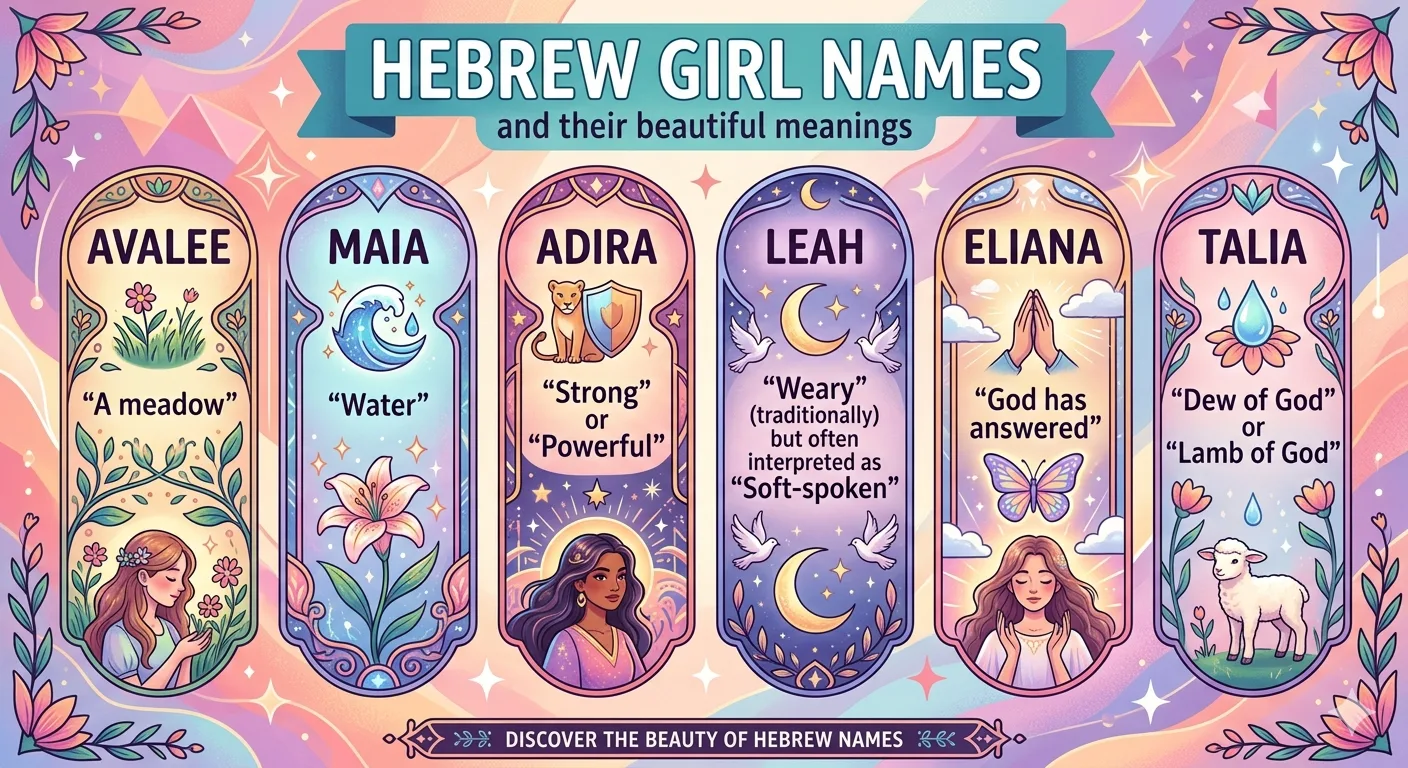
Traditional and Biblical Hebrew Girl Names That Have Endured for Millennia
The Hebrew Bible, known in Jewish tradition as the Tanakh and to Christians as the Old Testament, is one of the richest sources of girl names in all of human history. These biblical Hebrew names carry the weight of thousands of years of storytelling, faith, and cultural memory. They have been spoken in synagogues, churches, homes, and markets across every continent and every era of recorded history, and they remain as beautiful and meaningful today as when they were first given.
|
Name |
Origin and Meaning |
Why It Endures |
|
Eve |
Life, living, mother of all living |
First woman, universal human symbol |
|
Miriam |
Beloved, sea of bitterness, wished-for |
Prophet, sister of Moses, ancient and powerful |
|
Rebekah |
Captivating, to bind with beauty |
Matriarch, model of kindness and wisdom |
|
Dinah |
Judged, vindicated, righteous |
Daughter of Jacob, quietly dignified |
|
Bathsheba |
Daughter of the oath, seventh daughter |
Mother of Solomon, deeply significant |
|
Zipporah |
Bird, sparrow, beautiful bird |
Wife of Moses, rare and delicate |
|
Vashti |
Goodness, thread, beautiful |
Persian-Hebrew blend, courageous queen |
|
Hadassah |
Myrtle tree, fragrant bush |
Hebrew name of Esther, deeply meaningful |
|
Kezia |
Cassia tree, sweet spice |
Daughter of Job, rare and beautiful |
|
Peninnah |
Pearl, coral, precious stone |
Biblical matriarch, deeply rare |
|
Tirzah |
Pleasantness, she is my delight |
Daughter of Zelophehad, exceptionally rare |
|
Bilhah |
Troubled, bashful, tender |
Biblical figure, deeply uncommon today |
Eve holds a place unlike any other in the entire history of human naming. As the name given in Genesis to the first woman, the mother of all living, Eve is the ultimate origin name and carries a symbolic weight that no other name in any tradition can match. It comes from the Hebrew root Chavah, meaning to live or to give life, and the act of naming a daughter Eve is an acknowledgment of the sacred chain of life that connects every human being to every other. Eve remains a beautifully simple, deeply powerful name that many modern parents are choosing for its combination of brevity, elegance, and profound meaning.
Hadassah is the original Hebrew name of Esther, the queen and heroine of the book of Esther, and it means myrtle tree. The myrtle is one of the four plants used in the Jewish festival of Sukkot and is considered in rabbinic tradition to be a symbol of the righteous person who may lack personal fragrance but spreads goodness to others. Hadassah is an exquisitely rare choice outside of Israel and traditional Jewish communities, making it a stunning option for parents seeking a name with deep roots and a genuinely distinctive sound.
You can also use our Name Generator Tool to create unique names instantly. Eritrean Girl Names
Rare and Unique Hebrew Girl Names That Truly Captivate
For parents who want a name that is genuinely one of a kind while still carrying the spiritual depth and linguistic beauty of the Hebrew tradition, there is a world of rare and uncommon Hebrew girl names waiting to be discovered. These unique Hebrew names are drawn from biblical texts, ancient poetry, rabbinic literature, and the rich vocabulary of the Hebrew language itself, offering parents choices that are both deeply meaningful and refreshingly unexpected.
|
Name |
Meaning |
Why It Captivates |
|
Zivit |
Radiance, brightness, glow |
Modern Israeli gem, beautifully rare |
|
Achsa |
Ankle bracelet, adorned |
Daughter of Caleb, extremely rare beauty |
|
Shlomit |
Peaceful, my peace |
Feminine form of Shalom, deeply rare |
|
Nogah |
Morning light, brightness |
Son of David used as girl name, luminous |
|
Atara |
Crown, diadem, adorned |
Regal and rare, deeply poetic |
|
Pelah |
Wonderful, miraculous |
Rooted in the word for miracle, stunning |
|
Segula |
Treasure, precious thing |
Ancient Hebrew word for beloved treasure |
|
Tzipporah |
Bird, sparrow, swift one |
Wife of Moses, rare and deeply beautiful |
|
Adina |
Gentle, delicate, pleasurable |
Soft and rare, deeply elegant |
|
Nitzah |
Flower bud, blooming |
Nature name, exceptionally rare |
|
Rivkah |
Original form of Rebekah |
The authentic Hebrew form, deeply rooted |
|
Hemdat |
Desirable, precious, beloved |
Extremely rare, powerfully meaningful |
Atara, meaning crown or diadem, is one of the most regal and underused treasures in the entire Hebrew naming tradition. It appears in the biblical genealogies as a name carried by women of the tribe of Judah and has been used in various Jewish communities across centuries as a name of great dignity and beauty. In modern Israel, Atara remains relatively uncommon, making it an extraordinary choice for parents who want a name that is genuinely rare, deeply rooted, strikingly beautiful, and carries the added symbolism of a crown placed upon the head of a beloved daughter.
Segula holds a unique and fascinating place in Hebrew vocabulary and naming tradition. The word segula appears throughout the Hebrew Bible meaning treasured possession or something precious and set apart, and God uses the word to describe the relationship between the divine and the people of Israel. To name a daughter Segula is to call her a treasured possession, a precious and beloved thing. It is a name of extraordinary emotional power wrapped in an unusual and beautiful sound that stands completely apart from any mainstream naming trend.
Nature-Inspired Hebrew Girl Names Blooming with Beauty
The Hebrew language is deeply intertwined with the natural landscape of the ancient Levant, and the Hebrew Bible is filled with references to the plants, animals, landscapes, and natural phenomena of that fertile and beautiful corner of the world. This connection between Hebrew and nature has given rise to a rich tradition of nature-inspired Hebrew girl names that feel both rooted in tradition and perfectly aligned with the contemporary love of nature-connected names.
|
Name |
Natural Connection |
Why It Shines |
|
Tamar |
Date palm tree, uprightness |
Iconic tree of the ancient Middle East |
|
Sharon |
The fertile plain, a rose plain |
Geographic poetic beauty, Sharon rose |
|
Tirza |
Cypress tree, pleasantness |
Ancient Canaanite city and lovely plant |
|
Nirit |
Buttercup flower, yellow bloom |
Israeli wildflower name, delightfully rare |
|
Zahava |
Gold, golden one |
Precious metal, warmth and light |
|
Ofra |
Young deer, fawn |
Gentle animal name, softly beautiful |
|
Dafna |
Laurel tree, bay tree |
Victorious tree of ancient tradition |
|
Gal |
Wave, ripple of water |
Flowing and fresh, poetic simplicity |
|
Revital |
Refreshed with dew, revived |
Morning freshness, deeply poetic |
|
Nitza |
Flower bud, sprouting blossom |
Springtime name, rare and lovely |
|
Ayla |
Terebinth tree, oak tree |
Strong and beautiful, nature-rooted |
|
Liron |
My song, my joy |
Lyrical and light, musical nature |
Sharon is one of the most geographically and poetically resonant names in the entire Hebrew tradition. The Sharon plain was the name of the fertile coastal region of ancient Canaan, celebrated in the Song of Songs as a place of extraordinary beauty, giving us the beloved phrase the rose of Sharon. To name a daughter Sharon is to connect her to one of the most beautiful poetic images in all of biblical literature, a flower blooming in a fertile and abundant plain. Sharon was enormously popular in mid-twentieth-century America and Israel and is now experiencing a quiet revival as parents rediscover its genuine depth and natural beauty.
Zahava, meaning gold or golden one, belongs to a tradition of Hebrew names that celebrate the beauty and value of precious things. Gold in the Hebrew Bible is associated with the highest forms of beauty, wisdom, and divine creation, used to describe the decorations of the Temple in Jerusalem and the hair of the beloved in the Song of Songs. Naming a daughter Zahava is placing the symbolism of radiance, preciousness, and lasting beauty at the very center of her identity from the first moment of her life.
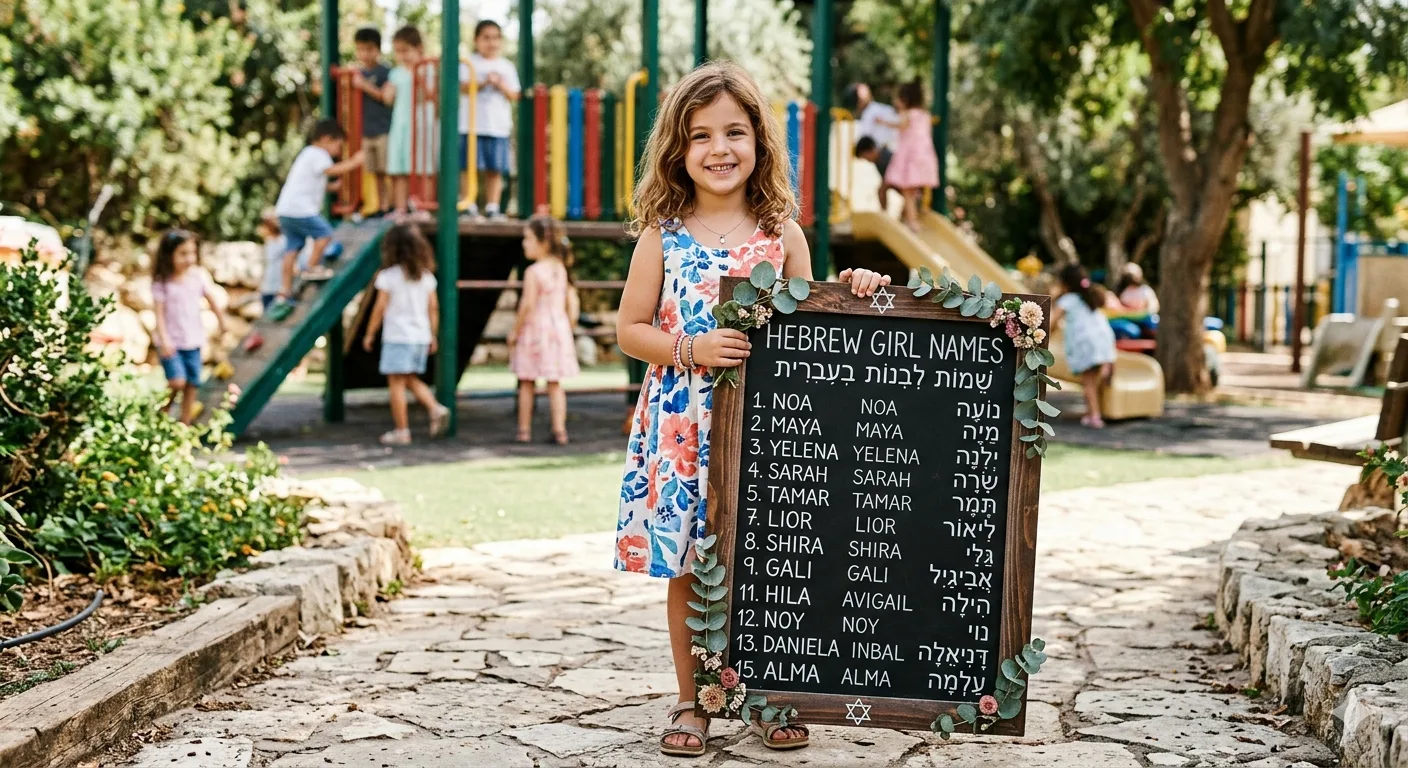
Modern Israeli Girl Names Crossing Cultural Boundaries
Israel is a country of extraordinary linguistic creativity. With a language revived from ancient texts into a living modern tongue by the Zionist pioneers of the late nineteenth and early twentieth centuries, Israeli Hebrew has developed an entirely new layer of names that blend ancient roots with modern sensibility. These contemporary Israeli girl names are gaining admirers and users far beyond the borders of Israel itself.
|
Name |
Meaning |
Global Appeal |
|
Maya |
Water, flow, illusion of light |
Top name globally, Hebrew and Sanskrit roots |
|
Dana |
To judge, God is my judge |
Simple and elegant, widely used internationally |
|
Inbar |
Amber, precious resin |
Uniquely Israeli, growing internationally |
|
Linor |
My light and my song |
Poetic compound name, modern Israeli gem |
|
Rotem |
Broom plant, desert shrub |
Desert plant name, beautifully Israeli |
|
Dor |
Generation, era, dwelling |
Short and meaningful, appealing globally |
|
Gal |
Wave, my wave |
Minimal and beautiful, used internationally |
|
Orit |
Light, my light |
Warm and glowing, uniquely Israeli feel |
|
Rinat |
Song of joy, joyful song |
Musical and joyful, lyrical beauty |
|
Keren |
Ray of light, horn, strength |
Biblical and modern, globally used |
|
Efrat |
Fruitful, honored, distinguished |
Deeply biblical, also modern Israeli city |
|
Neta |
Plant, sapling, young shoot |
Nature and growth, fresh and modern |
Maya occupies a truly remarkable position in global naming culture because it works beautifully across multiple linguistic and cultural traditions simultaneously. In Hebrew, Maya derives from roots related to water and flow. In Sanskrit, the same name carries meanings related to illusion and the creative power of the divine. In Spanish-speaking cultures it connects to the ancient Mayan civilization. This extraordinary cross-cultural resonance has made Maya one of the most widely used girl names on every continent, and its Hebrew roots give it a depth and authenticity that parents find deeply appealing.
Inbar, meaning amber or precious resin, is a name that was essentially created in modern Israel and has no ancient biblical precedent, making it a fascinating example of how the Hebrew language has continued to evolve and generate new names in the contemporary era. Amber resin was one of the trade goods of the ancient Mediterranean world and carries associations of warmth, golden beauty, and the preserved memories of ancient forests. Inbar has begun to attract interest from name enthusiasts outside of Israel who are drawn to its unusual sound and its connection to the natural world.
You can also use our Name Generator Tool to create unique names instantly. Estonian Girl Names
Spiritually Meaningful Hebrew Girl Names Carrying Sacred Power
One of the defining characteristics of the Hebrew naming tradition is the belief that a name carries spiritual power and moral direction for the person who bears it. The Hebrew concept of shem, or name, goes far beyond mere identification. In Jewish tradition, a name is believed to reflect and even shape the soul of the individual. This is why Hebrew girl names so often carry qualities, divine attributes, or spiritual hopes embedded directly in their meaning.
|
Name |
Spiritual Meaning |
Sacred Significance |
|
Emunah |
Faith, faithfulness, trust in God |
Core Jewish theological virtue |
|
Tzipporah |
Bird, freedom, spiritual swiftness |
Wife of Moses, bearer of divine mission |
|
Shulamit |
Peace, wholeness, she of peace |
Beloved of the Song of Songs |
|
Batya |
Daughter of God |
Pharaoh's daughter who saved Moses |
|
Eliana |
My God has answered, God is mine |
Divine response, widely beloved |
|
Brachah |
Blessing, divine benediction |
The word for blessing itself as a name |
|
Tehillah |
Praise, hymn, song of praise |
Root word of the Psalms |
|
Nechama |
Comfort, consolation, divine solace |
Used on Shabbat of comfort |
|
Tikvah |
Hope, expectation, divine promise |
Word for hope in national anthem |
|
Devorah |
Bee, prophetess, divine word-carrier |
Only female judge in the Bible |
|
Avigayil |
Father's joy, God's joy |
Wise woman praised by David |
|
Tzur |
Rock, divine strength |
God as rock and foundation |
Eliana has become one of the most internationally beloved Hebrew-origin girl names of the twenty-first century, embraced by Jewish families, Christian families, and secular families alike across dozens of countries. Its meaning, my God has answered or God is mine, carries an intimate sense of divine relationship and the joy of a prayer heard and granted. The name combines the Hebrew El, meaning God, with the suffix ana, suggesting answered or gracious, creating a name that feels both deeply spiritual and completely beautiful to contemporary ears. Eliana consistently ranks among the top girl names in Italy, the United States, Israel, and Latin America.
Tikvah, the Hebrew word for hope, carries a significance in the Jewish world that transcends ordinary naming. It is the first word of Hatikvah, meaning the hope, which is the national anthem of the State of Israel, and it captures the two-thousand-year longing of the Jewish people for a return to their ancestral homeland. To name a daughter Tikvah is to fill her name with this extraordinary historical and emotional weight, the hope of an entire people preserved across millennia and finally realized in the modern era. As a girl's name, Tikvah is rare, beautiful, and deeply moving.
Latest Trends in Hebrew and Israeli Girl Names for 2026
Hebrew and Israeli girl naming is evolving rapidly in 2026, shaped by forces that include the growing global popularity of Israeli culture, the influence of social media on naming choices, a revival of interest in ancient and rare biblical names, and the continuing vitality of Israeli naming creativity. Understanding these trends helps parents navigate the rich landscape of Hebrew names with a sense of where the culture is heading.
The Ancient Name Revival
One of the most significant trends in Hebrew girl naming today is the deliberate revival of ancient and rare biblical names that had fallen out of common use. Names like Atara, Tirzah, Hadassah, Kezia, and Zipporah are being rediscovered by parents who want something genuinely rooted in Hebrew tradition while being refreshingly rare in any modern social or school setting. This trend reflects a broader cultural movement toward authenticity and depth in naming choices.
Short and Luminous Names
Israeli naming culture has always appreciated brevity and clarity, and this preference is stronger than ever in 2026. Names of two to four letters that carry big meaning are extremely fashionable. Noa, Gal, Mor, Adi, and Or are all examples of this preference for names that are clean, crisp, and carry significant meaning in minimal syllables. These short Hebrew names also travel beautifully across linguistic boundaries, making them ideal for families living in multicultural or multilingual environments.
Light and Nature Names
Names connected to light, luminosity, and the natural world are experiencing a powerful surge in the Hebrew naming world in 2026, mirroring a global trend but expressed through specifically Hebrew vocabulary and imagery. Names like Lior, meaning my light, Orit, meaning my light in a slightly different register, Revital, meaning refreshed with dew, and Zahava, meaning golden, all reflect this desire to connect a daughter with the warmth, clarity, and beauty of light and nature.
Diaspora and Global Hebrew Names
As the global Jewish community and a growing number of non-Jewish families engage more deeply with Hebrew culture through media, travel, and cultural exchange, Hebrew girl names are crossing borders faster than ever before. Names like Maya, Eliana, Naomi, and Abigail are being chosen by families with no direct connection to Hebrew-speaking communities, drawn purely by the beauty and depth of these names. This globalization of Hebrew naming is a remarkable cultural phenomenon that reflects the universal resonance of the Hebrew language.
How Hebrew Girl Names Are Chosen in Jewish and Israeli Culture
The Ashkenazic Naming Tradition
In Ashkenazic Jewish tradition, which developed in Eastern and Central Europe, babies are named after deceased relatives as an act of memorial and honor. The soul of the deceased is believed to live on in the child who carries their name, creating an unbroken spiritual chain between generations. Typically, only the first letter or the meaning of the ancestor's name needs to be honored, giving families creative flexibility while maintaining the tradition of ancestral remembrance.
The Sephardic Naming Tradition
Sephardic Jewish tradition, rooted in the communities of Spain, North Africa, the Middle East, and the Mediterranean world, has a different custom. In Sephardic culture, babies may be named after living grandparents as an expression of honor and love. This is considered a beautiful tribute to the grandparent and a way of celebrating the living generation. Sephardic names often reflect the Arabic, Spanish, Ladino, and Judeo-Arabic linguistic environments in which these communities lived for centuries.
Israeli Secular Naming Culture
In contemporary secular Israeli culture, names are chosen for aesthetic beauty, meaningful content, national or Zionist associations, or simple parental preference. Israeli parents draw freely from ancient biblical Hebrew, modern Israeli Hebrew vocabulary, nature, music, light, and occasionally international sources, creating one of the most vibrant and creative naming cultures in the world. The Israeli attachment to the Hebrew language as both an ancient heritage and a living modern tongue gives Hebrew naming an extraordinary vitality.
The Power of Meaning in Hebrew Naming
Across all communities and traditions that use Hebrew names, the meaning of the name is considered of paramount importance. Parents choosing a Hebrew name for their daughter are almost always aware of and inspired by the specific meaning embedded in that name. This deep intentionality sets Hebrew naming culture apart from many other traditions and ensures that every Hebrew name given to a child is also a kind of prayer, a wish, or a statement of the values and hopes that parents hold for their daughter.
You can also use our Name Generator Tool to create unique names instantly. Italian Girl Names
Tips for Choosing the Most Stylish and Meaningful Hebrew Girl Name
Choosing a Hebrew name for your daughter is one of the most beautiful and meaningful decisions you will make as a parent. Here are some thoughtful approaches to finding the perfect name from this extraordinary tradition.
Connect Meaning to Your Values and Hopes
Start by asking what qualities or blessings you most deeply want for your daughter. If you hope she will be a person of courage, consider names like Deborah the prophetess and judge, or Yael the bold heroine. If you hope she will bring joy and light, consider Shira, Lior, or Zahava. If you want her to carry a sense of peace, consider Shulamit or Shlomit. Letting the meaning guide you first will lead you to a name that carries genuine personal resonance.
Consider the Sound in Your Home Language
Hebrew names can sound very different depending on the language environment of your home and community. Consider how the name will sound when spoken by family members, how it will be pronounced at school, and whether it travels easily between languages if your family is multilingual. Names like Maya, Naomi, Eliana, and Abigail travel beautifully across languages. Names like Tzipporah or Shulamit may require more gentle pronunciation guidance in non-Hebrew speaking environments.
Honor Family or Cultural Heritage
If you have Jewish, Israeli, or broader Abrahamic heritage, a Hebrew name offers a beautiful way to connect your daughter to her cultural and spiritual roots. Consider researching the names of ancestors, matriarchs, or heroic figures in your family's tradition and finding a name that honors that heritage while feeling beautiful and appropriate for a child growing up today.
Explore Beyond the Common Choices
The Hebrew naming tradition is vast and rich enough to offer parents genuinely rare and distinctive choices that still carry deep meaning and linguistic beauty. Do not limit yourself to the most commonly known names. Explore names like Atara, Segula, Nitzah, Tikvah, Hemdat, and Inbar. The deeper you explore, the more extraordinary gems you will find waiting for the right daughter to bring them back into the world.
Generate More Names: Girl Names Generator
Conclusion: Choosing a Hebrew Name That Will Last a Lifetime
Hebrew girl names are among the most extraordinary and meaningful choices available to parents anywhere in the world today. They carry thousands of years of human experience, spiritual aspiration, poetic beauty, and cultural memory within them. Whether you choose a universally beloved name like Hannah or Sarah, a modern Israeli favorite like Noa or Shira, a rare biblical treasure like Hadassah or Atara, or a contemporary Israeli gem like Inbar or Talia, you are giving your daughter a name rooted in one of humanity's most remarkable and enduring linguistic and spiritual traditions.
In 2026, Hebrew girl names are more celebrated, more globally embraced, and more beautifully appreciated than at any previous point in modern history. The revival of interest in ancient names, the global reach of Israeli culture, and the universal recognition that depth and meaning matter in a name have all conspired to make this one of the most exciting moments to be exploring the Hebrew naming tradition. Whatever name you choose for your daughter, if it comes from the Hebrew tradition, it will carry within it a story that began thousands of years ago and will continue to unfold through her life for decades to come.