 German Girl Name Generator
Discover strong and beautiful German names
Guides & Articles
Germany Girl Names: A Complete Guide to Stylish, Popular and Meaningful Choices
Discover the most beautiful, trending, unique and culturally rich German girl names for 2026
Introduction: The Timeless Beauty of German Girl Names
Choosing a name for your baby girl is one of the most deeply personal and meaningful decisions any parent will ever make. In Germany, this decision is shaped by centuries of rich linguistic tradition, deep cultural pride, the enduring influence of Germanic mythology, Christian heritage, and an ever-evolving modern naming culture that balances timeless elegance with fresh, contemporary style. German girl names are among the most beautiful and meaningful in the world, known for their strong sounds, noble histories, and lyrical quality that makes them stand out in any language.
Germany has one of the most carefully preserved naming traditions in Europe. The German language itself gives girl names a distinctive character, combining strong consonants with soft vowel endings that create names of extraordinary beauty and depth. Names like Lieselotte, Hildegard, and Brunhilde that once defined an earlier era of German femininity now stand alongside modern favorites like Mia, Emma, and Sophia that reflect how German naming culture has evolved while remaining rooted in genuine cultural identity.
In 2026, German baby girl naming trends are at a fascinating crossroads. Parents across Germany, Austria, and German-speaking Switzerland are seeking names that carry genuine cultural heritage alongside modern freshness. International names have gained enormous ground, while uniquely German names rooted in Old High German, medieval legend, and historical tradition are being rediscovered and celebrated by parents who want something truly meaningful and culturally rooted for their daughters.
This complete guide explores popular German girl names with beautiful meanings, modern and trending options, traditional and cultural names, rare and distinctive picks, nature-inspired choices, and the deep cultural forces shaping German naming traditions today. You will also find expert tips for choosing the perfect name and a comprehensive FAQ section answering the questions parents most want answered when exploring German girl names for their daughters.
Popular German Girl Names with Beautiful Meanings
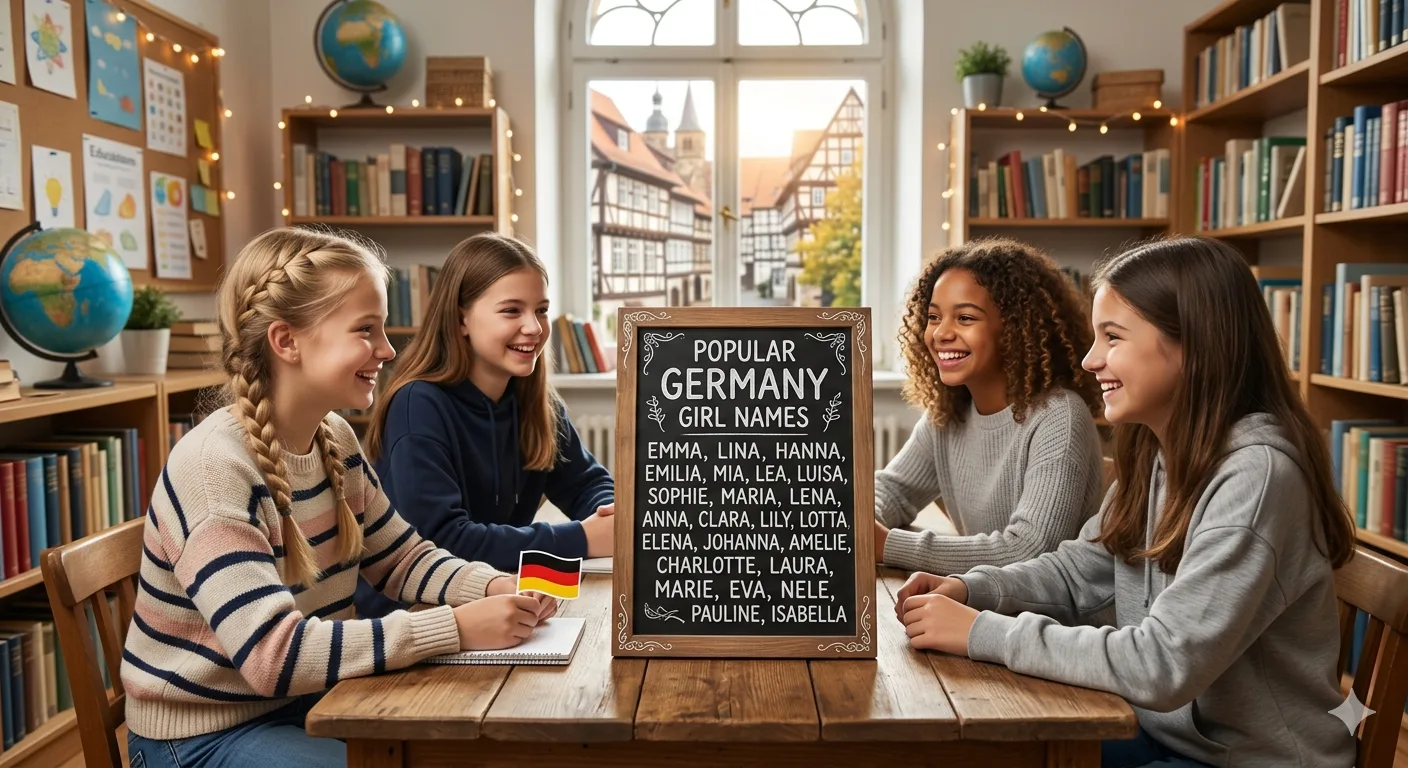
Certain names have held their place in German hearts for decades, consistently appearing among the most loved choices for baby girls across Germany and the wider German-speaking world. These popular German girl names combine beautiful sounds, powerful meanings, and strong cultural resonance. Whether you are looking for a name that feels warmly familiar across all corners of the German-speaking world or one that carries genuine depth and significance, these are the names to explore first.
|
Name |
Origin and Meaning |
Why It Stands Out |
|
Emma |
Germanic, whole, universal |
Consistently top-ranked in Germany for years |
|
Mia |
Scandinavian, beloved, mine |
Short, stylish, beloved across Germany |
|
Hannah |
Hebrew, grace, God has favored |
Biblical classic, warmly popular across generations |
|
Sofia |
Greek, wisdom, knowledge |
Timeless elegance, universally beloved |
|
Lena |
Greek or German, bright one |
Quintessentially German, pure and beautiful |
|
Lea |
Hebrew, weary, delicate |
Simple, lyrical, consistently top-ranked |
|
Anna |
Hebrew, grace, favor |
Ancient and enduring, beloved across cultures |
|
Emilia |
Latin, rival, industrious |
Flowing and elegant, rising fast in Germany |
|
Marie |
Hebrew, beloved, wished for |
Classic French-German form of Mary, timeless |
|
Laura |
Latin, laurel wreath, victory |
Strong and beautiful, deeply popular in Germany |
|
Clara |
Latin, clear, bright, famous |
Classic elegance with warm historical roots |
|
Lina |
German or Arabic, tender, gentle |
Soft, simple, warm and very popular |
Emma has dominated the top rankings of German baby girl names for many years, and its enduring popularity is no accident. The name carries a beautiful simplicity that works perfectly in German, English, French, and virtually every European language, making it a name that feels both deeply rooted in Germanic tradition and completely at home in the modern international world. Its meaning of wholeness and universality resonates deeply with German parents who want a name that feels complete and strong.
Lena represents one of the most quintessentially German name choices of the modern era. It strikes the perfect balance between genuinely Germanic roots and contemporary softness, sounding both culturally grounded and freshly modern. The name has remained a consistent favorite in German naming charts precisely because it carries this rare combination of old-world authenticity and new-world elegance. Marie, the classic German and French form of Mary, has never truly fallen out of favor in Germany, where its historical, religious, and cultural connections keep it perpetually relevant and beloved.
Modern and Trending German Girl Names in 2026
German parents in 2026 are drawn to girl names that feel contemporary, stylish, and forward-looking while still carrying genuine meaning and cultural resonance. The modern German naming landscape reflects a fascinating blend of international influence and cultural pride, with parents choosing names that work beautifully in the globalized world their daughters will grow up in while remaining connected to German identity. Here are the names gaining the most momentum across Germany right now.
|
Name |
Meaning |
Why Trending |
|
Mila |
Slavic, gracious, dear |
Soft and international, hugely fashionable |
|
Nora |
Irish, honor, light |
Short and sweet, climbing fast in Germany |
|
Ida |
Germanic, industrious, labor |
Vintage revival, deeply German roots |
|
Luisa |
Germanic, famous warrior |
Flowing and elegant, strongly rising |
|
Amelie |
French-Germanic, hardworking |
Romantic and modern, very popular |
|
Franziska |
Latin, free woman, from France |
Quintessentially German, beloved classic |
|
Nina |
Spanish or Slavic, girl, grace |
Short, musical, internationally loved |
|
Frida |
Germanic, peaceful, beloved |
Artistic legacy, deeply German and modern |
|
Ronja |
Scandinavian, God's joyful song |
Literary icon in Germany, rising fast |
|
Elsa |
Hebrew via German, pledged to God |
Classic German fairy-tale name, beloved |
|
Tilda |
Germanic, mighty in battle |
Vintage short form, modern and fresh |
|
Lia |
Hebrew or Italian, weary, bearer |
Ultra-short, soft, rising across Germany |
Frida deserves special attention as one of the most culturally loaded and fascinating names rising in popularity across modern Germany. While the name itself is deeply Germanic in origin, meaning peace or beloved, it carries the global cultural legacy of Frida Kahlo, the Mexican artist who has become one of the most celebrated creative icons of the twentieth century worldwide. German parents choosing the name Frida in 2026 are drawing on both the authentic Germanic heritage of the name and its association with creativity, strength, and artistic vision.
Ronja is a particularly interesting case in German naming trends because of its strong literary connection. The name comes from Astrid Lindgren's beloved novel Ronja Robbersdaughter, a book that has been deeply embedded in German childhood reading culture for decades. For many German parents, choosing Ronja is a way of honoring a beloved piece of Scandinavian-German literary heritage while giving their daughter a name that sounds fresh, strong, and distinctive. Names with strong literary associations have always held a special place in the German naming tradition, reflecting the country's deep cultural reverence for literature and storytelling.
Traditional and Cultural German Girl Names That Never Go Out of Style
Traditional German girl names carry the weight of history, the beauty of time-tested Germanic elegance, and the warmth of names that have been cherished by German families across many centuries. These classic names have deep roots in Old High German, medieval Germanic tradition, and the rich tapestry of German cultural history. Many of them carry meanings that reflect the values of strength, nobility, protection, and virtue that have always been central to German cultural identity.
|
Name |
Origin and Meaning |
Why It Endures |
|
Hildegard |
Germanic, battle protection |
Medieval saint, visionary, deeply historic |
|
Brunhilde |
Norse-Germanic, armored warrior |
Legendary Valkyrie, powerful and proud |
|
Gertrude |
Germanic, strength of spear |
Ancient dignity, literary connections |
|
Ingrid |
Norse, beautiful, Ing's ride |
Scandinavian-Germanic classic, timeless |
|
Hedwig |
Germanic, strife and combat |
Medieval royalty, deeply historic |
|
Mathilde |
Germanic, mighty in battle |
Royal and literary, enduring strength |
|
Elfriede |
Germanic, elf power, magical |
Rare but authentically German, beautiful |
|
Adelheid |
Germanic, noble kind |
Source of Alice, deeply historic German |
|
Gisela |
Germanic, pledge, oath |
Medieval German royalty, quietly enduring |
|
Walburga |
Germanic, strong protection |
Saint's name, ancient Germanic beauty |
|
Kunigunde |
Germanic, brave in war |
Medieval Empress name, rare and powerful |
|
Irmgard |
Germanic, whole, universal strength |
Old German nobility, historically rich |
Hildegard occupies a place of unique honor in the history of German girl names. Saint Hildegard of Bingen, the twelfth-century mystic, composer, healer, and visionary who remains one of the most remarkable figures in all of medieval European history, gives this name a cultural weight that few other names can match. In an era when many parents are searching for names with genuine depth and historical significance, Hildegard stands as one of the most extraordinary choices available in the German naming tradition.
Mathilde, the Germanic form of Matilda, has been borne by queens, saints, and noblewomen across a thousand years of German and European history. It carries the meaning of mighty in battle, a beautiful combination of softness and strength that speaks to the German cultural ideal of women who are graceful in appearance and formidable in character. The name is currently experiencing a quiet but sustained revival among German parents who appreciate its royal heritage and its warm, flowing sound.
Adelheid is one of the most fascinating names in the German tradition because it is the original Germanic source from which the English name Alice ultimately descended. Long before Alice became a beloved English classic, Adelheid was a name of Germanic nobility, carried by queens and princesses across medieval Europe. Choosing Adelheid today is a way of going back to the very roots of a naming tradition that has shaped European culture for over a thousand years.
You can also use our Name Generator Tool to create unique names instantly. Belgian Girl Names
Rare and Unique German Girl Names That Truly Stand Out
For parents who want something genuinely extraordinary, the German naming tradition offers a wealth of rare and distinctive choices that are deeply rooted in cultural history while feeling genuinely unusual in the modern world. These rare German girl names are perfect for families who want their daughter to have a name that is distinctive, deeply meaningful, and unlikely to be shared with classmates. The richness of Old High German, Germanic mythology, and medieval naming traditions provides an extraordinary treasury of uncommon gems.
|
Name |
Origin and Meaning |
Why It Stands Out |
|
Walpurga |
Germanic, strong protector |
Saint's name, deeply rare and historical |
|
Sigrún |
Norse-Germanic, victory rune |
Mythological Valkyrie, gloriously rare |
|
Thordis |
Norse-Germanic, Thor goddess |
Rare Nordic-Germanic power name |
|
Lieselotte |
Hebrew-Germanic, devoted + battle |
Quintessentially German compound, rare |
|
Alwine |
Germanic, noble friend |
Ancient German gem, rarely heard today |
|
Edeltraud |
Germanic, noble strength |
Deeply rare, authentically Germanic |
|
Friederike |
Germanic, peaceful ruler |
Feminine Frederick, historically rich |
|
Roswitha |
Germanic, famous strength |
Medieval poet's name, beautifully rare |
|
Sigrid |
Norse, beautiful victory |
Norse-German beauty, quiet and rare |
|
Mechthild |
Germanic, mighty in battle |
Medieval German, extraordinarily rare |
Roswitha carries one of the most remarkable stories in all of German cultural history. Hrotsvitha of Gandersheim was a tenth-century German canoness and poet who is widely considered the first known female playwright in Western history and the first known German-language woman writer. She wrote Latin plays, poetry, and historical accounts that were extraordinary for her era and place. Choosing Roswitha for a daughter today is both a genuinely rare aesthetic choice and a profound tribute to one of the most forgotten but important women in German and European cultural history.
Friederike, the feminine form of Friedrich, meaning peaceful ruler, carries a beautiful symmetry between the powerful Germanic elements of its meaning and the soft, flowing sound it produces in spoken German. It was a name beloved by German royalty and nobility for centuries and is now so rare that a daughter named Friederike would carry something genuinely distinctive and historically resonant into her life. These are names that invite curiosity, conversation, and a deep connection to German cultural heritage.
Nature-Inspired German Girl Names Blooming in 2026
Germany's extraordinary natural landscape, from the ancient Black Forest and the Bavarian Alps to the Rhine Valley vineyards, the Baltic coastline, and the wide plains of the north, has always inspired a deep German love of nature that extends into naming culture. Nature-inspired German girl names have surged in popularity across Germany in recent years, reflecting both a global trend toward environmental awareness and a specifically German cultural tradition of deep respect for the natural world.
|
Name |
Natural Connection |
Why It Is Beloved |
|
Rosa |
Latin, the rose flower |
Floral classic, timeless and beautiful |
|
Viola |
Latin, violet flower |
Musical and botanical, quietly elegant |
|
Linde |
Germanic, linden tree |
Deeply German tree name, gentle beauty |
|
Heide |
Germanic, heath, open moorland |
Authentically German landscape name |
|
Sylvia |
Latin, forest, woodland spirit |
Forest-inspired, classic and lovely |
|
Flora |
Latin, flower, goddess of spring |
Botanical beauty, timeless charm |
|
Birke |
Germanic, birch tree |
Rare German tree name, earthy and pure |
|
Almut |
Germanic, noble courage |
Meadow associations, authentically German |
|
Wiesje |
Germanic, meadow |
Earthy, rare, deeply nature-rooted |
|
Lore |
Germanic, laurel, noble fame |
Forest and laurel connections, lyrical |
The linden tree holds a uniquely special place in German cultural identity, making Linde one of the most authentically German nature names available. The linden, known as the Linde in German, has been celebrated in German poetry, song, and folklore for centuries as a symbol of love, community, and the sacred heart of village life. The famous folk song Am Brunnen vor dem Tore celebrates the linden tree as a place of memory and longing. Choosing Linde for a daughter is a way of rooting her in a very specific and beautiful piece of German natural and cultural heritage.
Heide captures the spirit of the distinctive German heath landscape, the wide open moorlands of northern Germany that have inspired countless works of German literature and art. The name carries a quiet, earthy beauty that feels deeply authentic to the German landscape tradition. It also functions beautifully as a standalone name with a sound that is both simple and evocative, making it a beautiful choice for families who want something genuinely rooted in the German natural world.
German Girl Names Rooted in Mythology and Germanic Legend
Germanic mythology and medieval German legend represent one of the richest sources of girl names in the entire European naming tradition. From the heroic Valkyries of Norse and Germanic mythology to the legendary figures of the Nibelungenlied and the epic poems of medieval Germany, these names carry stories of extraordinary power, beauty, and cultural significance. Choosing a name from Germanic mythological tradition is a way of connecting a daughter to the deepest roots of German cultural identity.
|
Name |
Mythological Source |
Story and Significance |
|
Brunhild |
Norse-Germanic, Valkyrie warrior |
Greatest Valkyrie of the Nibelungenlied |
|
Kriemhild |
Germanic, combat and battle |
Central heroine of the Nibelungenlied |
|
Freya |
Norse goddess of love, beauty |
Most beloved Norse goddess, magic and love |
|
Hilda |
Germanic, battle maiden |
Short form of Valkyrie names, noble |
|
Gudrun |
Norse-Germanic, god's secret |
Legendary Norse heroine, deeply powerful |
|
Sigune |
Germanic, victory, rune power |
Medieval German Arthurian heroine |
|
Waltraute |
Germanic, rule, strength, power |
Valkyrie name, Wagner's Ring Cycle |
|
Irmhild |
Germanic, whole battle |
Ancient Germanic legendary name |
Kriemhild stands as one of the most powerful female figures in all of German literary tradition. As the central female character of the Nibelungenlied, the great medieval German epic that ranks alongside the works of Homer and Virgil in European literary importance, Kriemhild is a figure of extraordinary complexity, fierce love, and devastating power. The story of Kriemhild and Siegfried is one of the defining narratives of German cultural identity, and the name carries all of that epic weight and lyrical beauty.
Freya, the Norse goddess of love, beauty, war, and magic, has become one of the most fashionable mythological names across the entire European and Anglo-American world in recent years. In Germany, choosing Freya connects a daughter to the shared Norse-Germanic mythological tradition that lies at the roots of northern European culture. The name has the advantage of being both deeply historically authentic and completely contemporary in sound and feel, making it perfect for parents who want the best of both worlds.
You can also use our Name Generator Tool to create unique names instantly. Belizean Girl Names
German Girl Names with Deep Cultural and Religious Significance
Germany's complex and layered religious history, shaped by centuries of Catholicism, the Protestant Reformation that began in Wittenberg in 1517, and the enduring influence of Christian saints and biblical tradition, has created a rich landscape of religiously significant German girl names. These names carry the weight of faith, history, and cultural meaning that many German parents find deeply important when choosing a name for their daughter.
|
Name |
Faith or Cultural Tradition |
Significance |
|
Maria |
Hebrew, beloved, wished for child |
Most sacred name in German Catholic tradition |
|
Elisabeth |
Hebrew, my God is an oath |
Saint Elizabeth of Hungary, revered in Germany |
|
Katharina |
Greek, pure |
Saint Katharina, Martin Luther's wife |
|
Barbara |
Greek, foreign, strange |
Saint Barbara, patron of miners, beloved in Bavaria |
|
Ursula |
Latin, little she-bear |
Saint Ursula, beloved medieval German martyr |
|
Hildegard |
Germanic, battle protection |
Saint Hildegard of Bingen, mystic and composer |
|
Agnes |
Greek, pure, holy |
Saint Agnes, early Christian martyr, deeply revered |
|
Veronika |
Greek-Latin, true image |
Saint Veronica, beloved across German tradition |
|
Magdalena |
Hebrew, from Magdala |
Mary Magdalene, important in German devotion |
|
Dorothea |
Greek, gift of God |
Saint Dorothy, patron of brides, warmly beloved |
Maria holds a place of absolute centrality in the German Catholic naming tradition. For centuries, Maria was the most commonly given name to baby girls in predominantly Catholic regions of Germany, particularly in Bavaria, the Rhineland, and southern Germany, reflecting the deep devotion to the Virgin Mary that has shaped German Catholic culture since the medieval period. Even in the more secular naming culture of modern Germany, Maria remains one of the most respected and beloved names, carrying the weight of centuries of faith and cultural identity.
Katharina carries a fascinating dual significance in the German cultural tradition. On one hand, it is the name of Saint Katherine of Alexandria, one of the most important female saints in the medieval Catholic tradition. On the other hand, Katharina von Bora was the name of Martin Luther's wife, making it a name with special resonance in the German Protestant tradition as well. In a country where the conflict and eventual coexistence of Catholicism and Lutheranism has shaped so much of cultural history, Katharina is a name that bridges faith traditions in a uniquely German way.
Beautiful German Baby Girl Name Ideas for Every Style
Whether you are drawn to soft and lyrical names, strong and historical names, short and punchy names, or long and flowing names, the German naming tradition offers extraordinary options across every style category. Here is a curated collection of German baby girl name ideas organized by sound and style to help you find the perfect match for your daughter.
Soft and Lyrical German Girl Names
For parents drawn to names with a gentle, musical quality, German offers an abundance of beautiful soft names. Amelie brings French and German elegance together in a name that flows like music when spoken. Marlene, the name immortalized by the legendary German actress and singer Marlene Dietrich, combines softness with unmistakable strength. Lieselotte blends two beautiful German names into one compound that feels both tender and distinctly German. Anneliese combines the grace of Anne with the beauty of Liese for a name that is quintessentially German in the best possible way. Elke, a northern German name meaning noble, carries a quiet, melodic beauty that feels both ancient and fresh.
Strong and Historical German Girl Names
For parents who want a name with undeniable strength and historical weight, names like Mathilde, Hildegard, Gertrude, and Walburga carry enormous historical authority. Mechthild, the name of several important medieval German noblewomen and saints, carries a powerful sound that matches its powerful history. Irmgard, combining the Germanic elements for whole and strength, is a name of real historical dignity. Gisela, meaning pledge, was the name of German queens and empresses and carries that regal heritage in every syllable.
You can also use our Name Generator Tool to create unique names instantly. Ghanaian Boy Names
Short and Modern German Girl Names
For parents who love the clean, confident feel of short names, Germany offers wonderful options. Lea and Lena remain perennial favorites for their simplicity and beauty. Pia, a name meaning devout and pious with Latin roots, has become fashionable across Germany for its short, clear sound. Ina, a soft and simple German name, feels both timeless and completely current. Gesa, a northern German short form of Gertrud, has a wonderfully distinctive sound. Nele, the northern German form of Cornelia, has become one of the trendiest short names in contemporary Germany, beloved for its gentle yet distinctive sound.
Latest German Girl Naming Trends Shaping 2026
German baby girl naming trends in 2026 reflect a fascinating interplay between international influence, cultural rediscovery, and the enduring German love of quality, depth, and authenticity. Several clear and compelling patterns are defining the naming landscape across Germany, Austria, and German-speaking Switzerland right now.
International and internationally compatible names are dominating the top rankings. Emma, Mia, Sophia, Hannah, and Lena all rank consistently in the top ten across Germany because they work beautifully in German while also being easily understood and pronounced in English, French, Spanish, and other major languages. In an era of global mobility, German parents increasingly want names that will serve their daughters well anywhere in the world.
Vintage German names are experiencing a powerful and sustained revival. Names like Ida, Hedwig, Erna, Frieda, Thea, and Lieselotte that might have seemed completely old-fashioned two decades ago are now among the most discussed and fashionable names for German baby girls. This trend reflects a broader cultural desire for names that carry genuine history, character, and a sense of story. These vintage German names carry the warmth of grandmothers and great-grandmothers while sounding fresh and interesting to contemporary ears.
Short names remain extremely strong across all German-speaking regions. The preference for two and three letter names like Mia, Lea, Lia, and Ina reflects the German aesthetic appreciation for clarity, directness, and clean simplicity. German parents in 2026 are drawn to names that are easy to say, easy to spell, easy to remember, and yet carry real warmth and beauty.
Scandinavian-influenced names continue to gain ground in Germany, reflecting both geographic and cultural proximity. Names like Frida, Ingrid, Sigrid, Ronja, Nora, and Astrid all carry Norse or Scandinavian elements that sit comfortably within the broader Germanic naming tradition. The shared mythological and linguistic roots between German and Scandinavian naming cultures make these crossover names feel authentic rather than foreign.
Nature and element-inspired names are growing rapidly. Alongside Rosa and Viola, parents are increasingly drawn to names like Linde, Heide, Wiesenblume, and other names with direct connections to the German landscape and natural world. This trend is deeply connected to growing environmental consciousness in German society and a cultural desire to give children names that connect them to the living, natural world.
How Baby Girl Names Are Chosen in German Culture
Understanding how German families approach the naming process reveals the thoughtful, historically aware, and culturally grounded approach that characterizes German naming culture at its best.
Family and Generational Tradition
German naming culture has a strong tradition of honoring family members, particularly deceased grandparents and great-grandparents, by passing their names down to new generations. This practice, known as naming after a relative, creates beautiful threads of continuity across family history. A grandmother named Hildegard or Gertrude might pass her name to a granddaughter either directly or through a modern adaptation. This respect for family continuity and ancestral connection is one of the most deeply rooted aspects of German naming culture.
Religious Naming Traditions
Germany's Catholic and Protestant traditions have both exerted enormous influence on naming culture across the centuries. In Catholic regions, particularly Bavaria and the Rhineland, names of saints and names connected to the Virgin Mary have always been central to naming practice. The feast days of saints often inspired the names given to children born on or near those days. In Protestant regions, biblical names drawn from both the Old and New Testaments have been equally important. This rich religious naming heritage continues to influence German parents today, even in an increasingly secular society.
The Standesamt and Legal Name Regulations
Germany has a unique legal dimension to its naming culture through the Standesamt, the civil registry office, which has the authority to reject baby names that are deemed inappropriate, likely to cause harm to the child, or not clearly identifiable as a given name. Names cannot be purely surnames, cannot be offensive, and must be recognizably either male or female in most German states. This legal framework gives German naming culture a particular thoughtfulness and care, as parents know their chosen name will be reviewed by officials and must meet reasonable standards of dignity and clarity.
Regional Naming Differences Within Germany
Germany's strong regional identities, rooted in centuries of history as a collection of independent states and kingdoms, create fascinating regional differences in naming preferences. Bavarian families may lean toward names with Catholic saint associations and warm southern German character. Northern German families from Hamburg, Bremen, and Schleswig-Holstein often prefer names with Norse and Low German influence, reflecting the maritime and Scandinavian connections of the north. Families from the Rhine and Moselle regions may show French influence in their naming choices, while eastern German families carry their own distinct naming traditions shaped by both German and Slavic influences.
Expert Tips for Choosing the Perfect German Girl Name
Research the meaning deeply before committing. German names, particularly those rooted in Old High German and Germanic tradition, carry meanings that are specific and historically grounded. Understanding the full meaning of a name, including its component elements in compound Germanic names, adds a richness to your choice that will give your daughter a deeper connection to her name throughout her life.
Consider how the name works with your surname. German surnames tend to have strong consonant endings that can create beautiful rhythmic combinations or slightly awkward ones depending on the name you choose. Say the full combination of given name and surname many times out loud before making a final decision, and think about how it will sound announced in school, at a graduation ceremony, or in a professional context.
Think about nickname traditions. German naming culture has a rich tradition of affectionate short forms and nicknames. Elisabeth becomes Elsa, Liesl, or Betti. Maria becomes Marie or Mia. Katharina becomes Kathi or Rina. Considering which natural nickname your chosen name generates is important because your daughter may use that nickname more than her full name in daily life.
Honor regional heritage thoughtfully. If your family comes from a specific region of Germany, names rooted in that region's particular cultural traditions can create a beautiful sense of place and identity. A Bavarian family might consider names with Catholic and Alpine roots. A northern German family might look toward names with Norse and maritime connections. These regional choices create a sense of belonging and story that generic internationally popular names cannot always provide.
Balance timelessness with distinctiveness. The most beloved German girl names tend to be those that feel neither completely ordinary nor jarringly unusual. A name like Clara strikes this balance beautifully, carrying centuries of German cultural history while sounding fresh and clear in the modern world. Look for names that feel like they could belong to a woman in any decade of the twentieth or twenty-first century, because your daughter will carry her name through many different chapters of her life.
Generate More Names: Girl Names Generator
Conclusion: Celebrating the Rich World of German Girl Names
German girl names represent one of the most extraordinary naming traditions in the entire world. From the ancient power of Germanic mythology through the elegant saints' names of medieval Catholicism, the thoughtful biblical names of the Lutheran Reformation, the lyrical compound names of the classical German tradition, and the fresh international favorites of modern German society, the wealth of beautiful, meaningful, and culturally rich choices available to parents naming a German girl in 2026 is truly remarkable.
Whether you choose a timeless classic like Maria or Elisabeth, a modern German favorite like Emma or Mia, a nature-inspired gem like Linde or Rosa, a mythologically powerful name like Brunhild or Freya, a rare and distinctive vintage choice like Roswitha or Mechthild, or a warmly revived grandmothers name like Ida or Frieda, you are giving your daughter a name with genuine beauty, depth, and cultural meaning rooted in one of Europe's greatest civilizations.
The most important thing about choosing a German girl name in 2026 is choosing one that resonates with your heart, honors your family's unique story, and carries the values and beauty you hope your daughter will embrace throughout her life. A name is the first and most lasting gift you give your child, and in the extraordinarily rich world of German naming tradition, there is a perfect name waiting for every girl born into this remarkable culture. May your daughter grow up proud of her name, deeply connected to her heritage, and ready to write her own chapter in the long and beautiful story of German womanhood.