 Czech Girl Name Generator
Discover beautiful Czech girl names from Central European Slavic heritage
Guides & Articles
Czech Republic Girl Names: A Complete Guide to Stylish, Popular and Meaningful Choices
Discover the most beautiful, trending, unique and culturally rich Czech girl names for 2026
Introduction: The Enchanting World of Czech Republic Girl Names
Choosing a name for your baby girl is one of the most meaningful and deeply personal decisions a parent will ever make. In the Czech Republic, this tradition carries centuries of cultural richness, Slavic heritage, religious history, and a modern creative spirit that makes Czech girl names among the most beautiful and distinctive in all of Europe. Whether you are a Czech family rooted in Bohemia or Moravia, a parent of Czech heritage living abroad, or simply someone captivated by the elegance of Central European names, the world of Czech Republic girl names offers extraordinary variety and depth.
Czech names occupy a fascinating space where ancient Slavic roots meet Christian tradition, where poetic meanings blend with strong and graceful sounds, and where a fierce national identity finds expression in the names given to each new generation. The Czech language itself, with its rich use of diacritical marks like the hacek and the accent, produces sounds that are completely unique in the European naming landscape. Names like Katerina, Barbora, Tereza, Lucie, and Marketa roll off the tongue with a musical quality that is unmistakably Czech and unforgettably beautiful.
In 2026, Czech baby girl naming trends reflect a fascinating conversation between the country's deep Slavic and Christian heritage and the contemporary influences of a modern European society. Czech parents today are rediscovering traditional Bohemian names that nearly disappeared in the communist era, embracing modern international names with a Czech twist, celebrating rare and vintage Slavic names with powerful meanings, and exploring the full richness of a naming culture that stretches back more than a thousand years. This complete guide covers all aspects of Czech Republic girl names, from the most popular and trending choices to rare gems, traditional classics, cultural influences, and practical tips for choosing the perfect name.
Explore 500+ free name generators for gaming, social media, Girl or Boy names, and more — find your perfect stylish name in seconds at Stylish Names Generator.
Popular Czech Republic Girl Names with Beautiful Meanings
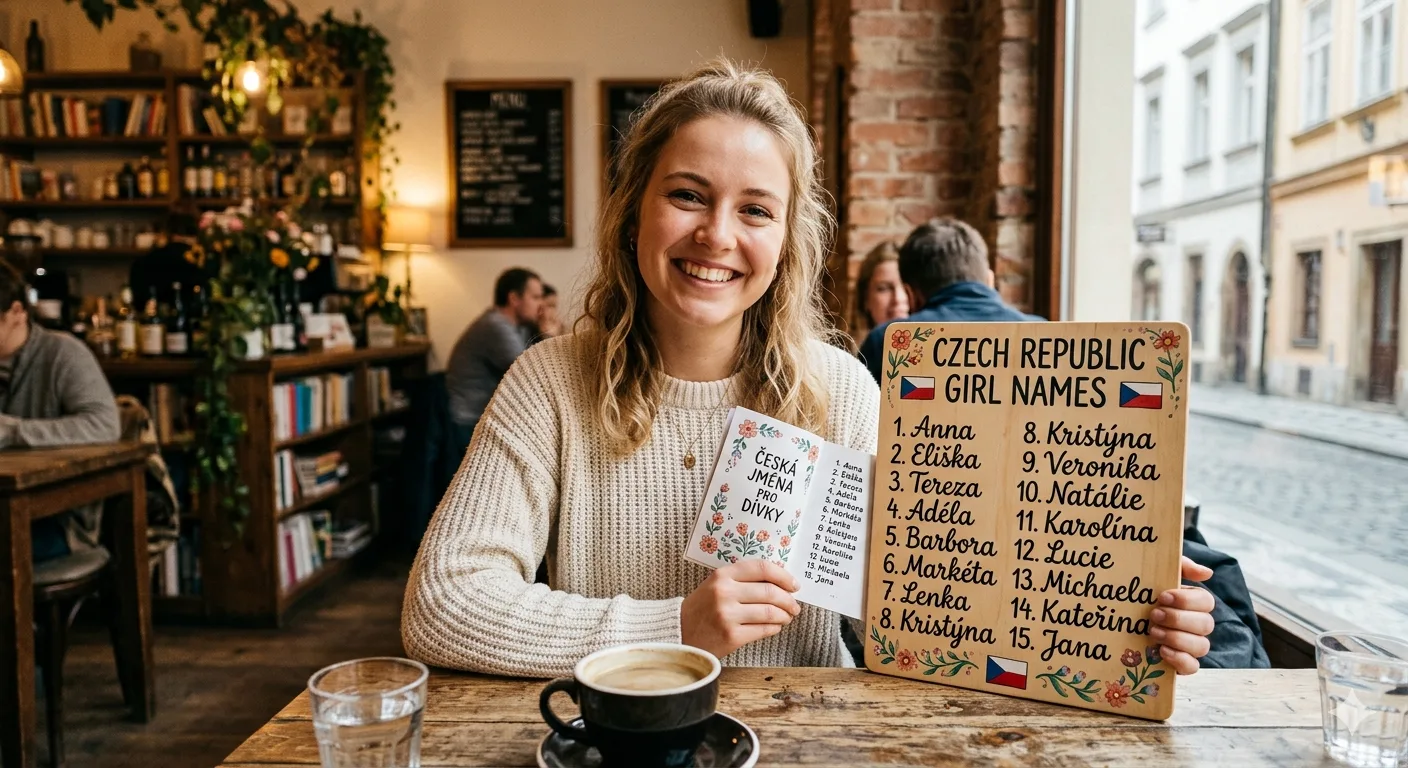
Certain Czech girl names have maintained their beloved status across generations, appearing consistently among the most chosen names for baby girls in the Czech Republic year after year. These popular Czech girl names combine beautiful Slavic or Latin sounds, powerful and meaningful origins, and a deep cultural resonance that makes them feel both timeless and deeply right. If you are looking for a name that carries genuine cultural credibility in Czech society while also sounding beautiful to international ears, these beloved names are the perfect starting point.
|
Name |
Origin / Meaning |
Why It Stands Out |
|
Tereza |
Greek, to harvest, guardian of summer |
Consistently top-ranked name in the Czech Republic |
|
Katerina |
Greek, pure, clear |
Elegant Slavic form of Katherine, deeply beloved |
|
Lucie |
Latin, light, illumination |
Bright and beautiful, classic Czech favorite |
|
Marketa |
Greek via Latin, pearl |
Czech form of Margaret, centuries of tradition |
|
Jana |
Hebrew, God is gracious |
Simple, strong, enduringly popular |
|
Eva |
Hebrew, life, living one |
Biblical beauty, universally loved in Czech |
|
Anna |
Hebrew, grace, favor |
Timeless elegance, one of the oldest Czech names |
|
Petra |
Greek, rock, stone |
Feminine form of Peter, strong and stylish |
|
Veronika |
Greek or Latin, true image |
Classic and musical, long Czech favorite |
|
Barbora |
Greek, foreign, stranger |
Czech Saint Barbara, beloved cultural name |
|
Kristyna |
Greek, follower of Christ |
Czech form of Christina, warmly traditional |
|
Monika |
Latin or African, advisor, counselor |
Soft and classic, consistently popular |
Tereza holds a place in Czech naming culture that is almost impossible to overstate. It has ranked among the very top names for Czech baby girls for decades and carries a warmth and familiarity that makes it feel like the quintessential Czech feminine name. The name honors Saint Teresa of Avila as well as Saint Therese of Lisieux, giving it strong religious roots while its Slavic sound makes it feel completely at home in the Czech linguistic landscape.
Katerina is the distinctly Czech way of honoring the ancient Greek name meaning purity, and it has been one of the cornerstone names of Czech feminine naming tradition since the medieval period. Its musical four-syllable flow, with the stress falling beautifully on the first syllable, gives it a graceful quality that Czech parents have cherished across countless generations. Lucie brings the concept of light into a name that is both simple and radiant, and its connection to Saint Lucy, whose feast day falls on one of the darkest days of winter, gives it a poetic seasonal resonance that Czech culture has always appreciated.
Modern and Trending Czech Girl Names in 2026
Czech parents in 2026 are navigating an exciting and sometimes surprising naming landscape. While traditional names retain enormous respect and popularity, there is a strong and growing movement toward names that feel contemporary, fresh, and connected to the wider European and global culture that the Czech Republic has enthusiastically embraced since 1989. Modern trending Czech girl names often blend an international sensibility with a distinctly Czech sound or spelling, creating names that work beautifully both within Czech society and in the wider world.
|
Name |
Meaning |
Why Trending |
|
Eliska |
Hebrew, my God is an oath |
Czech form of Elizabeth, hugely fashionable |
|
Adela |
Germanic, noble, nobility |
Elegant and fresh, rising fast across Bohemia |
|
Natalie |
Latin, born at Christmas |
International sound with Czech warmth |
|
Zuzana |
Hebrew, lily, graceful flower |
Classic Czech name experiencing revival |
|
Sofia |
Greek, wisdom, knowledge |
International favorite with strong Czech appeal |
|
Michaela |
Hebrew, who is like God |
Feminine Czech classic, modernly fashionable |
|
Dominika |
Latin, belonging to the Lord |
Stylish and strong, widely popular today |
|
Simona |
Hebrew, he has heard |
Musical and elegant, rising in Czech rankings |
|
Klara |
Latin, clear, bright, famous |
Vintage elegance, powerfully trending now |
|
Rozalie |
Latin, rose |
Rare floral beauty, fresh and fashionable |
|
Adela |
Germanic, noble |
Short, elegant, very current in Czech Republic |
|
Lenka |
Greek, torch, bright light |
Quintessentially Czech, warmly fashionable |
Eliska is one of the most fascinating name stories in contemporary Czech culture. A diminutive and uniquely Czech form of Elizabeth, it has transformed from a nickname into a fully independent given name in its own right and is now one of the most fashionable choices for Czech baby girls. It carries the authority and tradition of the ancient Hebrew name while sounding completely natural and contemporary in Czech everyday life. Its friendly, approachable quality makes it a perfect choice for modern Czech parents who want something with heritage and freshness in equal measure.
The name Klara is experiencing one of the most remarkable revivals in Czech naming culture right now. After decades of relative unfashionability, this clear and luminous name meaning bright or famous is being rediscovered by Czech parents as the perfect combination of vintage elegance and contemporary style. Its connection to Saint Clare of Assisi gives it spiritual depth while its sharp, clean sound feels completely modern. Rozalie, the Czech form of Rosalie, is another name in the midst of a powerful and beautiful revival, bringing a floral softness to the Czech naming landscape.
Traditional and Classical Czech Girl Names That Endure Through Time
Traditional Czech girl names carry the weight of Bohemian history, the beauty of ancient Slavic linguistic heritage, and the enduring legacy of Czech saints, queens, and cultural heroines across more than a millennium. These classical names have been the foundation of Czech feminine naming culture since the earliest days of the Bohemian kingdom and continue to be chosen with pride and reverence today because of their deep cultural authenticity and timeless elegance.
|
Name |
Origin / Meaning |
Why It Endures |
|
Ludmila |
Slavic, gracious people, people's grace |
Czech patron saint, most revered Bohemian name |
|
Bozena |
Slavic, divine, blessed by God |
Ancient Slavic beauty, deeply Czech |
|
Milada |
Slavic, beloved grace, dear grace |
Historic Czech name, gentle and beautiful |
|
Drahuska |
Slavic, dear, beloved treasure |
Affectionate name, old Bohemian charm |
|
Vlasta |
Slavic, power of the homeland |
Legendary Czech heroine, strong and proud |
|
Ruzena |
Slavic-Czech, rose, rosebud |
Floral classic, centuries of Czech tradition |
|
Bozka |
Slavic, gift of God, divine |
Traditional affectionate diminutive |
|
Hana |
Hebrew via Czech, grace, favor |
Czech form of Hannah, softly beautiful |
|
Vera |
Slavic and Latin, faith, truth |
Short and powerful, deeply Slavic soul |
|
Dagmar |
Nordic-Czech, day maid, glorious day |
Czech royal name, proudly historical |
|
Libuse |
Slavic, dear and beloved |
Mythological Czech princess, iconic name |
|
Bozena |
Slavic, divinely gifted |
Literary classic, Nemcova connection |
Ludmila stands above all other traditional Czech girl names as the most revered and culturally significant feminine name in the entire country. Saint Ludmila was the grandmother of the patron saint of Bohemia, Saint Wenceslas, and she was martyred for her Christian faith in the tenth century. She is considered the patron saint of the Czech lands, and her name has been passed down through Czech families as a sacred gift for over a thousand years. The name itself carries the beautiful Slavic meaning of gracious people or the grace of the people, making it not just a name but an expression of the best values of Czech civilization.
Libuse occupies a unique place in Czech cultural mythology as the legendary prophetess and princess who is said to have founded the city of Prague. According to Czech legend, it was Libuse who stood on the hill above the Vltava River and prophesied the founding of a great city whose glory would touch the stars. Choosing Libuse for a daughter today is an act of deep national pride and cultural reverence. The name Dagmar carries a fascinating history as both a Slavic and Nordic name that became beloved in Czech royal tradition, carried most famously by a beloved Czech queen who became Queen of Denmark in the medieval period.
You can also use our Name Generator Tool to create unique names instantly. Namibia Girl Names
Rare and Unique Czech Girl Names That Truly Distinguish
For parents seeking something genuinely distinctive within Czech naming culture, there is a treasure trove of rare and uncommon Czech girl names that carry extraordinary beauty, depth of meaning, and cultural authenticity without being widely used in modern times. These unique Czech girl names draw on the deepest wells of Slavic linguistic tradition, Bohemian mythology, forgotten medieval names, and the rich poetic heritage of the Czech language to offer truly one-of-a-kind choices.
|
Name |
Origin / Meaning |
Why It Stands Out |
|
Doubravka |
Slavic, oak grove, strength of oak |
Medieval Bohemian princess, extremely rare |
|
Svetlana |
Slavic, light, radiance, luminous |
Beautiful Slavic rarity with glowing meaning |
|
Kveta |
Czech, flower, blossom |
Rare floral gem, distinctly Czech |
|
Radoslava |
Slavic, joyful glory, glad fame |
Powerful compound name, very rare today |
|
Blazena |
Czech-Slavic, blessed, happy, fortunate |
Gentle and rare, deeply meaningful |
|
Miloslava |
Slavic, gracious glory, glory of grace |
Beautiful compound, ancient and rare |
|
Vlastimila |
Slavic, power and grace combined |
Rare compound, fierce and tender |
|
Striborna |
Czech, silver, moonlight silver |
Poetic and extremely rare |
|
Zlatuska |
Czech, little golden one |
Endearing and unique, Czech gold |
|
Cervinka |
Czech, little red one, ruby |
Vivid and rare, purely Czech |
Doubravka is one of the most historically significant rare Czech names still occasionally used today. It was borne by a tenth-century Bohemian princess who married Mieszko I of Poland and brought Christianity to the Polish people, making her one of the most consequential figures in Central European religious history. The name means oak grove and carries connotations of deep-rooted strength, natural beauty, and the ancient forests that have always shaped the Bohemian spirit. Choosing Doubravka for a daughter is an act of profound historical consciousness and an embrace of a name that is simultaneously beautiful and extraordinary.
Svetlana, while more commonly associated with Russian naming culture, has a long history in Czech and Slavic tradition as a name meaning radiant light. In the Czech Republic it has the quality of a rare gem, beautiful and meaningful but seldom encountered in modern times. Kveta, meaning flower or blossom, is one of those distinctly Czech names that could not exist in quite the same way in any other language, capturing the fresh beauty of spring flowers in a sound that is immediately recognizable as belonging to the Czech linguistic tradition.
Czech Baby Girl Naming Ideas for Every Style and Personality
Finding the right Czech girl name for your baby involves thinking about what qualities matter most to your family. Czech naming culture is beautifully varied, offering everything from short and strong one-syllable names to long and melodious compound Slavic names, from internationally recognizable forms to names that are purely and unmistakably Czech. Here is a thoughtful selection of Czech baby girl names organized by the qualities families most often seek.
Sweet and Gentle Czech Names
Families drawn to names with a soft and tender quality will love Anezka, the distinctly Czech form of Agnes meaning pure and chaste, with its warm diminutive ending that gives it an immediately affectionate feel. Hanecka and Lenecka are diminutive forms that carry enormous warmth. Kvitka, meaning little flower, and Ruzicka, meaning little rose, bring natural sweetness. Miluse and Milka draw on the Slavic root mil meaning dear and beloved.
Strong and Empowering Czech Names
For parents wanting a name that carries strength and determination, Czech culture offers Vladimira meaning great ruler, Bohumila meaning pleasing to God with divine strength, Jaroslava meaning glorious spring, Vlastimila combining power and grace, and the legendary Libuse whose prophetic vision founded Prague itself. These are names with genuine historic power behind them.
Musical and Melodious Czech Names
The Czech language produces names of extraordinary musicality. Veronika with its flowing four syllables, Magdalena with its biblical grandeur, Karolina with its graceful European charm, Natalie with its celebration of birth and light, and the beautiful Viktoriya all carry a musical quality that makes them feel like they belong in a song as much as on a birth certificate.
Cultural and Religious Influences on Czech Girl Names
Czech naming culture has been shaped by two enormous and sometimes competing forces over the past thousand years. The first is the ancient Slavic tradition that predates Christianity, producing names rooted in the natural world, abstract virtues, and the compound structure that places two meaningful elements together to create a name of layered meaning. The second is the Christian tradition that entered Bohemia in the ninth century and brought with it the names of biblical figures, apostles, martyrs, and saints that transformed the Czech naming landscape forever.
The Slavic Heritage in Czech Girl Names
Before Christianity arrived in Bohemia, Czech ancestors gave their daughters names drawn from the world around them and the virtues they valued most. These ancient Slavic names are compound words that place two meaningful elements together. The element mil meaning dear, beloved, or grace appears in names like Milada, Miloslava, Miluse, and Vlastimila. The element slav meaning glory or fame appears in names like Jaroslava, Radoslava, and Miloslava. The element bog or boz meaning God or divine appears in names like Bozena and Bohumila. These names tell a story about what ancient Slavic culture prized most, deep personal bonds, glory achieved through honorable action, and a relationship with the divine forces of the natural world.
Christianity and the Czech Patron Saints
When Cyril and Methodius brought Christianity and a written alphabet to the Slavic lands in the ninth century, and when the Bohemian royal family converted to Christianity, a wave of new names entered Czech culture. Names honoring Czech saints became the most culturally significant choices a family could make. Ludmila, Vaclav, Agnes, Prokop, and Zdislava are all names of Czech saints that carry deep national and religious significance. The tradition of celebrating name days, called svatory, means that every Czech woman with one of these traditional saints names has a personal holiday observed throughout Czech society, adding another layer of cultural meaning to the act of naming.
The Jewish and German Heritage in Czech Naming
The Czech lands have historically been home to significant German-speaking and Jewish communities whose naming traditions have influenced Czech culture for centuries. Names like Eliska, Adelheid, Hildegard, and Hedvika entered Czech culture through the German-speaking community. Hebrew biblical names came both through Christianity and through the historic Jewish community of Bohemia, one of the oldest and most culturally significant in Europe. Names like Ester, Rut, Sara, and Miriam carry this dual heritage beautifully.
Latest Czech Girl Name Trends Shaping 2026
Czech baby girl naming trends in 2026 reflect a fascinating and multi-directional cultural conversation that is unique to a country navigating its own rich past and its European present simultaneously. Several clear patterns are defining how Czech parents are naming their daughters right now.
The Great Czech Vintage Revival
One of the most powerful naming trends in the Czech Republic today is the enthusiastic rediscovery of names that were popular in the first half of the twentieth century but fell out of fashion during the communist era between 1948 and 1989. Names like Bozena, Ruzena, Milada, Blazena, Hortenzie, and Vilemina that carry an almost nostalgic Old Bohemian charm are being chosen by young Czech parents as a deliberate act of cultural reclamation. These names feel vintage in the most beautiful sense, connected to a pre-communist Czech identity that the country has been recovering and celebrating since 1989. Bozena in particular is making a striking comeback, partly inspired by the literary legacy of Bozena Nemcova, the beloved nineteenth-century writer whose face appears on the Czech one hundred crown note.
Short and Crisp Czech Names on the Rise
Czech parents in 2026 show a strong preference for shorter names that still carry genuine cultural weight. Names of two or three syllables are dominating the current popularity charts. Eliska, Klara, Lucie, Hana, Vera, Adela, and Jana are all benefiting from this preference for names that feel clean, strong, and easy in everyday use without sacrificing meaning or beauty. This mirrors a broader European trend but with a distinctly Czech flavor, as these names are not just short but anchored in specifically Czech linguistic and cultural tradition.
The International Name with Czech Soul
A significant number of Czech parents today are choosing internationally recognizable names that nevertheless have strong Czech versions or deep roots in Czech cultural history. Sofia, Natalie, Dominika, Veronika, and Karolina are all names that work beautifully across European languages while feeling completely at home in a Czech context. This approach reflects the reality of Czech life today, a country deeply integrated into European and global culture while remaining proudly distinctive in its own identity. For parents who want their daughter to carry a name that travels well across borders while remaining authentically Czech, this is an increasingly popular strategy.
Nature and Seasons in Czech Baby Names
The Czech landscape, with its ancient forests, rolling Bohemian hills, Moravian vineyards, and four distinct seasons, has always inspired Czech naming culture. Names connected to nature and the natural cycles are experiencing a meaningful revival in 2026. Kveta meaning flower, Ruzena meaning rose, Lesana meaning forest woman, Jaroslava connecting to the word for spring, Snezana meaning snow, and even the beautiful Zlatuska meaning little golden one all draw on natural imagery. Czech parents today are increasingly drawn to names that connect their daughters to the natural world and to the specifically Czech landscape that has shaped the national spirit for centuries.
You can also use our Name Generator Tool to create unique names instantly. Nauru Girl Names
How Czech Families Choose Girl Names and What It Means
The Name Day Tradition
One of the most distinctive aspects of Czech naming culture is the institution of jmeniny or name days. The Czech Republic maintains an official calendar in which nearly every day of the year is assigned one or more traditional Czech names. When a Czech person celebrates their name day, it is a minor holiday observed by family, friends, and colleagues who offer congratulations and sometimes small gifts. This tradition creates a powerful social and cultural incentive for Czech parents to choose names that appear on the official name day calendar, ensuring their daughter will have a personal celebration to look forward to every year. This is why traditional Czech names retain such strong cultural currency even as international names become more available and fashionable.
Family and Ancestral Connection
Czech families have a deep tradition of naming children to honor grandparents, great-grandparents, and other beloved relatives. It is not uncommon for a Czech girl to carry her grandmother's name either as a first name or as a middle name, creating a living thread of connection between generations. This practice means that many of the traditional Slavic names that might otherwise fade from use are kept alive by families who choose them as acts of memory and love. The custom of honoring the dead through the names of the living is a Slavic tradition with roots stretching back to pre-Christian times and remains deeply meaningful in Czech family culture today.
The Czech Language and Name Formation
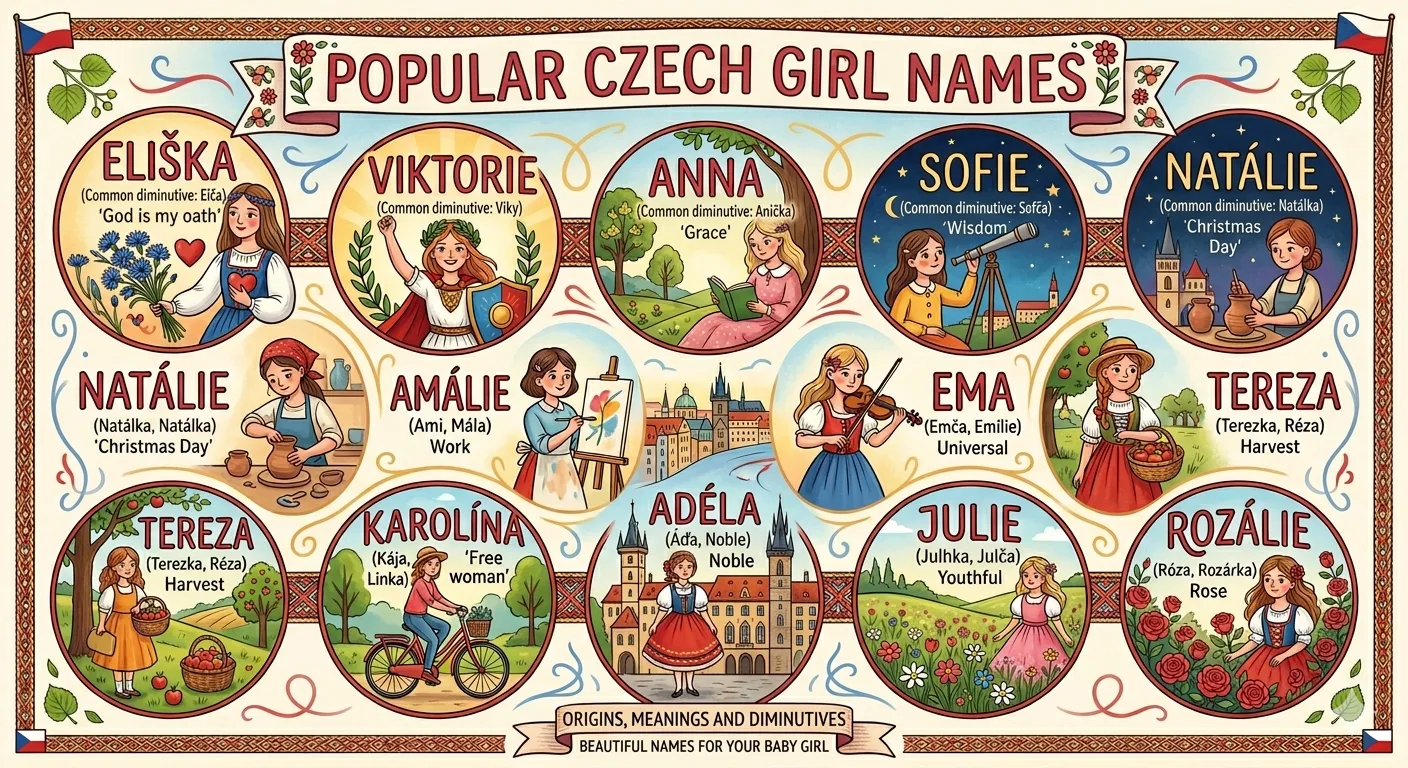
The Czech language has a rich tradition of diminutive name formation that is unique in the European naming landscape. Virtually every Czech name has at least one affectionate diminutive form used in everyday family and social life. Jana becomes Janecka or Janicka. Lucie becomes Lucinka. Tereza becomes Terezka or Terinka. Eva becomes Evicka. These diminutive forms are not just nicknames but an entire additional layer of naming culture that allows the same fundamental name to carry different registers of intimacy, formality, and affection depending on the form used. For Czech parents, choosing a name means also thinking about what beautiful diminutives it will naturally produce.
You can also use our Name Generator Tool to create unique names instantly. Denmark Girl Names
Expert Tips for Choosing the Perfect Stylish Czech Girl Name
Consider the name day calendar first. Before falling in love with any Czech girl name, check whether it appears on the official Czech name day calendar. A name without a name day means your daughter will miss out on one of the most characteristically Czech social traditions. The Czech calendar is rich and varied, but not all names are included, so this is a practical and culturally important first step.
Think about the diminutive possibilities. As discussed above, Czech naming culture places enormous value on the affectionate diminutive forms of names. Say your chosen name aloud and then think about what natural diminutives it produces. Katerina becomes Katka or Katicka. Barbora becomes Barka or Barborka. If you love the diminutives as much as the full name, you have found a name with genuine staying power in Czech everyday life.
Honor your Czech heritage intentionally. If you are of Czech descent and living outside the country, choosing a Czech girl name for your daughter is a beautiful and meaningful way to keep your heritage alive. Names like Ludmila, Blazena, Bozena, Anezka, or Kveta are unmistakably Czech and will give your daughter a living connection to Bohemia, Moravia, and the Slavic cultural tradition that shaped your family's history.
Balance Czech authenticity with international accessibility. For Czech families living in multilingual environments or for families outside the Czech Republic who love Czech names, it is worth thinking about how the name will be pronounced and received in other languages. Names like Lucie, Sofia, Natalie, Anna, Eva, and Petra work beautifully across multiple European languages while remaining genuinely and authentically Czech. If you want a name that is purely and distinctively Czech, names like Libuse, Ludmila, or Doubravka will always be immediately recognizable as belonging to the Czech tradition.
Read the meaning carefully and choose it with intention. Czech names, especially the traditional Slavic compound names, carry meanings of extraordinary richness and depth. A name like Miloslava means the glory of grace or glorious through graciousness. Jaroslava means the glory of spring. Vladimira means great ruler. These meanings are not incidental decorations but the original core of the name's identity. Choosing a name whose meaning resonates with your hopes and wishes for your daughter is one of the most meaningful acts of Czech naming tradition.
Generate More Names: Girl Names Generator
Conclusion: Celebrating the Beauty and Depth of Czech Republic Girl Names
Czech Republic girl names represent one of the richest and most distinctive naming traditions in all of Europe. Rooted in the ancient Slavic linguistic heritage that stretches back over a thousand years, shaped by the Christian faith that transformed Bohemia beginning in the ninth century, honored by the memory of Czech saints and legendary heroines, and continually refreshed by the cultural creativity of each new generation, Czech girl names offer an extraordinary range of beauty, meaning, and cultural depth.
Whether you choose a timeless classic like Tereza or Katerina, a legendary name with mythological resonance like Libuse, a rare Slavic gem like Doubravka or Svetlana, a vintage Bohemian revival like Bozena or Milada, a modern fresh choice like Eliska or Klara, or a nature-inspired beauty like Kveta or Ruzena, you are giving your daughter a name that participates in one of Europe's most compelling and meaningful naming cultures. Every Czech girl name carries within it the sounds and stories of Bohemia and Moravia, the mountains and forests of Central Europe, the struggles and triumphs of the Czech nation, and the enduring human desire to give the people we love names that capture something true and beautiful about who they are and who they might become.
We hope this complete guide to Czech Republic girl names has opened a doorway into the extraordinary richness of Czech naming culture and helped you discover names that feel genuinely right for your daughter. May she grow up proud of her name, connected to the deep and beautiful heritage it represents, and ready to add her own chapter to the long and remarkable story of Czech women who have carried these names with grace, strength, and distinction throughout history.