 Algerian Girl Name Generator
Discover beautiful Algerian girl names blending Arab and Amazigh heritage
Guides & Articles
Algeria Girl Names: A Complete Guide to Beautiful, Stylish and Meaningful Choices
Discover the most beautiful, trending, unique and culturally rich Algerian girl names for 2026
Introduction: The Enchanting World of Algerian Girl Names
Choosing a name for your baby girl is one of the most profound and joyful decisions any parent will ever make. In Algeria, this decision is shaped by a rich and layered tapestry of cultural traditions, Islamic faith, Berber heritage, Arabic linguistic beauty, French colonial history, and the vibrant modern energy of North African society. Algerian girl names are among the most lyrical, meaningful, and culturally resonant names found anywhere in the world, each one carrying centuries of story, geography, and spiritual depth.
Algeria is a country of remarkable diversity. It is the largest country in Africa by land area, stretching from the Mediterranean coast through the Tell Atlas mountains, across vast high plateaux, and deep into the Sahara Desert. This extraordinary geographical range has shaped a culture and a naming tradition that is equally vast and varied. Algerian names draw from classical Arabic, Berber and Amazigh languages, Islamic religious tradition, Andalusian heritage, and the distinctly Algerian creative spirit that emerged from centuries at the crossroads of Africa, the Arab world, and the Mediterranean.
In 2026, Algerian baby girl naming trends are evolving in fascinating ways. Parents are increasingly balancing deep respect for Islamic and cultural naming traditions with a desire for names that feel modern, individual, and suited to a young woman growing up in an increasingly connected global society. Whether you are drawn to classical Arabic names with spiritual depth, rare Berber names rooted in ancient Amazigh civilization, popular modern names shared across the Arab world, or uniquely Algerian choices that carry the specific flavour of this beautiful country, this complete guide covers the full landscape of stylish Algerian girl names today.
This article explores popular Algerian girl names with beautiful meanings, modern and trending choices, traditional and cultural names, rare Amazigh names, baby naming ideas inspired by nature and faith, the deep cultural forces shaping Algerian naming traditions, and much more. You will also find expert tips for choosing the perfect name and a comprehensive FAQ section answering the questions parents most want answered.
Popular Algerian Girl Names with Beautiful Meanings
Certain names appear again and again in Algerian families across generations, holding their place in Algerian hearts because they beautifully combine spiritual significance, linguistic beauty, and cultural resonance. These popular Algerian girl names are beloved by families across Algiers, Oran, Constantine, Annaba, and every corner of this magnificent country.
|
Name |
Origin and Meaning |
Why It Stands Out |
|
Amira |
Arabic, princess, one who commands |
Elegant and regal, deeply beloved across Algeria |
|
Fatima |
Arabic, one who abstains, shining |
Most sacred name in Islam, beloved everywhere |
|
Nour |
Arabic, light, radiance, illumination |
Beautiful and simple, consistently top-ranked |
|
Yasmine |
Persian via Arabic, jasmine flower |
Fragrant and graceful, widely loved across Algeria |
|
Sara |
Arabic and Hebrew, princess, noble lady |
Timeless and beautiful, universally popular |
|
Meriem |
Algerian form of Maryam, beloved |
Arabic form of Mary, deeply revered in Islam |
|
Lina |
Arabic, tender, gentle, palm frond |
Soft and melodic, widely used across the country |
|
Rania |
Arabic, gazing, looking, queen-like |
Elegant and modern, popular with young families |
|
Imane |
Arabic, faith, belief, strong conviction |
Spiritually meaningful, widely cherished in Algeria |
|
Dina |
Arabic, religious, one of the faith |
Simple and beautiful, consistently popular |
|
Sana |
Arabic, radiance, brilliance, to shine |
Luminous meaning, short and sweet |
|
Wafa |
Arabic, loyalty, faithfulness, devotion |
Deeply meaningful virtue name, widely loved |
Fatima occupies a position of unique importance among Algerian girl names that goes far beyond simple popularity. As the name of the beloved daughter of the Prophet Muhammad, Fatima carries the deepest possible religious and spiritual significance in Islamic tradition. Algerian families who choose this name for their daughter are expressing both their faith and their wish to connect their child to one of the most honored figures in the history of Islam. The name is spoken with reverence throughout Algeria and across the entire Muslim world.
Nour is perhaps the most universally appealing of all Algerian girl names because its meaning, light and radiance, resonates so powerfully across cultures, languages, and traditions. Parents throughout Algeria are drawn to Nour for its simplicity, its beauty, and its spiritual resonance. Light is one of the most powerful metaphors in Islamic tradition, and choosing the name Nour for a daughter is a wish that she will bring brightness into every space she enters throughout her life.
Modern and Trending Algerian Girl Names in 2026
Algerian parents in 2026 are navigating a fascinating tension between honoring the deep cultural and religious naming traditions of their country and embracing names that feel fresh, contemporary, and reflective of a modern North African identity. The most trending Algerian girl names of the moment tend to carry genuine cultural roots while feeling forward-looking and stylish at the same time.
|
Name |
Meaning |
Why It Is Trending |
|
Malak |
Arabic, angel, divine messenger |
Heavenly meaning, hugely fashionable now |
|
Ines |
Latin via Arabic, gentle, pure |
Elegant and international, rising fast |
|
Manel |
Algerian form of Manuel, gift of God |
Distinctly Algerian feel, very popular |
|
Chaima |
Arabic, with a beauty mark, lovely |
Unique and beautiful, widely trending |
|
Assia |
Arabic, one who heals, comforter |
Meaningful and modern, very popular in Algeria |
|
Nihad |
Arabic, gentle nature, joyful spirit |
Soft and beautiful, gaining momentum |
|
Ryma |
Arabic, white gazelle, graceful beauty |
Poetic and lovely, fashionable choice |
|
Yousra |
Arabic, ease, prosperity, blessing |
Quranic name, widely loved and current |
|
Sirine |
Arabic, charming voice, melodious |
Musical and beautiful, rising in popularity |
|
Nadia |
Slavic via Arabic, hope, graceful |
International appeal, consistently strong |
|
Dounia |
Arabic, the world, earthly life |
Poetic and soulful, a distinctive Algerian choice |
|
Sabrina |
Latin and Berber, from the River Severn |
Cross-cultural appeal, popular in modern Algeria |
Malak has emerged as one of the most fashionable girl names in Algeria in recent years. Its meaning, angel or divine messenger, gives it an ethereal, spiritual beauty that resonates deeply with Algerian families. The name is short, easy to pronounce across Arabic, French, and Berber linguistic contexts, and carries a lightness and grace that many parents find irresistible for their daughters. Malak feels simultaneously deeply rooted in Islamic tradition and completely modern in its elegance.
Chaima is a name that feels distinctly Algerian in character, beloved particularly in the northern regions of the country. Its meaning, one with a beauty mark, connects to an old Arabic tradition of celebrating natural physical qualities as gifts of beauty and distinction rather than imperfections. The name is playful, warm, and carries a gentle pride in natural beauty that many Algerian parents find deeply appealing for their daughters.
Dounia, meaning the world or earthly life, is one of those names that carries a profound philosophical depth within a single beautiful word. To name a daughter Dounia is to acknowledge the precious gift of existence itself, to celebrate life on this earth as something worth cherishing. It is a name with a soulful quality that sets it apart from more straightforward choices and gives a child something genuinely meaningful to carry through her life.
Traditional and Cultural Algerian Girl Names That Carry the Soul of History
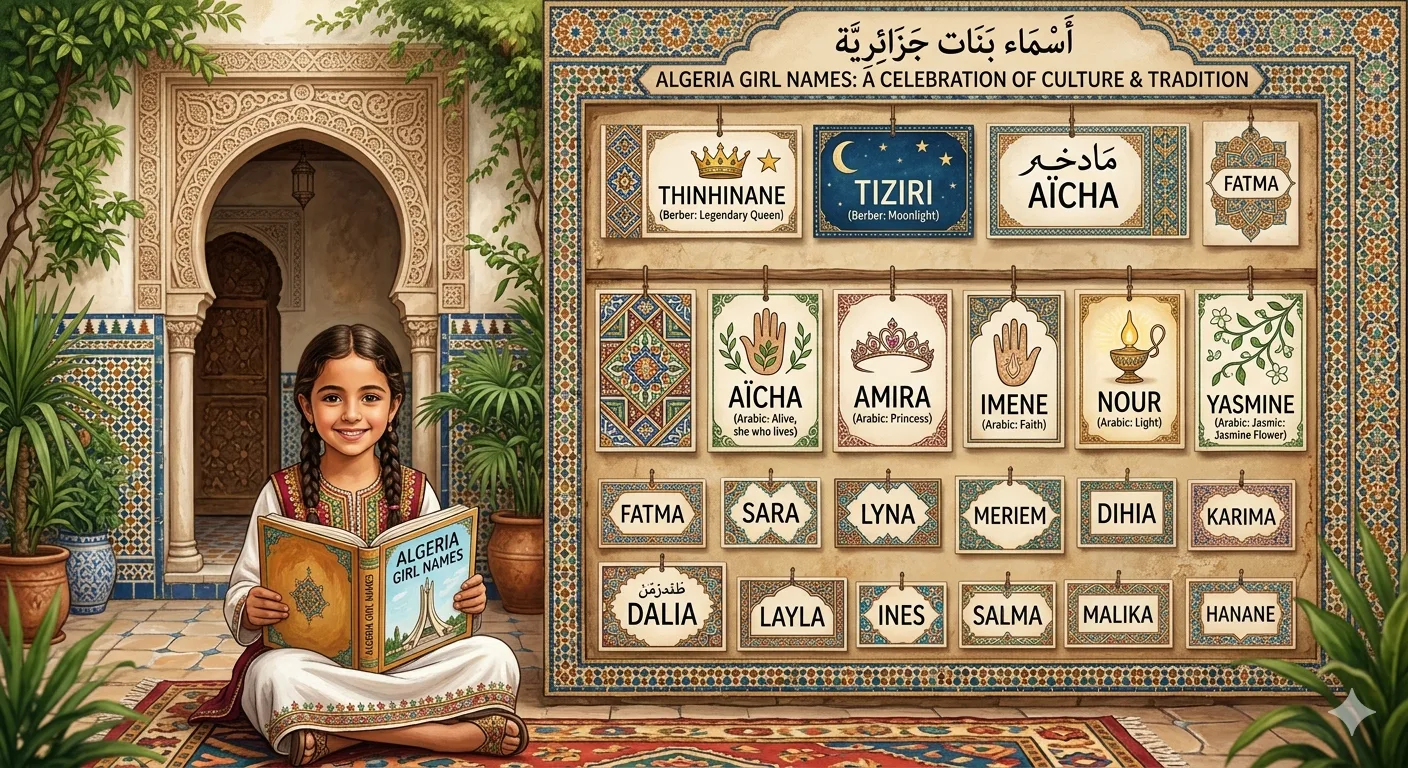
Traditional Algerian girl names draw from centuries of Arabic, Berber, and Islamic cultural history. These names have been given to Algerian daughters through generations and carry the weight of cultural memory, religious significance, and the deep beauty of a civilization with roots going back thousands of years. Choosing a traditional name for your daughter is a way of connecting her to something far larger than herself.
|
Name |
Origin and Meaning |
Cultural Significance |
|
Zohra |
Arabic, blooming, brightness, Venus |
Traditional Algerian classic, deeply loved |
|
Khadija |
Arabic, premature baby, respected elder |
Name of the Prophet's first wife, most honored |
|
Aisha |
Arabic, living, full of life, prosperous |
Name of beloved wife of the Prophet |
|
Fatna |
Algerian form of Fatima, abstains |
Distinctly North African traditional form |
|
Messaouda |
Arabic, fortunate, blessed, happy one |
Traditional Algerian name, deeply rooted |
|
Zineb |
Arabic, fragrant plant, father's precious gem |
Traditional and beloved, very Algerian |
|
Kheira |
Arabic, good, virtuous, noble |
Simple virtue name, widely traditional |
|
Djamila |
Arabic, beautiful, graceful, elegant |
Classic Algerian beauty name, iconic |
|
Soumia |
Arabic, elevated, high, exalted |
Traditional Algerian choice, warmly familiar |
|
Hafsa |
Arabic, young lioness, gathering |
Name of a wife of the Prophet, respected |
|
Roukia |
Arabic, ascent, rise, elevation |
Quranic significance, traditional Algerian choice |
|
Saadia |
Arabic, fortunate, blessed, happy |
Classic traditional name, warm and familiar |
Djamila is one of the most iconic names in Algerian cultural history, partly because of its beautiful meaning, graceful and beautiful, and partly because of its association with Djamila Bouhired, one of the most celebrated heroines of the Algerian War of Independence. Bouhired's courage and sacrifice made her name a symbol of Algerian resistance and womanhood, and the name has carried that proud heritage ever since. Choosing Djamila for a daughter today connects her to both personal beauty and national honor.
Khadija and Aisha are among the most revered names in all of Islamic tradition, as they were carried by the closest companions and wives of the Prophet Muhammad. Khadija was the first wife of the Prophet, a wealthy and independent businesswoman who was the first to accept Islam, and her name carries connotations of dignity, strength, and spiritual courage. Aisha, the youngest wife of the Prophet, is remembered for her intelligence, scholarship, and the thousands of hadith she transmitted, making her one of the most important figures in early Islamic history.
Zohra carries a particular warmth in Algerian culture because it has been used there for so many centuries that it feels inseparably woven into the fabric of the country itself. The name means blooming or brightness and is also associated with Venus, the planet of beauty, giving it a celestial dimension alongside its earthly warmth. Many Algerian families with strong regional roots in cities like Tlemcen, Constantine, or the Kabylie region have passed this name down through multiple generations as a cherished family tradition.
You can also use our Name Generator Tool to create unique names instantly. Malaysia Girl Names
Rare and Beautiful Amazigh Berber Girl Names from Algeria
Algeria is home to one of the world's oldest living civilizations, the Amazigh people, also known as Berbers, whose language, culture, and naming traditions predate the Arab conquest by thousands of years. Amazigh girl names carry a unique and ancient beauty that is quite distinct from Arabic names, drawing from the Tamazight language and from the deep well of Berber cultural history, mythology, and connection to the land of North Africa.
|
Name |
Amazigh Meaning |
Why It Is Special |
|
Tafat |
Tamazight, light, the dawn |
Ancient Berber word for light, rare and beautiful |
|
Dihya |
Berber, legendary warrior queen |
Name of the famous Kahina queen, powerful |
|
Tinhinan |
Tamazight, she who is of the tents |
Legendary Tuareg ancestor, deeply revered |
|
Thiziri |
Tamazight, moonlight, gentle glow |
Poetic and rare, deeply Amazigh in character |
|
Massylya |
Ancient Berber, from the Massyli tribe |
Ancient North African heritage, very rare |
|
Yidir |
Berber, living, alive, full of life |
Ancient and rare, Amazigh cultural treasure |
|
Tiziri |
Tamazight, moonbeam, soft light |
Variation of Thiziri, equally beautiful |
|
Aziz |
Berber and Arabic, precious, strong |
Beloved across Kabyle and Arabic tradition |
|
Izia |
Tamazight, pride, honour, esteem |
Rare and meaningful, proudly Amazigh |
|
Sefra |
Tamazight, the yellow one, golden |
Linked to the Sahara, rare and evocative |
Dihya is one of the most powerful names in all of Algerian history. It was the name of the Berber warrior queen, known in Arabic sources as Al-Kahina, who led fierce resistance against the Arab conquest of the Maghreb in the late seventh century. She is remembered as one of the greatest military leaders in North African history and as a symbol of Amazigh independence and courage. To name a daughter Dihya today is to give her a connection to a woman of extraordinary strength who shaped the history of Algeria and the entire Maghreb.
Tinhinan is another name of legendary significance in Amazigh tradition. She is believed to be the mythical ancestor of the Tuareg people, the great confederation of Berber nomads who have inhabited the Sahara for thousands of years. Tinhinan is revered as a queen and a mother of nations, and her name carries an almost mythological weight in Tuareg and broader Amazigh culture. Choosing this name for a daughter is a gesture of profound respect for the ancient civilization of which Algeria is the inheritor.
The moonlight names Thiziri and Tiziri are among the most poetically beautiful names in the Tamazight language. The moon has always held special significance in North African culture, both as a guide for desert travelers navigating by night and as a symbol of feminine beauty, mystery, and gentle radiance. These rare Amazigh names offer Algerian parents the chance to give their daughter a name that is genuinely unique, deeply rooted in the oldest layer of Algerian cultural identity, and hauntingly beautiful in its meaning.
Nature-Inspired Algerian Girl Names Rooted in the Beauty of the Land
Algeria's extraordinary natural landscape, from the turquoise Mediterranean coast and the Cedar forests of the Tell Atlas to the volcanic rock formations of the Hoggar Mountains and the infinite golden expanse of the Sahara Desert, has inspired a tradition of nature-connected names that are among the most evocative and beautiful in the entire Algerian naming repertoire. These names speak of beauty, of the land, and of the natural world that has shaped Algerian culture for millennia.
|
Name |
Natural Connection |
Why It Is Beloved |
|
Yasmine |
Jasmine flower, fragrant and graceful |
Most beloved floral name in Algeria |
|
Warda |
Arabic, rose, flower, soft beauty |
Classic floral name, timeless elegance |
|
Nour |
Arabic, light, sunlight, radiance |
Luminous natural name, widely beloved |
|
Rym |
Arabic, white gazelle, desert grace |
Saharan creature, poetic and lovely |
|
Samira |
Arabic, entertaining companion at night |
Evening conversations under desert stars |
|
Naima |
Arabic, blessing, gentle, softness |
Gentle as water, warm and natural |
|
Bahia |
Arabic, beautiful, joyful, radiant |
Warm as the Algerian sun, widely loved |
|
Zahia |
Arabic, radiant, blooming, flourishing |
Like a garden in bloom, beautiful name |
|
Selma |
Arabic and Berber, peaceful, safe |
Gentle as the Mediterranean breeze |
|
Lamia |
Arabic, radiant, dark beauty, night |
Mysterious as the Sahara night sky |
Rym, the white gazelle of the desert, is one of the most poetically beautiful names in Algerian naming culture. The gazelle is a creature of extraordinary grace and speed that has inhabited the Sahara and the steppes of Algeria for thousands of years, and it has long served as a symbol of natural beauty, freedom, and delicate elegance in Arabic and Berber poetry. To name a daughter Rym is to wish her the grace of the gazelle, the freedom of the open desert, and the natural beauty that needs no adornment.
Yasmine is beloved throughout Algeria not just for its sound but for the jasmine flower itself, which grows abundantly in Algerian gardens and is deeply associated with the sensory pleasures of Algerian domestic life. The jasmine scent perfumes evening air in Algiers, Oran, and Tlemcen, wafting from gardens and terraces in the soft North African dusk. Naming a daughter Yasmine is to associate her with this beloved fragrance, with the beauty of Algerian evenings, and with the gentle pleasures of a culture that has always prized sensory beauty alongside spiritual depth.
How Names Are Chosen in Algerian Culture and What Shapes Naming Traditions
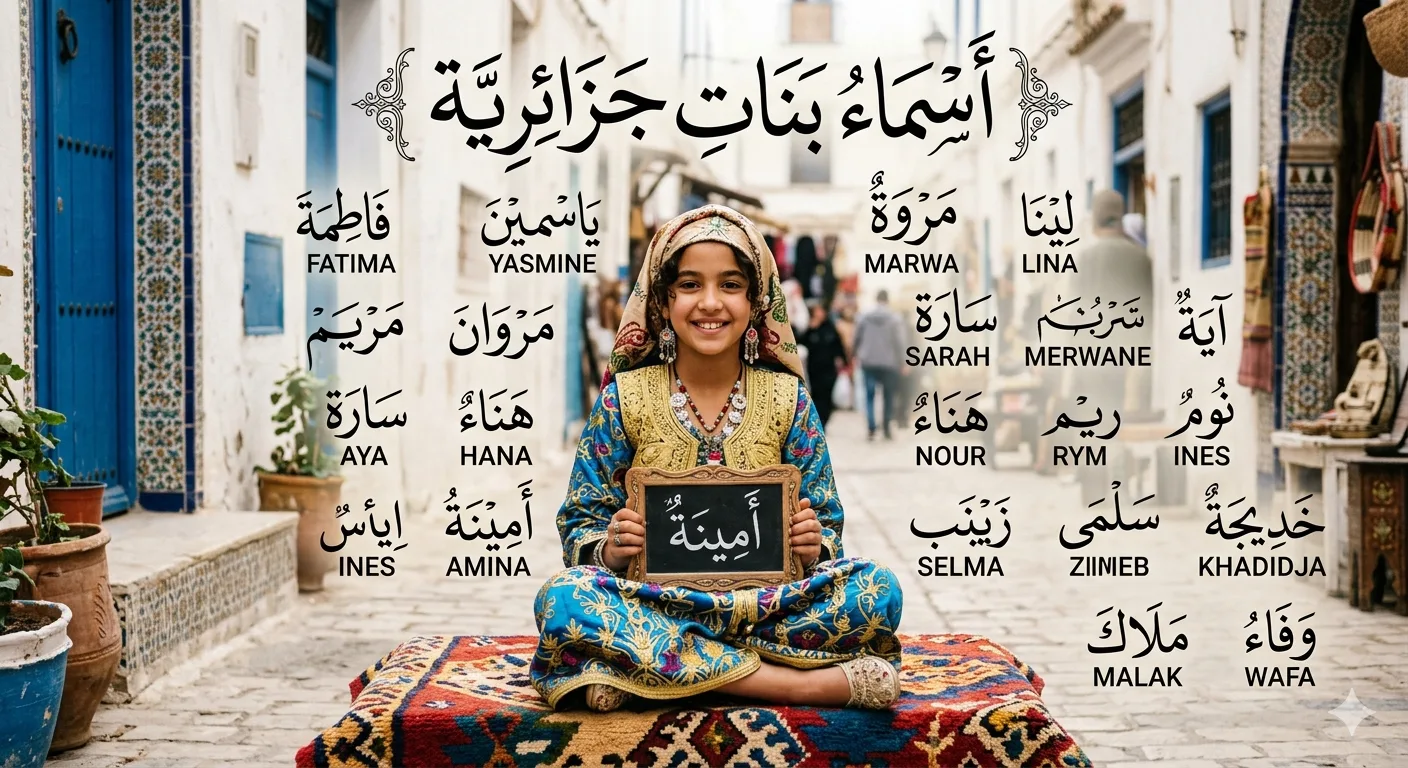
Understanding how Algerian families approach the naming process reveals the rich and deeply layered cultural landscape of one of North Africa's most fascinating countries. Algerian naming traditions are shaped by a complex and beautiful interplay of Islamic faith, Amazigh cultural identity, regional diversity, family traditions, and the influences of Algeria's remarkable history.
The Role of Islamic Faith in Algerian Girl Names
Islam is the most powerful single influence on Algerian girl naming traditions. The vast majority of Algerian families are Muslim, and Islamic naming traditions carry enormous weight in the country. Parents are guided by the hadith of the Prophet Muhammad, who advised Muslims to give their children names with beautiful and virtuous meanings. This tradition has shaped Algerian naming culture profoundly, producing a preference for names that carry spiritual significance, noble meanings, and connections to the Quran, the Prophet's family, or his companions.
Names that appear in the Quran or that are carried by figures revered in Islamic tradition are consistently popular in Algeria. Maryam, the Quranic name for Mary, mother of Jesus, is deeply revered in Islam and remains one of the most beautiful and popular names in Algeria. Fatima, Khadija, Aisha, Hafsa, and Zainab are all names carried by women who are central figures in Islamic history, and they remain profoundly meaningful to Algerian families who choose them as an act of faith and of connection to the sacred history of their religion.
Amazigh Heritage and Berber Naming Traditions
The Amazigh identity has experienced a powerful cultural revival in Algeria over recent decades. The Tamazight language was officially recognized as a national language of Algeria in 2016 alongside Arabic, a historic milestone that has encouraged many families to explore and celebrate their Berber heritage in ways that include naming. More Algerian parents are choosing Amazigh names for their daughters as an act of cultural pride, identity affirmation, and connection to the ancient civilization that predates all other layers of Algerian history.
In the Kabylie region of northern Algeria, Amazigh culture has remained particularly strong, and Kabyle names have always maintained a presence alongside Arabic names even during periods when Berber cultural expression was officially discouraged. Names like Tiziri, Dihya, Izia, and Tafat carry the soul of the Amazigh people and their ancient connection to the mountains and plains of North Africa.
Regional Diversity and Geographic Influences on Names
Algeria is a vast and regionally diverse country, and naming preferences vary considerably across different parts of this enormous nation. Families in Algiers and the northern coastal cities tend to embrace a broader range of modern and international influences in their naming choices, including names with French, Spanish, or broadly cosmopolitan appeal alongside traditional Arabic and Berber names. In the eastern cities of Constantine and Annaba, classical Arabic names and names with strong Islamic significance tend to dominate. In the western regions around Oran and Tlemcen, names often reflect the region's historic connections to Andalusian culture and its distinctive blend of Arab and Berber traditions.
In the Saharan south, Tuareg and other Berber naming traditions remain strong alongside Islamic names, producing some of the most distinctive and ancient naming choices found anywhere in Algeria. Names connected to the desert landscape, to ancient Tuareg history, and to the nomadic culture of the Sahara are found primarily in these southern regions and carry a unique beauty rooted in one of the world's most dramatic natural environments.
You can also use our Name Generator Tool to create unique names instantly. Maldives Girl Names
Rare and Unique Algerian Girl Names That Truly Stand Apart
For parents who want something genuinely distinctive, Algeria's rich and layered naming traditions offer a wealth of rare and uncommon choices that are deeply meaningful without being overly familiar. These unique Algerian girl names are perfect for families who want their daughter to carry a name that is individual, rooted in genuine cultural depth, and unlikely to be shared with many others in her generation.
|
Name |
Origin and Meaning |
Why It Stands Apart |
|
Nawel |
Arabic, gift, generous giving |
Rare and warm, distinctly Algerian character |
|
Houria |
Arabic, freedom, liberty |
Deeply meaningful, connected to independence |
|
Louiza |
Algerian form of Louise, famous warrior |
Distinctly Algerian variant, charming |
|
Kahina |
Berber, prophetess, seer |
Historical warrior queen, powerful and rare |
|
Leila |
Arabic, night, dark beauty, dusk |
Poetic Arabic classic, romantically rare |
|
Naouel |
Algerian form of Nawel, gift |
Specifically Algerian variant, very distinctive |
|
Selsabil |
Arabic, spring in paradise, Quranic |
Quranic name of paradise, rare and sacred |
|
Zeyneb |
Algerian variant of Zainab, fragrant tree |
Beloved traditional variant with local flavor |
|
Fella |
Kabyle Berber, jasmine flower |
Rare Amazigh floral name, beautiful |
|
Hassiba |
Arabic, noble, of good lineage |
Rare and dignified, historically significant |
Houria, meaning freedom and liberty, carries a particularly powerful resonance in Algerian culture. Algeria won its independence from France in 1962 after a long and painful war, and the concept of freedom is woven deeply into the national consciousness. To name a daughter Houria is to give her a name that speaks to one of the most fundamental values of the Algerian national story and to connect her to the spirit of liberation that defines her country's modern identity.
Fella is a rare and beautiful Kabyle name for jasmine that is distinct from the Arabic Yasmine and carries the specific flavor of Amazigh culture and language. In the Kabylie region, Fella has been used for generations as a way of naming daughters after this beloved flower in the Tamazight language rather than in Arabic, a small but meaningful expression of Amazigh cultural distinctiveness. It is a name of extraordinary delicacy and beauty that offers parents a deeply rooted alternative to the more common Yasmine.
Selsabil takes its name directly from the Quran, where it describes a spring of the most beautiful water in paradise. The name carries extraordinary spiritual significance as a name drawn directly from the sacred text of Islam, and its rarity in everyday use gives it a distinctive quality that many deeply religious families find enormously appealing. It is a name that speaks of paradise, of divine mercy, and of the spiritual aspirations parents hold for their daughters.
You can also use our Name Generator Tool to create unique names instantly. Andorra Girl Names
Latest Algerian Girl Name Trends Shaping 2026
Algerian baby girl naming trends in 2026 reflect a fascinating and dynamic intersection of deep cultural roots, Islamic identity, Amazigh revival, modern global influences, and the distinctive creative energy of contemporary Algerian society. Several clear and significant patterns are defining the naming landscape across Algeria right now.
The Amazigh revival is producing growing interest in Tamazight names across all regions of Algeria, not just in traditionally Berber areas like Kabylie. As Algerian society becomes increasingly proud of its full cultural heritage, names like Tiziri, Dihya, Fella, Izia, and Tafat are being chosen by families who want to honor the ancient Amazigh layer of Algerian identity. This trend shows no sign of slowing and is likely to accelerate as younger Algerian parents grow up with a stronger sense of their complete cultural heritage.
Short, melodic names are extremely fashionable in contemporary Algeria. Names of two syllables or fewer, like Nour, Rym, Ines, Lina, Dina, and Sara, are consistently popular because they feel clean, modern, and easy to use across both Arabic and French linguistic contexts. Algeria's bilingual culture, where both Arabic and French are widely spoken, creates a particular preference for names that work comfortably in both languages without awkward pronunciation challenges.
Quranic names are experiencing a sustained and growing popularity as Algerian families express pride in their Islamic identity. Names drawn directly from the Quran or associated with figures central to Islamic history are being chosen with increasing intentionality. Maryam, Selsabil, Yousra, Imane, and similar names carry both spiritual depth and contemporary relevance for Algerian families who see naming as an act of faith and of cultural expression simultaneously.
International and cross-cultural names continue to grow in urban Algeria, particularly in Algiers and Oran. Names like Ines, Nadia, Sabrina, and Lina work effortlessly across French, Spanish, Arabic, and English linguistic contexts and are chosen by cosmopolitan urban families who want their daughters to carry names that travel well in an increasingly interconnected world. This reflects the genuinely Mediterranean character of northern Algerian culture, which has always absorbed and synthesized influences from across the sea.
Vintage names are also experiencing a quiet revival among younger Algerian parents who are rediscovering the beauty of the names their grandmothers and great-grandmothers carried. Names like Zohra, Fatna, Saadia, Messaouda, and Kheira are being reconsidered not as old-fashioned choices but as authentic expressions of Algerian cultural heritage with a charming vintage quality. This trend mirrors similar vintage name revivals happening in many cultures around the world and reflects a broader desire for names with genuine historical depth.
Expert Tips for Choosing the Perfect Stylish Algerian Girl Name
Begin with meaning and intention. Algerian naming tradition places enormous weight on the meaning of a name, a tradition directly rooted in Islamic teaching. Choose a name whose meaning feels like a wish or a prayer for your daughter. A name meaning radiance, faith, grace, or beauty is a gift that will resonate throughout her life.
Consider how the name works in Arabic and French. Algeria is a genuinely bilingual country where both Arabic and French are used daily in education, business, and cultural life. Consider how your chosen name sounds and is pronounced in both languages to ensure it works comfortably across the linguistic landscape your daughter will inhabit.
Honor your regional heritage. Algeria is a country of rich regional diversity, and many of the most beautiful Algerian names are deeply rooted in specific regional traditions. If your family has Kabylie roots, exploring Amazigh names might be a beautiful way to honor that heritage. If your family comes from the west, exploring names connected to Tlemcen and the Andalusian tradition might feel meaningful.
Think about the full name together. In Algerian naming tradition, the full name, first name together with the family name and often the father's name in the traditional patronymic system, matters enormously. Say the full combination out loud many times to feel its rhythm and ensure there are no unintended sounds or combinations.
Trust the counsel of family and faith. In Algerian culture, naming is often a family and community event, with input sought from grandparents, religious leaders, and respected elders. This tradition of collective wisdom around naming is a beautiful one, and the perspectives of those who love your family most can often help you find the name that truly feels right.
Generate More Names: Girl Names Generator
Conclusion: Celebrating the Timeless Beauty of Algerian Girl Names
Algerian girl names are among the most beautiful, meaningful, and culturally rich names to be found anywhere in the world. They carry within them the spiritual depth of Islamic tradition, the ancient pride of Amazigh civilization, the lyrical beauty of the Arabic language, the regional diversity of a vast and magnificent country, and the distinctive creative spirit of a people who have always found beauty in both faith and the natural world.
Whether you choose a beloved classic like Fatima or Zohra, a modern favourite like Malak or Nour, a rare Amazigh gem like Dihya or Tiziri, a nature-inspired name like Yasmine or Rym, or a uniquely Algerian choice like Houria or Fella, you are giving your daughter a name with genuine cultural depth, spiritual resonance, and lasting beauty. Each of these names carries a story, a meaning, and a connection to something larger than itself.
The most important thing about choosing an Algerian girl name in 2026 is choosing one that feels true to your family's identity, honors the cultural and spiritual heritage you hold dear, and carries the love and aspiration you feel for your daughter from her very first breath. In the rich and endlessly beautiful world of Algerian naming tradition, there is a perfect name waiting for every girl born into this extraordinary country.